 Sudden Valley
 Why Deming Windows Take More Punishment Than People Expect
Deming sits in that part of Whatcom County where marine weather off the Sound and cooler, wetter air draining down from the Mount Baker foothills meet in the middle. The result is a lot of gray, damp days strung together, driving rain that comes in sideways during fall and winter storms, and a moss season that seems to start earlier and end later every year. None of that is dramatic on any single day, but it's relentless, and windows are one of the first parts of a house to show the wear.
Old aluminum-frame or original single-pane wood windows in this area tend to sweat on the inside, feel cold to stand near, and let in a steady draft that homeowners often blame on the furnace before they realize it's the window. Add in salt-tinged marine air that gets carried inland during weather systems, and you get slow corrosion on hardware and fasteners that a drier climate wouldn't produce nearly as fast. Energy-efficient windows address the comfort and utility-bill side of that problem, but done right, they also need to be installed in a way that respects how much water this region throws at a house every year.
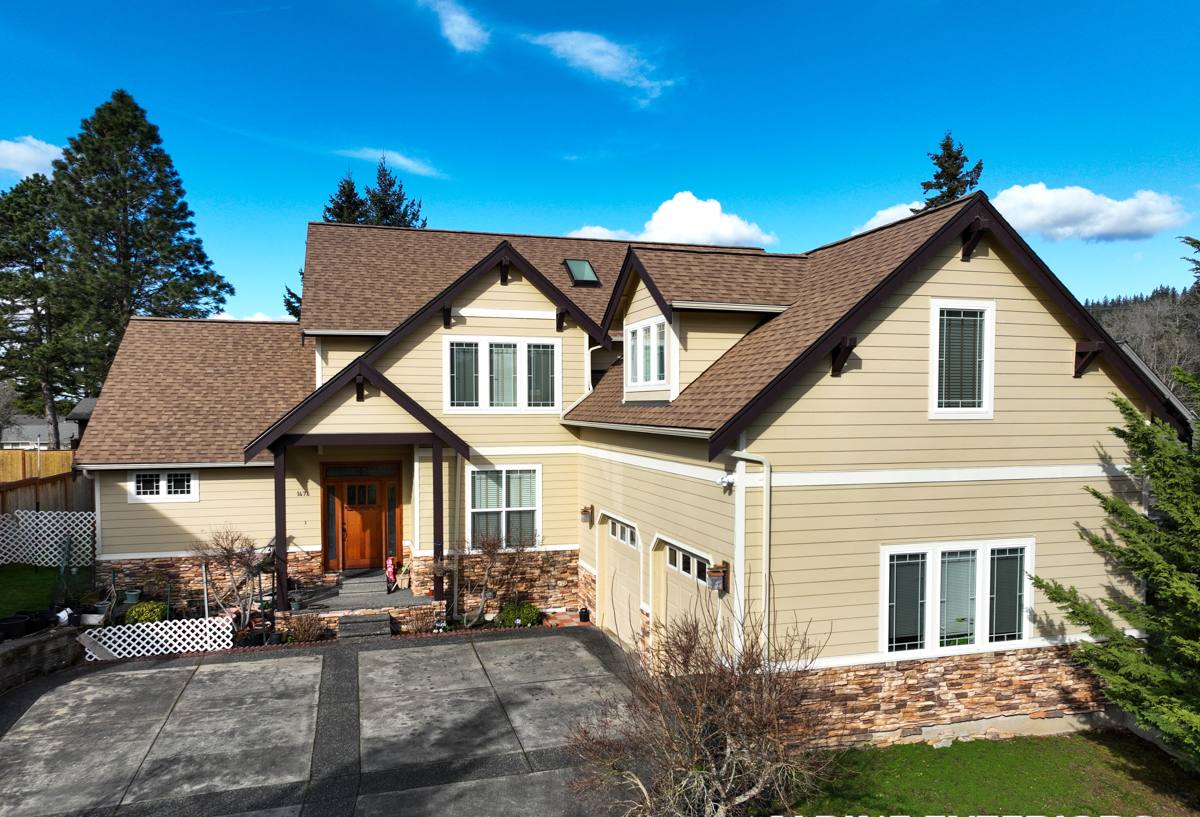
What "Energy-Efficient" Actually Means for a Whatcom County Home
The phrase gets used loosely in advertising, so it's worth being specific about what actually changes performance on a house like yours.
U-Factor: How Much Heat Escapes
U-factor measures how well a window keeps heat inside during our cold, damp winters — lower is better. For this climate, we typically recommend windows with a U-factor in the 0.27–0.30 range or better, which is a meaningful step up from the single- or early dual-pane windows found in a lot of older Deming homes.
Low-E Coatings and Gas Fills
A low-emissivity (low-E) coating is a microscopically thin layer that reflects heat back into the room in winter while still letting daylight through. Combined with an argon or krypton gas fill between panes, it cuts down on both heat loss and that clammy, cold-glass feeling you get standing near an older window on a January evening.
Solar Heat Gain Coefficient
This measures how much solar heat passes through the glass. In a climate that doesn't get much intense summer sun, we're less focused on blocking heat gain and more focused on retaining what warmth you do have — so the coating and gas fill package matters more here than it would in a hot, dry climate.
Where Drafts, Fog, and Slow Rot Actually Come From
Most window complaints we see in this area aren't really about the glass — they're about what's happening around the window opening.
- Fogging between panes means the seal on an insulated glass unit has failed and moisture has gotten between the layers. It's not repairable — the unit needs replacing.
- Drafts are often not the sash itself but gaps around the frame where old caulk has cracked or shrunk, or where the original installation never sealed the rough opening properly.
- Soft trim or staining below a window usually points to water getting behind the flashing and running down inside the wall before it shows on the surface — by the time you see it, the sheathing underneath may already be affected.
- Moss and green staining around window trim is more than cosmetic. Moss holds moisture against wood and paint far longer than bare siding would, and that constant dampness is exactly what accelerates trim and sill rot in a climate like ours.
This is also why we treat window replacement and siding work as connected jobs rather than separate trades. A window installed correctly but tied into failing or poorly flashed siding will still leak — and a beautiful siding job around a poorly flashed window just hides the problem for a while.
Choosing the Right Frame Material for This Climate
There's no single "best" window material for every home — it depends on your budget, your home's style, and how much upkeep you want to take on. Here's how the common options actually perform in a wet marine climate like Deming's.
| Frame Material | Moisture Resistance | Maintenance | Typical Fit |
|---|---|---|---|
| Vinyl | Very good — won't rot or corrode | Low; occasional cleaning | Most homes; best value for energy performance per dollar |
| Fiberglass | Excellent — very stable in wet, cold swings | Low | Homes wanting long-term durability and minimal expansion/contraction |
| Wood-clad (exterior-clad, wood interior) | Good on the exterior clad side; interior wood needs protection from condensation | Moderate — interior finish upkeep | Homes prioritizing interior wood appearance |
| Bare wood | Poor without diligent upkeep in constant damp | High — regular painting/sealing | Historic homes where original appearance matters more than upkeep |
| Aluminum | Poor thermally; prone to condensation and corrosion near marine air | Moderate | We don't recommend it for energy-efficiency projects in this climate |
For most Deming homes, we steer people toward vinyl or fiberglass because both shrug off the constant moisture without the ongoing maintenance burden that wood demands in a climate that rarely gives paint and sealant a long dry stretch to cure and hold.
What a Correct Installation Actually Involves
The window product matters less than most homeowners assume — installation quality is what determines whether you get 20+ years of trouble-free performance or a callback in three winters. A proper install in this climate includes:
- A sloped sill pan flashing at the base of the opening so any water that does get past the window sheds outward, not into the wall cavity
- Proper integration of window flashing tape with the house wrap or weather-resistive barrier, lapped correctly so water always moves downward and outward, never inward
- Backer rod and quality sealant at the exterior trim joints, sized and installed so the sealant can actually flex with temperature and moisture cycling
- Correct shimming and squaring so the sash operates smoothly and the weatherstripping seals evenly all the way around
- Low-expansion foam or backer rod for interior air sealing — not just caulk over a gap
- Careful reintegration with the surrounding siding and trim so the whole assembly sheds water as one system, not a window "patched" into old siding
Skipping any one of these steps is usually invisible on install day and only shows up as a problem two or three wet seasons later — which is exactly why we don't cut corners on flashing details even though nobody but us will see them once the trim goes back on.
Our Process for a Deming Window Project
- On-site assessment. We look at existing window condition, framing, and how the current siding and trim tie in — not just measure openings.
- Product and glass package selection. We walk through frame material, U-factor, and coating options based on your budget and the specific exposure of each wall (a north-facing wall that stays damp longer often gets extra attention).
- Tear-out and inspection. Removing the old window lets us check the sheathing and framing underneath for hidden moisture damage before anything new goes in — this is often where we catch problems the homeowner didn't know existed.
- Installation with full flashing detail. Sill pan, tape, and weather-resistive barrier integration happen before the new window is even set.
- Siding and trim reintegration. We match the surrounding exterior so the finished opening looks intentional and sheds water as a complete system.
- Final walkthrough. We test operation, check seals, and go over care basics with you before we consider the job done.
Cost Factors Worth Understanding Before You Get Quotes
Window quotes vary a lot from house to house, and price differences usually come down to a handful of real factors rather than one contractor simply being "cheaper."
| Factor | How It Affects Cost |
|---|---|
| Frame material | Vinyl is typically the most budget-friendly; fiberglass and wood-clad cost more up front |
| Number and size of openings | Larger or custom-sized windows cost more per unit than standard sizes |
| Access and height | Second-story or hard-to-access windows take more labor and equipment |
| Condition of the rough opening | Hidden rot found during tear-out means added repair before the new window can go in |
| Glass package | Upgraded low-E coatings or triple-pane glass add cost but also add comfort and efficiency |
| Trim and siding matching | Reworking trim to match existing siding adds labor beyond the window unit itself |
Be cautious of any quote that seems unusually low without addressing flashing and sill pan work specifically — that's often where corners get cut, and it's the part of the job that determines whether the window still performs well in ten years.
Why It Matters to Hire a Crew That Already Works in Deming
A contractor who regularly works this part of Whatcom County has already seen how the housing stock here ages — where moss tends to collect on north- and west-facing walls, how driving rain during winter storms tests flashing details, and which older construction methods in this area tend to leave windows under-flashed by today's standards. That familiarity shows up in fewer surprises during tear-out and a faster, more accurate estimate up front, because we're not guessing at how the local climate and building practices interact — we're working from what we've already seen on homes like yours.
It also matters for accountability. A crew based in the area and known in the community has a reputation to stand behind locally, not just a phone number that's hard to reach after the invoice is paid.
Keeping Energy-Efficient Windows Performing in a Wet Climate
New windows reduce maintenance, but they aren't maintenance-free — especially here.
- Clean weep holes along the bottom of the frame periodically so they don't clog with debris and trap water inside the frame
- Inspect exterior caulking each fall before the heavy rains set in, and touch up any cracked or separated joints
- Keep moss and organic buildup cleared from trim and sills — don't let it sit against the frame through the wet months
- Avoid aiming a pressure washer directly at window seals or weep systems when cleaning siding
- If you notice fogging between panes, address it early — it's a sign of a failed seal, not something that improves on its own
If you're weighing whether it's time to replace windows on a Deming home, or you want a second opinion on a quote you've already received, we're happy to take a look and give you a straightforward, no-pressure estimate — just fill out the form below.