 Sudden Valley
 Why Acme Homes Need More Than a Standard Window Order
Order a window off a national manufacturer's standard size chart and you get a product engineered for an average climate — not the one we actually have here. Homes around Acme and the broader Sudden Valley area deal with salt-tinged marine air working its way inland, driving rain that comes in sideways during winter storms, and a moss season that can stretch eight or nine months out of the year in shaded, damp spots. None of that shows up on a spec sheet, but all of it shows up on a window frame that wasn't built or installed with this climate in mind.
That's the difference between a window that looks fine on installation day and one that still seals, opens, and drains properly five winters later. In Whatcom County, the install matters as much as the product — sometimes more.
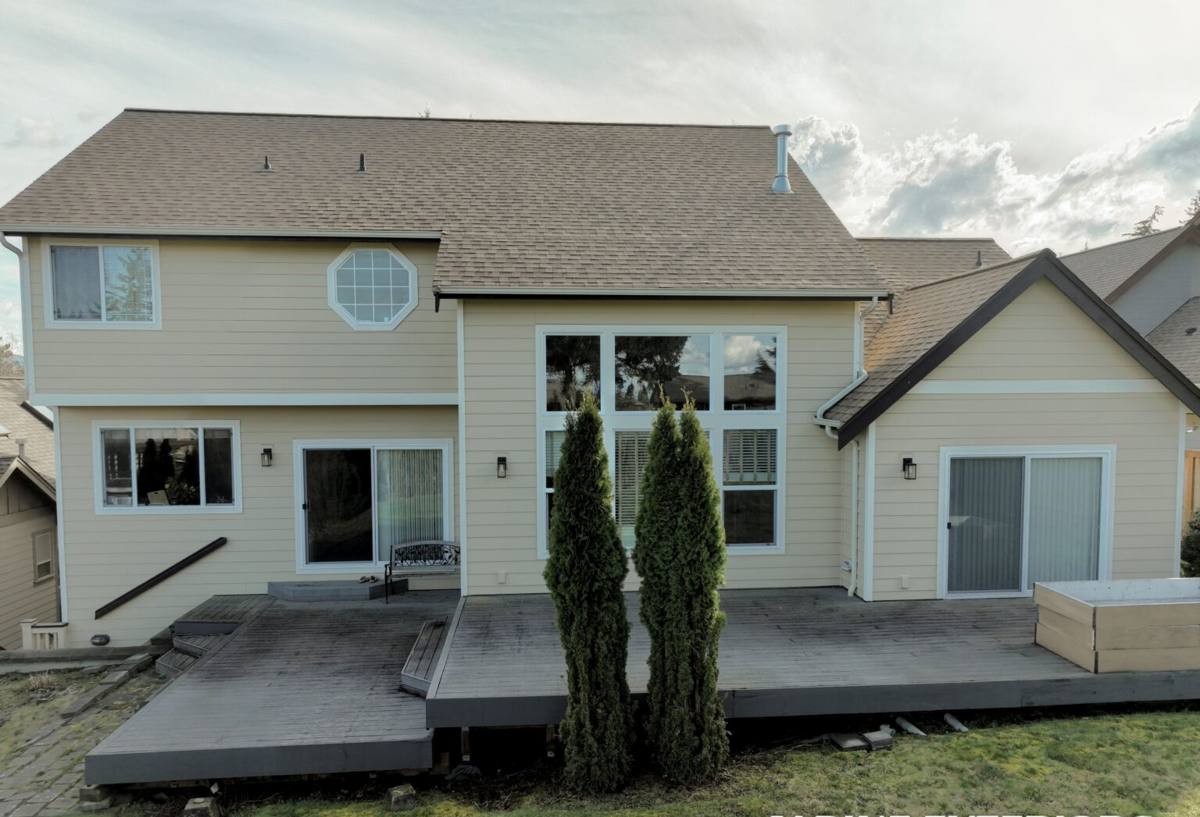
What "Custom" Actually Means on an Acme Job
Older and Irregular Openings
Plenty of homes in this area weren't built to modern standard window sizes. Farmhouses, older cabins, and additions built over the years often have openings that are slightly out of square, a half-inch off from any stock size, or trimmed out in a way that a big-box replacement window simply won't fit without a lot of shimming, gap-filling, and caulk doing work it shouldn't have to do. Custom work starts with field-measuring every opening individually and ordering or building to those exact dimensions, not the closest catalog size.
Matching the Home, Not Just the Hole
The other half of "custom" is appearance. Grille patterns, sightlines, sash proportions, and exterior trim profiles all affect whether a new window reads as part of the house or as an obvious swap-in. On older homes especially, we try to match or intentionally update the window style in a way that's consistent across the whole elevation, rather than ending up with three different sash profiles because three different openings got "whatever fit."
Materials That Actually Hold Up in This Climate
Every window material handles moisture and salt-laden air a little differently. None of them are wrong choices across the board — but some make more sense than others depending on the exposure and upkeep you're willing to put in.
| Material | Moisture Behavior | Maintenance | Best Fit |
|---|---|---|---|
| Vinyl | Won't rot or corrode; seams and welds need to be quality-built to stay watertight | Low — occasional cleaning | Budget-conscious replacements, rental or secondary properties |
| Fiberglass | Dimensionally stable in wet-dry cycling; resists swelling | Low | Larger openings, exposed walls, long-term performance |
| Wood interior / clad exterior | Good if the cladding and flashing details are done right; wood core is vulnerable if water gets behind the cladding | Moderate to high | Homes where interior wood trim and appearance matter most |
| Aluminum | Prone to corrosion pitting in salt-influenced air over time; conducts cold, so condensation risk is higher | Moderate | Limited, mostly commercial or specific architectural uses |
For most Acme-area homes we're steering people toward vinyl or fiberglass for full exposure walls, and reserving wood-clad for openings that are more protected by roof overhang or orientation. That's a maintenance and moisture-behavior call, not a brand preference — any of these materials can perform well or poorly depending on the specific product line and how it's installed.
Flashing and Water Management: Where Window Jobs Actually Fail
Almost every window "failure" we get called out to inspect isn't a bad window — it's a bad flashing detail. When rain is coming in at an angle instead of straight down, which is common here, water finds any shortcut in the installation: a sill pan that wasn't sloped to drain outward, head flashing that wasn't lapped over the weather-resistive barrier correctly, or sealant used in place of proper flashing instead of alongside it.
A correct install, in order, looks like this:
- Opening is prepped, squared, and checked for rot or soft framing before anything goes back in
- Sill pan flashing installed with a slight outward slope so any water that gets past the window drains back out, not into the wall
- Window set, leveled, and fastened per the manufacturer's structural requirements
- Side flashing and head flashing integrated with the weather-resistive barrier in proper shingle-lap order — each layer overlapping the one below it
- Sealant used at the specified joints only, as a backup to the flashing system, never as the primary water barrier
- Interior air-sealing completed separately from exterior water-sealing — they're different jobs with different materials
This is also where window work and siding work overlap directly. If the siding around an opening isn't tied into the window flashing correctly, you can have a perfect window and still get water intrusion at the trim.
Moss, Algae, and the Long Wet Season
Shaded, damp conditions around Acme are exactly what moss and algae need to establish themselves, and window components are not immune. Sills, tracks, and screens that stay damp and shaded for long stretches will grow moss and green algae film over time, which holds moisture against the frame, stains sills, and can gum up sliding hardware and weep holes that are supposed to let water drain out.
A few things reduce that burden significantly: frame materials and finishes that don't give algae anything to grip onto, sill designs with clear drainage paths that don't collect standing water, corrosion-resistant hardware so tracks keep moving freely, and fiberglass or vinyl-mesh screens that don't hold moisture the way older aluminum screens can. None of this eliminates cleaning entirely — nothing does in this climate — but it cuts down how often it's needed and how much damage neglect causes in the meantime.
Our Custom Window Process
- On-site assessment — we look at each opening, the surrounding siding and trim condition, sun/shade exposure, and drainage path before recommending anything
- Precise measurement — every opening is measured individually; nothing gets ordered off an assumed standard size
- Material and product selection — matched to that specific opening's exposure, not a one-size answer for the whole house
- Integration planning — how the new window ties into existing siding, trim, and weather barrier, especially on older homes where those details may need updating
- Removal and installation — old unit removed, framing checked and repaired if needed, new window set and flashed per the sequence above
- Sealing and trim finish work — exterior trim, caulking at the correct joints, and interior finish work completed to match
- Final walkthrough — operation, seal, and drainage checked with you before we consider the job done
What Drives the Cost of a Custom Window Project
Custom window pricing varies more than people expect, mostly because "custom" covers a wide range of actual work. Broadly, homeowners in this area should expect per-window costs to run from the low end for a standard-size vinyl replacement in good condition framing, up several times higher for large or oddly shaped openings in premium materials with extensive trim and flashing repair. The factors below are what actually move the number.
| Cost Factor | Why It Matters |
|---|---|
| Opening size and shape | Standard rectangular openings cost less than arched, oversized, or non-standard shapes that require custom fabrication |
| Frame material | Vinyl is typically the most affordable; fiberglass and wood-clad run higher |
| Glass package | Double vs. triple pane, low-E coatings, and gas fill all add cost but affect comfort and condensation resistance |
| Condition of existing framing and siding | Rot repair, re-flashing, or siding tie-in work around the opening adds labor beyond the window itself |
| Access and site conditions | Second-story openings, tight access, or extensive trim removal add time |
Signs Your Current Windows Are Already Failing
Because the damage from moisture and moss builds slowly, a lot of window problems get ignored until they're expensive. Worth checking for:
- Fogging or a permanent haze between panes — the seal between the glass layers has failed
- Soft or discolored wood trim around the frame, inside or out
- Noticeable draft near the frame edges when it's windy
- Windows that are hard to open, close, or lock — a sign of frame movement or swelling
- Moss or persistent green staining on the sill or lower frame
- Peeling or bubbling paint on the exterior trim immediately around the window
- Visible gaps or cracked caulk at the joint between the window and the siding
Any one of these on its own might be minor. Several together, especially on the same wall, usually points to a flashing or drainage issue rather than just an old window.
Why a Crew That Already Works in Acme Matters
Whatcom County covers a lot of different microclimates, and Acme's mix of shaded, damp, rural exposure isn't the same as an open, wind-exposed lot closer to the water. A crew that's already worked homes in this specific area has seen which flashing details actually hold up here, which materials handle the moss and moisture load without constant upkeep, and where older homes in this part of the county tend to have hidden framing issues before the wall ever gets opened up.
It also matters that window work and siding work aren't separate problems — they meet at the same trim line. A crew that handles both understands how the window flashing needs to integrate with the siding's own drainage plane, instead of treating the window as an isolated product install and hoping the siding contractor lines up the details later.
If your windows are original to the house, fogging, drafty, or just due for an honest look, we're happy to come out and take a look. The estimate is free, there's no pressure, and you'll get a straight answer about what's actually needed versus what can wait — just fill out the form below.