 Sudden Valley
 Siding Installation in Cordata: Built for a Marine Climate
Cordata sits in the same Whatcom County weather pattern that shapes every siding decision we make: salt-tinged air off the Sound, long stretches of driving rain, and a moss season that can run most of the year on shaded walls. Our crew works out of Sudden Valley and covers this part of the county regularly, which means we're not guessing at what holds up here — we're installing and repairing siding in these conditions season after season.
A siding installation that looks right on day one and a siding installation that's still performing in year fifteen are two different jobs. The difference almost never comes down to the brand name on the plank. It comes down to the materials chosen for this climate, the details underneath the surface, and whether the crew installing it understands what Whatcom County weather actually does to a wall over time.
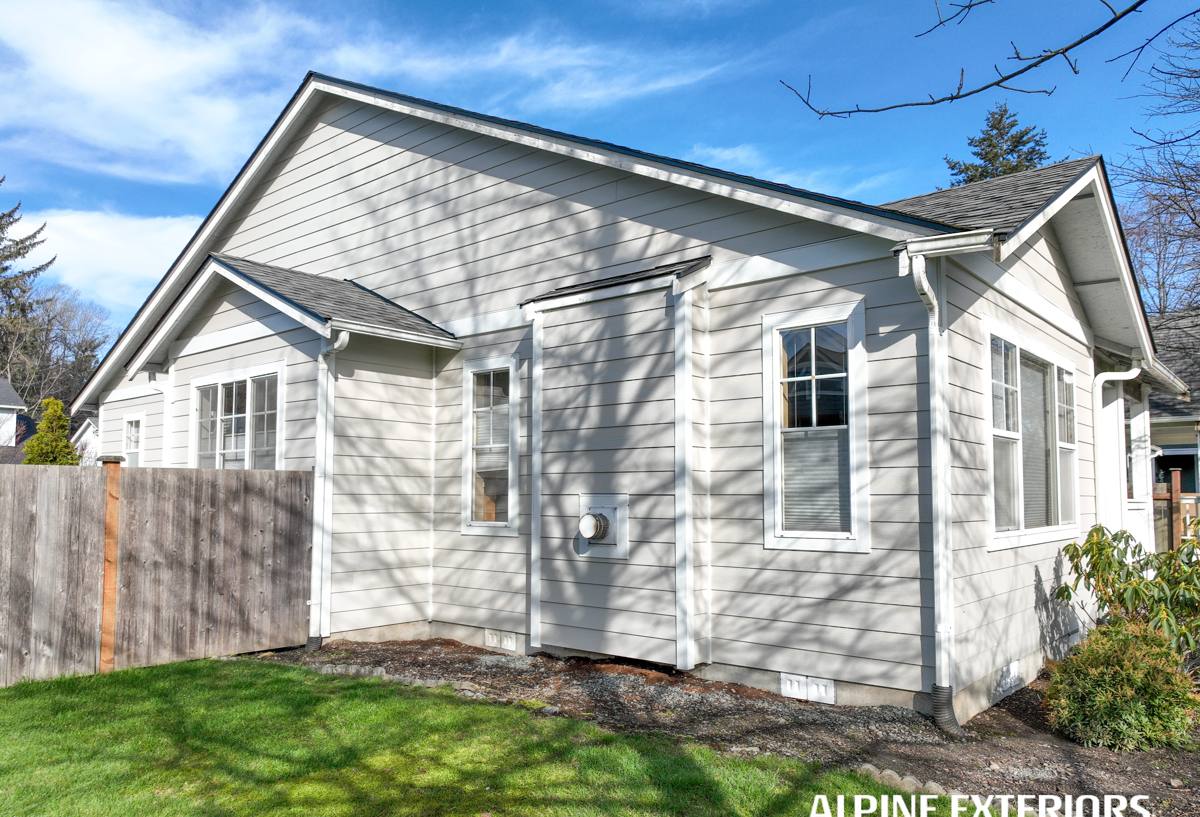
What This Climate Does to Exterior Siding Over Time
Salt Air and Slow Corrosion
Homes closer to the water deal with airborne salt that settles on exterior surfaces and accelerates corrosion of fasteners, trim, and any metal flashing that isn't rated for it. Over years, this shows up as rust streaking, failing fastener heads, and premature paint breakdown on materials that weren't specified for coastal exposure.
Driving, Wind-Driven Rain
Whatcom County doesn't just get rain — it gets rain pushed sideways by wind off the water, which finds every gap, seam, and undersized overlap in a siding system. Water intrusion problems on local homes are rarely caused by rain falling straight down; they're caused by wind-driven rain working its way behind siding that wasn't lapped, flashed, or sealed for that kind of exposure.
A Moss Season That Doesn't Really End
Mild, wet winters combined with heavy tree cover mean moss and algae have a long window to establish themselves on north-facing and shaded walls. Materials that hold moisture, or that develop a rough, porous surface as they age, give moss and algae something to grip onto — and once established, that growth holds even more moisture against the wall.
Why We Install Only James Hardie Fiber Cement Here
We standardized on James Hardie fiber cement siding for every job we take on, including Cordata installations, and we don't install vinyl, LP SmartSide, Cemplank, Allura, primed spruce, or cedar. That's not a marketing position — it's a professional standard built around what actually holds up in this specific climate without turning into a maintenance burden for the homeowner.
| Material | Behavior in Salt Air & Driving Rain | Moss/Algae Resistance | Long-Term Maintenance |
|---|---|---|---|
| James Hardie fiber cement (HZ5) | Engineered for harsher, wetter climate zones; non-combustible; dimensionally stable when wet | Dense, factory-finished surface resists moss adhesion better than porous or wood-based materials | Low; ColorPlus finish is factory-cured and not meant to need repainting on the original cycle |
| Vinyl | Can warp, buckle, or become brittle with temperature swings and wind-driven rain behind panels | Grime and algae can streak the surface; limited cleaning options without damaging the finish | Low upfront, but panels aren't repairable piece by piece the way fiber cement is |
| Cedar / primed spruce | Absorbs moisture; prone to swelling, cupping, and rot without diligent upkeep | Wood surfaces are highly susceptible to moss and mildew in shaded, damp conditions | High; regular refinishing, caulking, and spot repairs needed |
| LP SmartSide (engineered wood) | Strand-based wood product; edges and cut ends are moisture-sensitive if not properly sealed | Better than raw wood but still an organic substrate that can support growth if maintenance lapses | Moderate; relies on consistent caulking and paint maintenance to keep moisture out |
The point isn't that every other product fails immediately — plenty of homes in Whatcom County have vinyl or wood siding that's holding on fine. The trade-offs are real, though: more upkeep, more sensitivity to installation quality, and less margin for error in a climate that gives siding no real off-season. Hardie's HZ5 line is engineered specifically for wetter, harsher climate zones like this one, backed by a factory ColorPlus finish and a strong transferable warranty, which is why it's what we put on homes instead.
What a Correct Siding Installation Actually Involves
Weather-Resistive Barrier and Drainage Gap
Everything starts underneath the siding, not at the surface. A code-compliant weather-resistive barrier, properly lapped and sealed at every penetration, is the layer that actually keeps bulk water out of the wall assembly. In a climate with this much wind-driven rain, we also build in a drainage gap behind the siding so any moisture that does get past the cladding has somewhere to go instead of sitting against the sheathing.
Flashing and Trim Details
Windows, doors, deck ledgers, and roof-to-wall intersections are where most real-world siding failures start. Correct flashing at these transitions — installed in the right shingle-lap sequence with the weather barrier — matters more than almost anything else on the job, and it's the detail that gets rushed on jobs done by crews unfamiliar with the local exposure.
Fastening, Clearances, and Caulking
James Hardie publishes specific fastener types, spacing, and clearance requirements (siding-to-grade, siding-to-roofline, siding-to-deck) that exist for a reason — get them wrong and you create a wicking point for moisture even with the right product on the wall. We follow manufacturer installation instructions to the letter, because that's also what keeps the product warranty intact.
Our Process for Cordata Siding Projects
- Walkthrough and assessment — we inspect the existing siding, sheathing condition, and trouble spots (window flashing, deck ledgers, north-facing walls) before quoting anything.
- Written scope and product selection — you get a clear scope of work, the specific Hardie product and color, and an honest estimate range before any work starts.
- Tear-off and sheathing check — old siding comes off and we check the sheathing underneath for hidden moisture damage before closing anything back up.
- Weather barrier and drainage plane installation — the water-management layer goes in correctly the first time, since it's the layer you won't see again once siding is up.
- Hardie installation to manufacturer spec — correct fasteners, clearances, and flashing sequence at every window, door, and roofline.
- Final walkthrough — we go over the finished job with you before calling it complete.
Signs a Cordata Home Needs New Siding Soon
- Moss or dark streaking that returns quickly after cleaning, especially on shaded or north-facing walls
- Soft or spongy spots when you press on the siding, which usually means moisture has reached the substrate
- Paint that's peeling, bubbling, or failing faster than a normal repaint cycle would suggest
- Visible gaps, warping, or buckling at seams and corners
- Rust staining below nail heads or metal trim
- Rising energy bills that could point to a compromised weather barrier letting in drafts and moisture
Why It Matters to Hire a Crew That Already Works This Area
Siding installation isn't a one-size-fits-all trade. A crew that mostly works drier inland climates may not default to a drainage gap, may under-flash a deck ledger, or may not think twice about a product's moisture behavior — not out of carelessness, but because it's simply not what their normal jobs demand. A crew that regularly works Whatcom County, including Cordata and the Sudden Valley area, builds those habits into every job by default because the climate doesn't give you a pass for skipping them.
There's also the practical side: permitting norms, typical home construction in this part of the county, and being reachable for warranty service down the road all matter more when the crew is actually local rather than passing through for a single job.
What Drives Siding Installation Cost in Cordata
| Cost Factor | Why It Matters |
|---|---|
| Home size and wall complexity | More square footage and more corners, dormers, or gables mean more material and labor time |
| Tear-off vs. install-over | Removing old siding down to the sheathing adds labor but lets us inspect and fix hidden moisture damage |
| Hidden sheathing or framing repair | Rot found once old siding comes off has to be addressed before new siding goes on — this is the most common reason a quote changes |
| Trim and detail work | Windows, dormers, and custom trim take more time to flash and finish correctly than a plain wall |
| Product line and color | Hardie's ColorPlus factory-finished options versus field-painted options affect both material cost and long-term upkeep |
| Access and site conditions | Steep lots, limited driveway access, or dense landscaping can add time to any exterior project |
We won't quote a firm number without seeing the house, but we'll always walk you through which of these factors are driving your specific estimate — no vague allowances, no surprises buried in fine print.
Living With Hardie Siding Through a Long Moss Season
Even with a moss-resistant, factory-finished product, this climate rewards a little routine upkeep. Keeping gutters and downspouts clear prevents water from sheeting down walls where it doesn't belong. An occasional gentle rinse on shaded, north-facing sections keeps moss and algae from getting established in the first place. Because Hardie's ColorPlus finish is baked on at the factory rather than field-applied, it holds up to this kind of routine cleaning far better than a painted wood or engineered-wood surface would, which is one more reason it's the only product we put behind our name.
If your Cordata home's siding is showing its age, or you're planning ahead before the next wet season sets in, we're happy to take a look and walk you through what we'd actually recommend — no pressure, no obligation. Use the form below to request a free estimate.