 Sudden Valley
 Siding Built for What Cordata Actually Deals With
Homes in the Cordata area sit inside one of the wetter, more marine-influenced pockets of Whatcom County, and that shows up in how siding ages here. Salt air moving in off the water corrodes cheap fasteners and trim hardware years before it should. Driving rain — rain pushed sideways by wind instead of falling straight down — finds every gap in a lap joint, a butt seam, or a poorly flashed window. And the long moss season that runs through most of the fall, winter, and spring keeps north-facing and shaded walls damp for weeks at a stretch, which is exactly the environment moss, algae, and mildew need to take hold. Siding that isn't specifically suited to this combination doesn't fail dramatically — it fails slowly, through swelling, staining, soft spots, and paint that won't hold, until a homeowner is looking at a much bigger repair than they expected.
This page is about one thing: what it takes to install James Hardie fiber cement siding correctly on a Cordata home, and why that combination of product and process matters more here than it would in a drier, calmer climate.
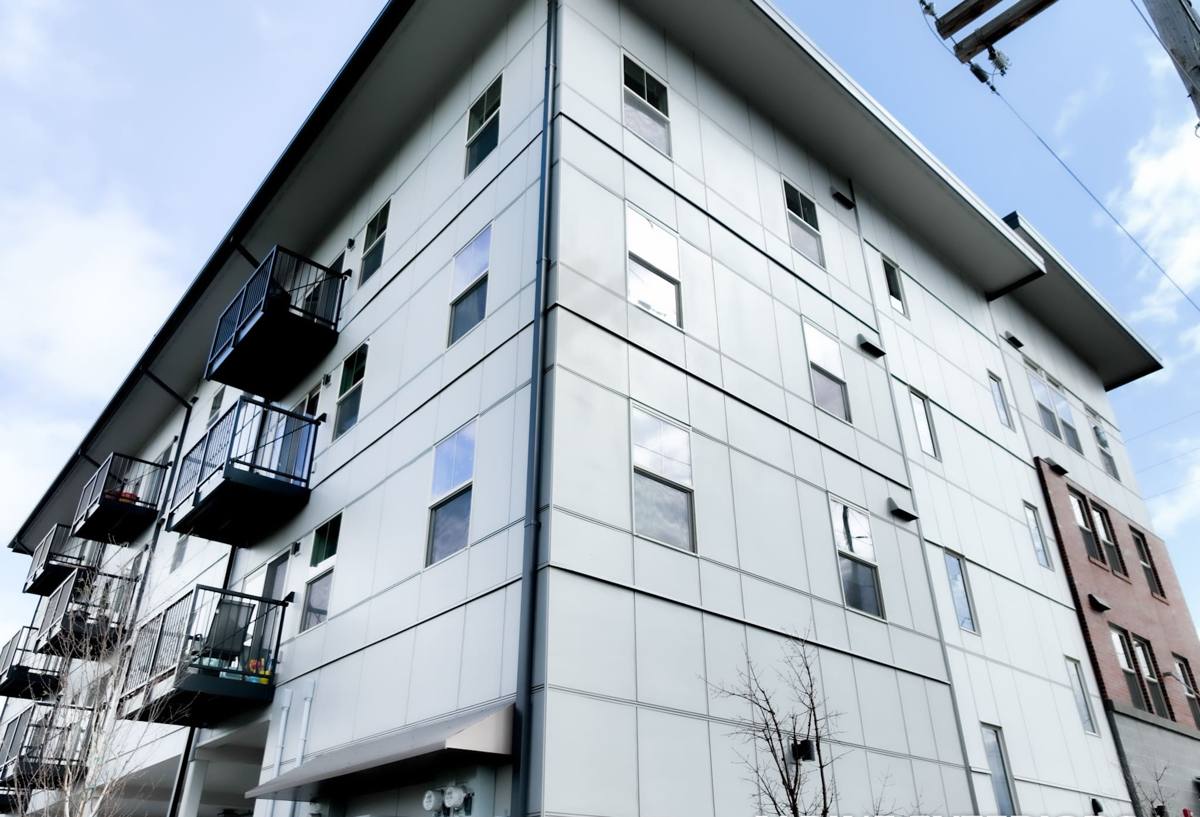
Why We Install Only James Hardie
We made a deliberate decision to install James Hardie fiber cement siding exclusively — not vinyl, not LP SmartSide, not Cemplank or Allura, not primed spruce or cedar. That's not a marketing position; it's a standard we hold because of what we've seen these products do over years of exposure in exactly this kind of climate. Fiber cement is non-combustible, dimensionally stable when properly acclimated and fastened, and doesn't rely on paint alone to keep water out the way wood trim does. James Hardie backs its ColorPlus factory-finished products with a substantial, transferable limited warranty, and the company engineers separate product formulations for different climate zones rather than selling one version everywhere. For a region with this much sustained moisture exposure, that engineering difference is not a minor detail — it's the reason the siding still looks and performs the way it should ten and twenty years out.
We're not going to tell you every other product is worthless — vinyl is inexpensive and low-maintenance in mild conditions, and cedar has real appeal if you're willing to keep up with it. But once you weigh moisture behavior, fastener corrosion, moss resistance, fire performance, and long-term maintenance against each other for a home in this specific climate, Hardie is what we're willing to put our name behind.
James Hardie's Climate-Engineered Line
James Hardie doesn't sell one universal product. Its HZ product system is formulated differently depending on regional climate — colder, wetter regions like the Pacific Northwest get a formulation engineered around freeze-thaw cycling and sustained moisture exposure, rather than the version built for hot, dry southern climates. That distinction matters on a Cordata home more than it would somewhere with a drier, milder year-round climate, because the siding spends more of the year wet or damp than dry.
What Correct Installation Actually Involves
James Hardie siding performs the way it's rated to perform only when it's installed to the manufacturer's specifications — and in a climate like this, the installation details matter more than the product choice itself. A poorly installed Hardie job in a wet climate can trap moisture just as badly as any other siding failure. Here's what we consider non-negotiable on every job:
Water-Resistive Barrier and Drainage
Behind every board is a water-resistive barrier, and behind that, ideally, a drainage gap that lets any moisture that gets past the siding find its way back out instead of sitting against the sheathing. In a climate with this much sustained rain, a drainage plane isn't an upgrade — it's the difference between siding that sheds incidental moisture and a wall assembly that slowly rots from the inside where nobody can see it.
Flashing at Every Penetration
Windows, doors, hose bibs, light fixtures, deck ledgers — every place something interrupts the siding is a place water can get behind it if it's not flashed correctly. Driving rain off the water doesn't just run down the face of a wall; it gets pushed up and sideways under trim and around openings. Correct head, sill, and jamb flashing at every penetration is what keeps that wind-driven rain from becoming a hidden leak.
Fasteners, Clearances, and Caulking
James Hardie specifies fastener type, spacing, and penetration depth for a reason — the wrong fastener corrodes faster in salt-influenced air and can eventually let a board work loose. Manufacturer-specified clearances at grade, roof lines, and horizontal surfaces keep the bottom edge of the siding from sitting in standing water or snow. And caulking only belongs at specific joints, per Hardie's own instructions — over-caulking traps moisture instead of releasing it, which is a common mistake that actually accelerates the exact problem it's meant to prevent.
Moss, Algae, and the Long Wet Season
Moss doesn't grow because siding is bad — it grows because a surface stays damp long enough, in the shade, for spores to establish. Rougher, more porous materials and joints where water collects give moss and algae more to grip onto than a smooth, factory-finished surface with tight, correctly caulked seams. James Hardie's ColorPlus finish is baked on at the factory under controlled conditions, which gives it a harder, more uniform surface than field-applied paint — and a properly installed, well-drained wall simply doesn't stay wet as long as one where water pools at bad joints or clogged weep points. None of that eliminates moss entirely on a shaded, north-facing wall in Whatcom County — nothing does — but it substantially reduces how fast it establishes and how much damage it does once it's there.
Our Installation Process
The steps don't change from job to job — what changes is how carefully each one gets done, and that's where most of the long-term performance difference between siding jobs actually comes from.
- Inspection and sheathing check: Before anything comes off, we look at what's actually happening behind the existing siding — soft spots, past water damage, and sheathing condition all get identified before we quote the job, not discovered as a surprise mid-project.
- Tear-off and substrate repair: Damaged sheathing gets replaced, not covered over. Installing new siding over compromised sheathing just hides a problem that will keep getting worse.
- Water-resistive barrier and drainage plane: A continuous, correctly lapped barrier goes on with a drainage gap behind the siding field.
- Flashing: Every window, door, and penetration gets flashed to shed water outward and downward, integrated with the barrier rather than just caulked over it.
- Hardie installation: Boards or panels go on to manufacturer spec — correct fastener type and spacing, correct clearances at grade and trim, correct seam treatment.
- Trim, caulking, and touch-up: Only the joints Hardie specifies get caulked, and any factory-finish touch-up is done with the matched ColorPlus touch-up product, not generic exterior paint.
- Final walkthrough: We go over the finished job with the homeowner, including basic maintenance expectations, before calling it done.
Comparing Siding Options for a Climate Like This
Every siding material has trade-offs. The table below reflects how each option typically holds up under the specific conditions common to Cordata and the surrounding Whatcom County area — sustained rain, wind-driven moisture, salt-influenced air, and a long moss season.
| Factor | James Hardie Fiber Cement | Vinyl | Cedar / Wood | Engineered Wood (e.g. LP SmartSide) |
|---|---|---|---|---|
| Driving rain / moisture resistance | Strong when installed with proper drainage and flashing | Sheds water but seams and J-channels can trap it | Absorbs moisture; relies on maintained paint or sealant | Wood-based core is sensitive to sustained moisture exposure |
| Salt air / fastener corrosion | Low risk with correct fastener spec | Low material corrosion, but trim hardware still at risk | Moderate; fasteners and hardware corrode over time | Moderate; same fastener concerns as wood-based products |
| Moss / algae resistance | Good, especially with factory ColorPlus finish | Fair; smooth surface but seams collect debris | Poor without regular cleaning and re-sealing | Fair to poor depending on coating maintenance |
| Fire performance | Non-combustible | Combustible | Combustible | Combustible |
| Ongoing maintenance | Low — periodic cleaning and caulk checks | Low, but cracks and fades over time | High — regular staining/sealing required | Moderate — coating upkeep needed to prevent moisture intrusion |
| Typical warranty structure | Long-term, transferable limited warranty on the product and factory finish | Varies widely by manufacturer and thickness | Typically no manufacturer warranty; material only | Manufacturer warranty, often with maintenance requirements attached |
What Drives the Cost of a Job
We won't quote a number without seeing the house, but the factors that move a siding job up or down in price are consistent. Understanding them helps you evaluate any estimate you get, from us or anyone else.
| Cost Factor | How It Affects the Job |
|---|---|
| Existing sheathing condition | Hidden water damage found during tear-off adds repair scope that can't be fully known until the old siding is off |
| Home size and wall complexity | More corners, dormers, and trim detail means more cutting, fitting, and labor time |
| Siding profile chosen | Lap widths, panel systems, and trim styles vary in material and labor cost |
| Story height and access | Second-story and steep-lot work requires more scaffolding or lift access |
| Window and penetration count | Each opening needs individual flashing work, which adds time regardless of home size |
| Tear-off vs. overlay feasibility | Existing wall conditions determine whether a full tear-off is required, which affects labor and disposal |
Signs Your Current Siding May Already Be Struggling
A lot of siding problems in this climate don't announce themselves until they're expensive. These are the signs worth checking for, especially after a wet winter:
- Soft or spongy spots when you press on the siding, especially near the bottom edges
- Paint that's bubbling, peeling, or won't hold no matter how often it's redone
- Moss or dark algae staining creeping under lap joints, not just sitting on the surface
- Visible gaps or separation at butt seams and corner trim
- Warping, cupping, or boards that no longer sit flat against the wall
- A noticeable draft or rise in heating costs that wasn't there before
- Rust streaks running down from fastener heads or trim hardware
Any one of these on its own might be minor. Several together, especially on the same wall, usually mean water has been getting behind the siding for a while.
Why It Matters That We Already Work in This Area
A crew that's installed siding across Whatcom County knows which walls in a neighborhood like Cordata tend to hold moisture longer, which orientations grow moss fastest, and how much wind-driven rain a given exposure actually sees over a full winter. That's not something you learn from a manufacturer's install manual alone — it's the difference between technically following the spec and applying it in a way that accounts for how this specific climate behaves. It also means we're not guessing at permitting expectations or showing up with a one-size-fits-all approach built for a drier region.
Maintenance and What the Warranty Actually Covers
One of the reasons we standardized on James Hardie is that its maintenance burden is genuinely lower than the alternatives, not just marketed that way. The ColorPlus factory finish is designed to hold its color and resist fading and chipping far longer than field-applied paint, which means you're not repainting on the same cycle wood siding demands. Realistic upkeep is periodic washing to keep moss and grime from establishing, an annual look at caulked joints and trim, and prompt attention if anything gets damaged by impact. James Hardie's limited warranty on the product itself, plus a separate finish warranty on ColorPlus products, is transferable to a new owner if you sell — something worth mentioning to a buyer's inspector, since documented Hardie siding with a transferable warranty is a real point in a home's favor.
If your Cordata-area home is showing early signs of siding trouble, or you're planning ahead for a replacement, we're glad to take a look and walk you through what we're seeing — no pressure, no obligation. Use the form below to request a free estimate.