 Sudden Valley
 Why Cordata Decks Wear Out Faster Than the Manual Says
A deck built from the same plans in a drier climate can hold up for decades with basic upkeep. In Cordata and the rest of Whatcom County, that math changes. Salt-tinged marine air corrodes fasteners and hardware faster than inland climates ever see. Driving rain finds every gap in flashing and end-grain that a builder left unsealed. And a moss season that can run from early fall through late spring keeps wood surfaces damp for months at a stretch, which is exactly the condition rot fungus needs to take hold. None of this means a deck here is doomed — it means the repair work has to account for moisture and corrosion from the start, not just patch what's visibly broken.
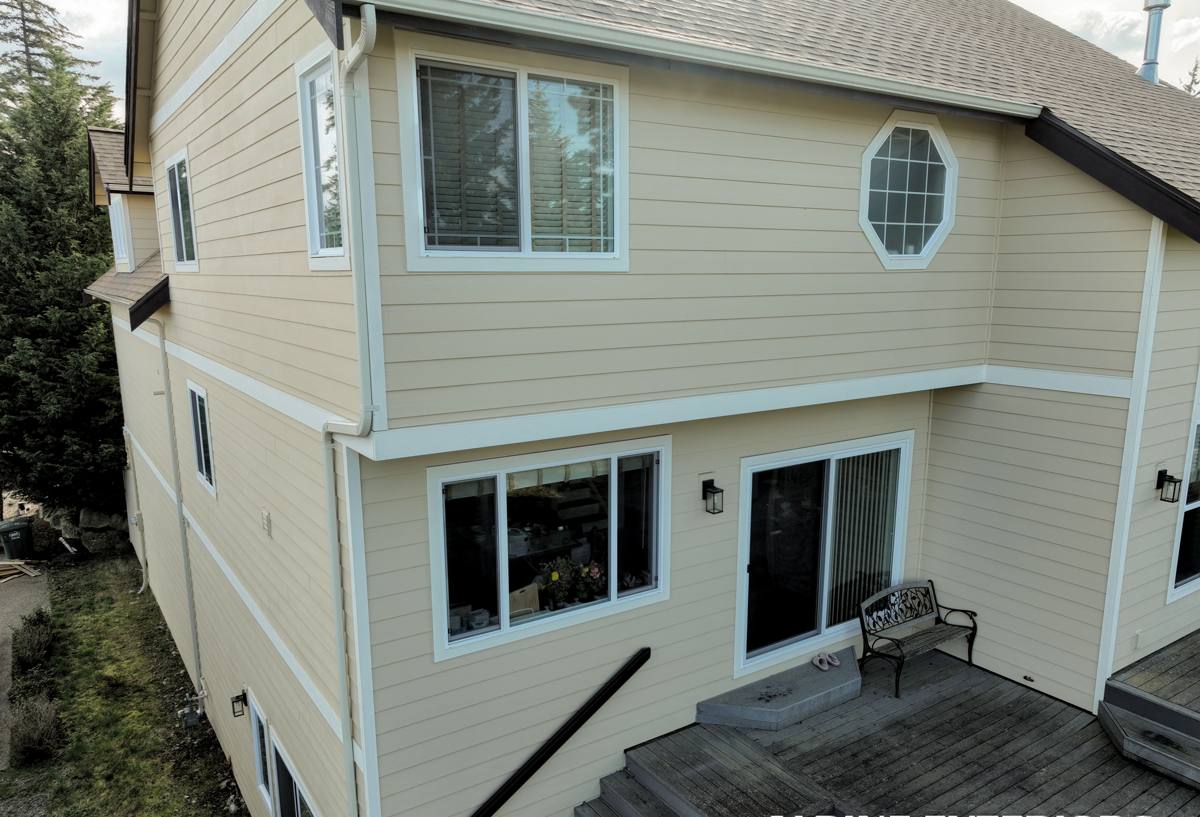
Signs a Deck Needs Repair, Not Just a Fresh Coat of Sealant
Homeowners often call us thinking they need a new stain job, and sometimes that's true. But a few warning signs mean the problem is deeper than the surface:
- Boards that feel soft, spongy, or flex underfoot, especially near the house or stair landing
- Rust streaks or a visible gap where the deck meets the house band board (a sign the ledger or flashing has failed)
- Railings or posts that wobble when pushed, rather than staying rigid
- Fastener heads that are rusted, popped up, or missing entirely
- Persistent green or black staining that doesn't lift with normal cleaning
- Stair stringers that feel loose or bounce when you walk down them
- Gaps between boards that have widened noticeably since the deck was built
- Small piles of fine sawdust near posts or framing, which can point to carpenter ants exploiting soft wood
- Water that sits and pools on the surface instead of draining off
Any one of these on its own might be minor. Two or three together usually mean the structure needs a real look before anyone plans a party on it.
What a Correct Deck Repair Actually Involves
Ledger Board and Flashing
The ledger board — where the deck bolts to the house — is the single most common failure point we find on wet-climate decks. If the flashing behind it was skipped, installed backwards, or has simply worn out, water gets channeled directly into the rim joist and wall framing instead of away from it. A correct repair means pulling the decking back far enough to inspect the ledger and flashing directly, not just caulking the seam and hoping. If the flashing has failed, it gets replaced properly, lapped so water sheds outward, before anything gets reattached.
Framing, Posts, and Footings
Rot in joists, beams, and posts is often hidden until you probe the wood with a screwdriver or awl. The spots that fail first are wherever wood meets concrete or sits close to soil, since that's where moisture wicks up and stays trapped longest. We check post bases, joist hangers, and beam connections for both wood rot and hardware corrosion — a joist hanger that's rusted through can look fine from a distance but has already lost most of its holding strength.
Decking Boards, Stairs, and Railings
Surface boards cup, check, or delaminate for different reasons depending on material — solid wood dries and swells with the seasons, while some composite boards can trap moisture at poorly ventilated end cuts. Stair stringers take constant foot traffic and weather exposure at the same time, so they often need attention before the rest of the deck does. Railings are a safety item, not a cosmetic one — a post that isn't solidly attached to the framing is a liability regardless of how good the railing looks.
Repair or Replace? The Cost Factors That Matter
Not every deck problem calls for a full rebuild, and not every deck is worth patching indefinitely. These are the factors that actually drive that decision:
| Factor | Favors Repair | Favors Replacement |
|---|---|---|
| Extent of rot | Isolated to a few boards or one framing member | Widespread through multiple joists, beams, or posts |
| Ledger and flashing condition | Intact or only needs re-flashing | Failed flashing has already damaged the house rim joist |
| Age and code compliance | Structure is sound, just weathered | Old railing height, spacing, or footing depth doesn't meet current code |
| Fastener and hardware condition | Hardware still solid, just surface rust | Widespread corrosion in hangers, bolts, or connectors |
| Budget and timeline | Targeted fix now, plan ahead for the rest | One project instead of repeated repairs over a few years |
Most decks we look at fall somewhere in the middle — sound framing with a few problem areas. In that case, targeted repair is the honest recommendation, and we'll tell you plainly if we think you're better off putting the money toward a rebuild instead.
Moss, Mildew, and Whatcom County's Long Wet Season
Moss on a deck isn't just an eyesore — it's a moisture sponge sitting directly on top of the wood, and it's also a genuine slip hazard on stairs and sloped areas. Shaded, north-facing decks or ones under tree cover hold moss longest, sometimes staying damp well after the rest of the yard has dried out. Part of any repair we do includes clearing moss and organic buildup from the surface and from between boards, because sealing over it just traps the moisture underneath. We'll also flag drainage or airflow problems under the deck itself — poor ventilation below the joists is one of the quieter reasons decks in this area rot from the inside out.
Fasteners and Hardware: Why the Small Stuff Matters Most in Salt Air
Fasteners are cheap compared to the framing they hold together, but they're often the first thing to fail in a coastal, wet climate. Mixing incompatible metals — aluminum flashing against the wrong screw, for example — sets up galvanic corrosion that eats hardware from the inside long before it looks bad on the surface. Our standard on repairs is to use fasteners and structural hardware rated for exterior, corrosive-exposure use, matched correctly to whatever metal or wood they're going into. It costs a little more than the cheapest hardware bin option, but replacing a rusted-through joist hanger twice is more expensive than doing it right once.
Our Process for a Cordata Deck Repair
- Inspection: we probe suspect wood, check the ledger and flashing directly, and look underneath at posts, footings, and joist hangers rather than just walking the surface.
- Written scope: you get a clear breakdown of what's structural and needs fixing versus what's cosmetic and optional, before any work starts.
- Repair work: rotted members get replaced, flashing gets corrected where it's failed, and hardware gets upgraded to fasteners suited for this climate.
- Moss and buildup removal: surfaces get cleared of organic growth so repairs aren't sealing moisture in.
- Walk-through: we show you what was found, what was done, and what to keep an eye on going forward.
Why It Matters That We Already Work in This Area
A crew that regularly works decks in Cordata and around Sudden Valley has already seen how homes of a given age and construction style in this part of Whatcom County tend to fail — which ledger details were common on a given building era, which framing shortcuts show up again and again, and how fast moss and moisture damage actually progress here versus a drier region a contractor might have trained in. That familiarity means less time spent guessing during inspection and more time spent on the actual repair. It also means we're realistic about scheduling around the wet months, since some repair work is best timed for a drier stretch rather than squeezed into the middle of the rainy season.
Keeping a Repaired Deck Sound After We Leave
A good repair buys you years, but a little upkeep buys you more. A short annual routine goes a long way in this climate:
- Clear moss and debris before the wet season sets in each fall
- Check fastener heads and railing connections once a year for early rust or looseness
- Reseal or restain on the interval appropriate to your decking material and sun/shade exposure
- Trim back overhanging vegetation to let air and light reach the deck surface
- Look underneath periodically for standing water or blocked drainage paths
If you're noticing soft spots, rust stains near the house, or a deck that just doesn't feel as solid as it used to, we're happy to take a look. The estimate is free, there's no pressure to do more work than the deck actually needs, and you'll get a straight answer about whether you're looking at a repair or something bigger.