 Sudden Valley
 Why Composite Decking Makes Sense for Cordata's Climate
Cordata sits inland from Bellingham Bay, but it still gets the full Whatcom County weather package: months of low gray drizzle, wind-driven rain that comes in sideways off Pacific storm systems, and a moss season that can run from October clear through May under the mature tree canopy common in the area. A wood deck out here needs annual staining, regular sanding, and constant vigilance against rot just to look decent. Composite decking, installed the right way for this climate, is built to take that punishment without asking for that kind of upkeep.
That last part — installed the right way — matters more here than in drier climates. Composite boards themselves are engineered to resist moisture, but the framing underneath, the fasteners holding it together, and the flashing where the deck meets your house are still vulnerable to everything this region throws at a deck. A composite deck built without those details in mind will still fail, just more slowly and less visibly than a wood one would.
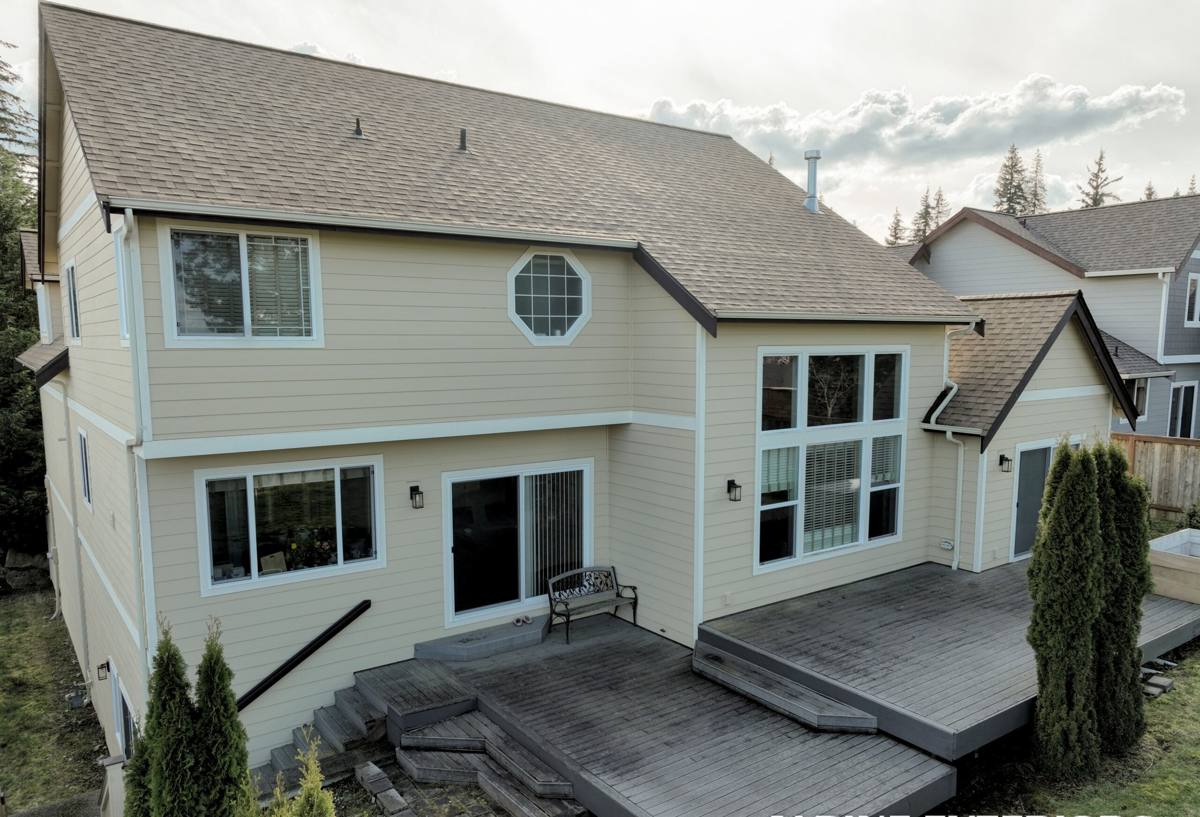
What This Climate Actually Does to a Deck
Driving Rain and Hidden Rot
Rain here rarely falls straight down. Wind pushes it sideways, and sideways rain finds its way into gaps that vertical rain never would, especially at the ledger board, where a deck attaches to the house. If that connection isn't flashed correctly, water works its way behind the decking and into the rim joist or band board. That damage happens out of sight, behind the boards, and it's one of the most common structural failures we find on older decks in this area. It has nothing to do with whether the surface is wood or composite; it's a framing and flashing problem that composite decking doesn't solve on its own.
Salt Air and Fastener Corrosion
Bellingham Bay isn't far, and the airborne salt that drifts inland accelerates corrosion on anything metal. Standard exterior-rated screws, joist hangers, and hidden-fastener clips will rust and weaken faster here than they would fifty miles inland. Once a fastener corrodes, it loses grip strength long before it looks obviously bad, which means a board can work loose without much visible warning. This is why hardware selection matters as much as board selection on a Cordata deck.
Moss, Algae, and the Long Wet Season
Cordata's yards tend to have real tree cover, and shade plus months of standing dampness is exactly what moss and algae need to take hold. Composite decking is more resistant to organic growth than wood, but it isn't immune — a shaded, poorly ventilated deck can still develop a slick green film on the surface, particularly on stair treads where it becomes a genuine slip hazard rather than just a cosmetic issue. How a deck is built — airflow underneath, sun exposure, board texture — has a real effect on how much moss becomes a problem.
What a Correctly Built Composite Deck Involves
Framing and Substructure
Composite boards need consistent joist spacing to perform the way the manufacturer's warranty assumes, typically tighter spacing for diagonal or picture-frame board patterns than for straight runs. We use pressure-treated framing lumber and run protective joist tape over the top of every joist. That tape seals the wood around each fastener penetration, which is one of the simplest and most effective ways to keep framing lumber from rotting from the top down in a climate this wet.
Ledger Attachment and Flashing
Where a deck ties into the house, we install proper metal flashing and a moisture barrier behind it, not just caulk and hope. Where the layout allows it, we'll often recommend a freestanding deck design with its own posts and footings instead of a ledger board bolted to the house — it costs a little more in framing but removes one of the most common points of water intrusion entirely.
Fasteners and Hardware
Given the salt air this area sees, we use stainless steel or coated corrosion-resistant fasteners and hardware throughout, not standard exterior-grade screws. For the decking itself, we install the hidden-fastener clip system matched to whatever board line you choose, since using an off-brand clip system is one of the fastest ways to void a manufacturer's warranty.
Drainage and Airflow Underneath
The ground below the deck gets graded and sloped to shed water away from the house rather than let it pool under the structure. We also leave proper gapping between boards and avoid sealing the skirting solid — vented skirting lets air move underneath, which keeps the framing drier and cuts down on the shaded, stagnant conditions that feed moss growth.
Choosing the Right Composite Board
Not all composite decking is built the same, and the differences matter more in a wet, shaded climate than they do in a dry one. Here's how the main options compare for a home in this area:
| Material | Moisture Behavior | Moss/Algae Resistance | Ongoing Maintenance |
|---|---|---|---|
| Pressure-treated wood | Absorbs water, prone to swelling, splitting, and rot at fastener points | Low — porous surface holds organic growth | Annual sanding, staining, and sealing |
| Uncapped composite | Better than wood but the exposed surface can still absorb some moisture over time | Moderate — can stain and support surface growth in shaded areas | Occasional cleaning, no staining needed |
| Capped composite | Fully sealed shell resists moisture absorption and swelling | Best available — engineered surface sheds water and resists staining | Periodic rinsing and light cleaning |
We generally recommend capped composite boards for Cordata projects specifically because of the moss season — an engineered, sealed surface simply gives biofilm less to grip onto than an uncapped board does. It costs more per board up front, but for a deck that's going to sit under tree cover for eight months of the year, that upfront difference tends to pay for itself in reduced upkeep.
Our Process for a Cordata Composite Deck
- Site assessment — we look at the existing structure if there is one, check for rot at the ledger and rim joist, and note sun exposure and tree cover so we can talk through board and layout options that account for it.
- Design and board selection — we walk through board tiers, colors, and railing options against your budget and how much shade the deck will sit in.
- Permitting — we handle the paperwork with the local building department, including footing depth and guardrail requirements.
- Demolition — if we're replacing an existing deck, we tear it out and inspect the framing and ledger area underneath, which is often where hidden problems turn up.
- Framing and structural work — posts, footings, beams, and joists go in to spec, with joist tape applied before any decking touches the frame.
- Flashing and waterproofing — ledger flashing and moisture barriers go in before a single board is fastened down.
- Decking installation — boards go down with the manufacturer's hidden-fastener system and correct gapping for drainage and expansion.
- Railing, stairs, and trim — fascia boards, railings, and stair components get installed and squared up.
- Final walkthrough — we go over the finished deck with you, including basic care guidance specific to the boards you chose.
What Drives the Cost
Composite decking generally costs more per square foot than pressure-treated wood up front, but it avoids the recurring cost of annual staining and sealing over the life of the deck. Beyond the boards themselves, several project-specific factors move the price up or down:
| Cost Factor | Why It Matters | Typical Impact |
|---|---|---|
| Deck size and shape | More square footage and cut angles mean more material and labor | Moderate to High |
| Existing structure condition | Rotted framing or a compromised ledger connection needs to be rebuilt, not just resurfaced | Moderate to High |
| Ledger vs. freestanding design | A freestanding deck needs more footings and framing but avoids house-attachment risk | Moderate |
| Board tier (uncapped vs. capped) | Capped boards cost more per foot but need less long-term upkeep | Moderate |
| Railing material | Composite, aluminum, and cable railing all price differently | Low to Moderate |
| Stairs and multiple levels | Each additional level adds framing, railing, and labor | Moderate |
| Permit and inspection fees | Set by the local building department, not by us | Low |
Maintenance Checklist for Composite Decking in Cordata's Climate
Composite decking is genuinely lower-maintenance than wood, but low-maintenance isn't the same as no-maintenance in a climate this wet. A little seasonal attention goes a long way toward keeping moss and mildew from getting established:
- Rinse the deck surface a few times a year to clear pollen, tree debris, and organic buildup before it feeds moss growth
- Keep gutters and downspouts clear so roof runoff isn't sheeting directly onto the deck surface
- Sweep fallen leaves and needles promptly, especially during fall canopy drop
- Use a manufacturer-approved cleaner for any mildew film rather than a pressure washer on high setting, which can damage the cap layer
- Keep skirting vents clear of debris so air can keep circulating underneath the deck
- Check ledger flashing and any visible fasteners once a year for early signs of corrosion or gaps
- Use furniture pads or feet that allow some airflow rather than letting planters or furniture sit flush against the boards for months at a time
Why Hire a Crew That Already Works in Cordata
A lot of what makes a deck hold up here isn't in the board specs — it's in the details a crew only picks up from building in this specific area over and over. We know which yards tend to have heavier shade and slower drying times, which affects how aggressively we vent and slope a given deck. We're familiar with the local permitting process, so that step doesn't stall your project. And because Sudden Valley Siding is already working throughout Whatcom County on a regular basis, if something needs a warranty callback down the road, we're not driving in from out of the area to take care of it.
None of that replaces sound building practices — good flashing and correct framing matter everywhere — but local familiarity is what keeps small climate-specific details from getting overlooked.
If you're weighing composite decking for a Cordata property, we're happy to walk your yard, look at what you're working with, and give you a straight answer on what it would take. Reach out for a free, no-pressure estimate using the form below.