 Sudden Valley
 Siding Replacement for the Columbia Area of Sudden Valley
Homes in the Columbia area of Sudden Valley sit in one of the more demanding exterior environments in Whatcom County. Between moisture rolling off Lake Whatcom, heavy tree cover that keeps siding shaded and damp, and a marine-influenced climate that brings salt air, driving rain, and a long moss season, the siding on these homes works harder than siding almost anywhere else in the region. This page covers what siding replacement actually involves here, what correct installation looks like, and why a crew that already works this specific area gets better, longer-lasting results than a contractor coming in cold.
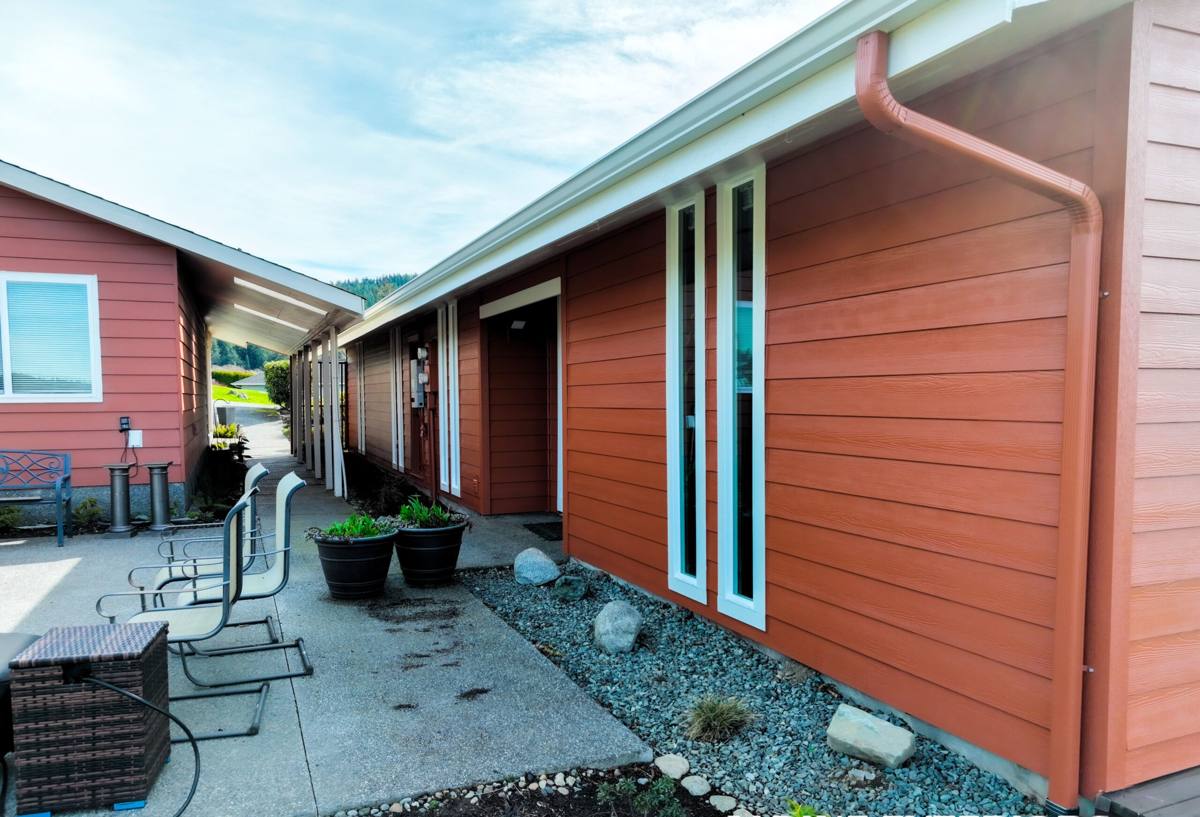
Why Columbia Homes Wear Out Their Siding Faster
Siding failure in this part of Whatcom County rarely happens because a product is "bad." It happens because moisture finds a way in and stays there. A few things specific to this area accelerate that process:
Salt air and driving rain
The marine air common to this part of Washington carries salt that settles on exterior surfaces and slowly breaks down paint films, fasteners, and unprotected wood fiber. Combine that with wind-driven rain that hits siding at an angle instead of just running down it, and you get water intrusion at laps, seams, and fastener penetrations that a drier climate would never expose.
Shade and moss
Sudden Valley's tree cover is part of what makes it a desirable place to live, but it also means many homes get limited direct sun on at least one or two elevations. Less sun means siding stays damp longer after every rain, and damp, shaded surfaces are exactly where moss and algae take hold. A long moss season isn't just cosmetic — moss holds moisture against the siding surface for weeks at a time, and that sustained dampness is what eventually breaks down caulking, paint, and in some cases the substrate underneath.
Temperature swings and material movement
Wood-based and composite sidings expand and contract with humidity and temperature changes. Over years of freeze-thaw cycles and wet-dry cycles, that movement opens gaps at joints and fastener holes that weren't there when the siding was new — which is exactly where water gets its first foothold.
What Correct Siding Replacement Actually Involves
Siding replacement isn't just removing old boards and nailing up new ones. Done correctly, it's a system, and skipping any layer of that system is how a new-looking siding job fails again in five to ten years instead of lasting decades. A proper job includes:
- Full tear-off of the old siding and trim, not installation over existing material
- Inspection of the sheathing underneath for rot, soft spots, or prior water damage, with repair or replacement before anything new goes up
- A correctly lapped weather-resistant barrier (WRB) installed shingle-style so water sheds outward, not inward
- Proper flashing at every window, door, deck ledger, and roof-to-wall transition — the places where most real-world leaks actually originate
- Correct fastener type, spacing, and placement for the specific siding product being installed
- Factory-finished siding installed with the manufacturer's specified gaps, clearances, and caulking points, not field-painted after the fact
Any one of these steps done wrong can undermine an otherwise good siding product. This is where a lot of siding jobs — regardless of brand — go wrong, and it's a bigger factor in long-term performance than the material choice itself.
Why We Install Only James Hardie Fiber Cement
We standardized on James Hardie fiber cement siding for every home we work on, including in the Columbia area, and we don't install vinyl, LP SmartSide, or unfinished wood siding. That's a deliberate decision based on how those products hold up in exactly the conditions described above — sustained moisture, shade, moss, and salt-influenced air.
Fiber cement is non-combustible and dimensionally stable, meaning it doesn't expand and contract with moisture the way wood-based products do, which matters a great deal in a climate with a long wet season. James Hardie's HardieZone system also matters here: their HZ5 product formulation is engineered for regions with cold, wet winters like ours, with a moisture-resistant composition suited to freeze-thaw cycling. The ColorPlus factory finish is baked on and warrantied against fading and flaking, which removes the field-painting step that's often where quality control breaks down on a job site. Combined with a strong transferable manufacturer warranty, it's the product we're comfortable putting our name behind on a home that's going to face decades of Whatcom County weather.
Our Process, Start to Finish
Every siding replacement we do follows the same sequence, regardless of the size of the home:
- On-site assessment — we walk the exterior, check for moisture damage, moss buildup, and problem areas specific to the home's exposure and tree cover
- Written estimate — scope, product selection, and pricing laid out before any work begins, no surprise add-ons hidden in vague language
- Tear-off and substrate inspection — old siding and trim removed, sheathing checked and repaired as needed
- Weather barrier and flashing — WRB and flashing installed at every penetration and transition point before new siding goes up
- Hardie installation — siding, trim, and accessories installed to manufacturer spec, including fastener pattern and clearances
- Final walkthrough — we go over the finished job with the homeowner before calling it complete
Because we work in Sudden Valley regularly, we already understand the access considerations, common lot layouts, and typical exposure patterns in this area, which keeps the estimate accurate and avoids mid-project surprises.
Cost Factors for Siding Replacement
Every home is different, so we don't quote firm numbers until we've walked the property, but these are the main factors that move the price up or down on a typical siding replacement in this area:
| Factor | Why It Affects Cost |
|---|---|
| Extent of substrate damage | Rot or soft sheathing found during tear-off requires repair before new siding can go on |
| Home size and wall complexity | More corners, gables, and cutouts around windows and doors mean more labor and trim work |
| Siding profile chosen | Lap width, shingle-style panels, and specialty trim carry different material and labor costs |
| Existing siding removal difficulty | Multiple layers of old siding or extensive moss/staining add to tear-off time |
| Site access | Steep lots, limited driveway access, and tree-crowded elevations common in this area can affect staging and scaffolding needs |
| Trim and accessory scope | Fascia, soffit, and window trim replaced at the same time reduces long-term callback risk but adds to the initial scope |
Signs Your Siding Needs Replacement, Not Just Repair
Not every siding problem means a full replacement — sometimes a section repair or recaulking is enough. But in a climate like this one, certain signs mean the siding system has been compromised in ways that spot repairs won't fix:
- Soft or spongy spots when you press on the siding
- Visible rot, delamination, or swelling at the bottom edges near grade
- Paint or finish that's peeling or bubbling in the same spots repeatedly, even after repainting
- Persistent moss or algae staining that returns quickly after cleaning
- Warping, bowing, or gaps opening up between boards
- Interior signs like musty smells, staining on interior walls, or peeling interior paint near exterior walls
- Siding that's original to a home built more than 25-30 years ago, especially on shaded or north-facing elevations
If you're seeing more than one of these, it's worth getting an honest assessment before spending money on repairs that won't hold.
Why a Crew That Already Works This Area Matters
Siding contractors who work all over Whatcom County and beyond aren't necessarily worse, but there's real value in a crew that's already done multiple jobs in Sudden Valley and the surrounding Columbia area specifically. We know what the tree cover and lake-adjacent moisture typically do to a home's north and west elevations before we even start the walkthrough. We know what moss buildup looks like when it's cosmetic versus when it's already done damage underneath. And because we're not learning the area's climate patterns on your job, the estimate we give up front tends to hold up through the project instead of growing with change orders once tear-off reveals what's actually going on behind the old siding.
What to Expect During the Project
Most single-family siding replacements take anywhere from several days to a couple of weeks depending on home size, trim complexity, and how much substrate repair is needed once tear-off starts. Weather is a real factor in this climate — we plan around the wetter stretches of the year and won't install siding over wet sheathing, since sealing moisture in is worse than leaving old siding up a little longer. You'll have exposed sheathing for at least part of the job; we take reasonable steps to protect the home during that window, and we'll walk you through the schedule before work starts so there aren't surprises about how the property will look mid-project.
If your Columbia-area home has moss buildup, soft spots, or siding that's simply worn out from years of Whatcom County weather, we're happy to take a look and give you a straight, no-pressure estimate — no obligation, just an honest read on what your home actually needs. Use the form below to get started.