 Sudden Valley
 Siding Repair in Bellingham: What Our Crew Actually Handles
Siding repair covers a wide range of jobs, and not every damaged wall needs a full re-side. Our crew is based nearby in Sudden Valley and works Bellingham neighborhoods on a regular basis, so we see the same recurring issues over and over: a section of board that's gone soft near a downspout, a corner piece that's cracked from an impact, caulking that's failed at window trim, fasteners that have backed out or rusted, and siding panels that have separated slightly from the wall. Repair work means fixing the specific problem correctly — matching materials where we can, correcting the moisture source that caused the damage, and reinstalling to the same standard as new construction — not just patching over a symptom and hoping it holds.
We also get called out for smaller jobs that some contractors won't bother with: a single cracked board, a piece of trim that pulled away in a windstorm, or a spot where a previous repair was done poorly and is already failing again. A siding repair specialist should be willing to look at all of it, tell you honestly what's wrong, and give you a straight recommendation — even if that recommendation is "this one's minor, keep an eye on it" rather than a full invoice.
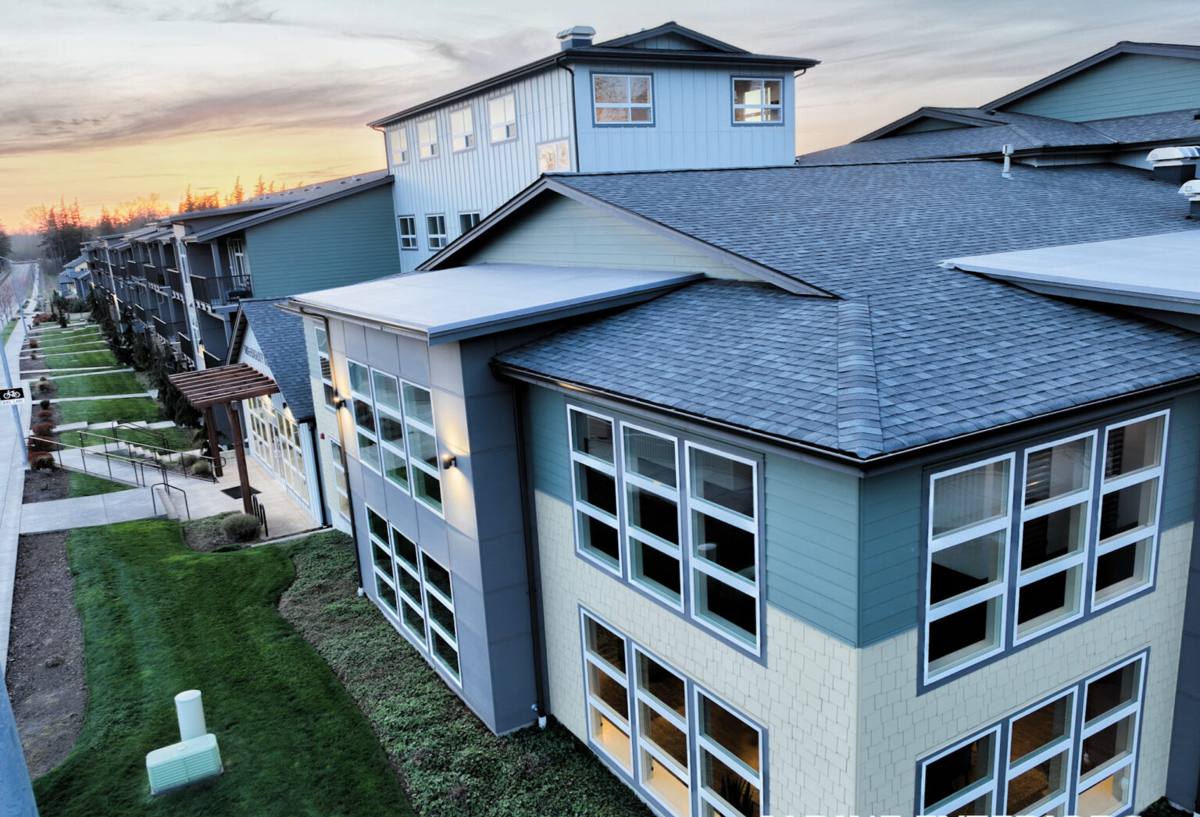
Why Bellingham's Climate Wears Down Siding Faster Than People Expect
Whatcom County sits in a spot where several weather factors stack on top of each other, and Bellingham homes take the brunt of it. None of this is unusual for the area — it's just what siding here has to survive, year after year.
Salt Air Off Bellingham Bay
Homes closer to the water deal with a steady low-level exposure to salt-laden air. Over time, that air accelerates corrosion on fasteners, hardware, and any exposed metal flashing. It also breaks down caulking and paint finishes faster than they'd wear in a drier inland climate, which is one reason we pay close attention to fastener quality and sealant condition during every repair inspection.
Driving Rain and Wind-Driven Moisture
Bellingham doesn't just get rain — it gets rain pushed sideways by wind off the water, which finds its way into gaps that would stay dry in a calmer climate. Wind-driven rain is particularly hard on siding because it forces moisture into laps, seams, and trim joints that were never designed to handle standing water. This is usually the real culprit behind soft or delaminating siding, more than simple rainfall totals.
A Long Moss and Algae Season
Between the mild temperatures and consistent moisture, moss and algae have a long growing season here — often close to year-round on shaded, north-facing walls. Left unchecked, that growth holds moisture directly against the siding surface, which speeds up rot in wood-based products and can stain and degrade the surface of almost any siding material over time.
Common Siding Damage We Find on Bellingham Homes
- Soft or spongy boards near downspouts, gutters, and roof-to-wall transitions where water concentrates
- Cracked or split boards from impact — branches, hail, or accidental contact during yard work
- Failed caulking around windows, doors, and trim, letting water track behind the siding
- Moss and algae buildup on shaded north- and west-facing walls, holding moisture against the surface
- Corroded or backed-out fasteners, especially on homes closer to the water
- Warped or bowed panels where moisture has been trapped behind the siding for an extended period
- Peeling or chalking paint finishes on older, field-painted siding that's due for attention
Some of these are cosmetic and can wait. Others — particularly soft boards and long-standing moisture intrusion — are signs of a problem that will keep spreading if it isn't addressed, because the underlying cause (usually water getting somewhere it shouldn't) doesn't fix itself.
What a Correct Siding Repair Actually Involves
A repair that's done right starts before anyone touches a board. We inspect the damaged area and the surrounding siding, not just the obvious problem spot, because moisture damage rarely stays contained to where it's visible from the ground. That often means checking behind trim, testing for soft spots with hand pressure, and looking at how water is actually moving across that section of the wall.
Diagnosing the Cause, Not Just the Symptom
If we replace a rotted board without figuring out why it rotted — a missing kick-out flashing, a caulk joint that failed, a downspout dumping water against the wall — the same spot will fail again. Correct repair means fixing the water management issue at the same time as the visible damage.
Matching Materials
If the existing siding is still in good shape overall and only needs a localized repair, we work to match the profile, texture, and finish as closely as possible. This is more straightforward with fiber cement products that have consistent factory specs than with older wood or vinyl siding where the exact original product may no longer be available — in those cases we'll tell you upfront what your options are.
Flashing, Fastening, and Sealant Details
The parts you don't see after the job is done matter as much as the parts you do. Correct flashing at joints and penetrations, proper fastener type and placement, and the right sealant applied in the right spots are what keep a repair from becoming a repeat call in a year or two.
Repair or Replace? How We Help Bellingham Homeowners Decide
Not every damaged section needs a full re-side, but at a certain point, repeated repairs stop making financial sense. We walk through the same factors on every inspection:
| Factor | Leans Toward Repair | Leans Toward Replacement |
|---|---|---|
| Extent of damage | Isolated to one or two sections | Spread across multiple walls or elevations |
| Age of existing siding | Still within its expected service life | At or past the age where failures multiply |
| Moisture intrusion history | Single identifiable cause, now corrected | Recurring issues in different spots over time |
| Material availability | Matching product still obtainable | Discontinued profile or color, poor match |
| Cost trajectory | One-time fix resolves the issue | Pattern of repeat repair costs over several years |
We'll give you our honest read on which side of that table your home falls on. If repair is the right call, that's what we'll recommend and do — we're not trying to upsell every repair job into a full replacement.
Our Repair Process, Start to Finish
- Inspection and diagnosis — we look at the damaged area and check for related issues nearby, including behind trim and at flashing points
- Written scope and estimate — you get a clear explanation of what's being repaired, why, and what it costs before any work starts
- Material sourcing — we source matching material where possible, or discuss honest alternatives if an exact match isn't available
- Repair and moisture correction — we fix the underlying water management issue alongside the visible damage, not instead of it
- Final walkthrough — we check the finished work with you and clean up the site before we leave
Why a Crew That Already Works Bellingham Matters
A contractor who works this area regularly already knows which elevations tend to hold moss, which neighborhoods see the worst wind-driven rain, and how salt exposure changes closer to the water versus further inland. That local pattern recognition speeds up diagnosis and helps us catch problems that a crew unfamiliar with Whatcom County conditions might miss on a first look. It also means faster scheduling for follow-up visits and warranty checks, since we're not driving in from out of the area for every appointment.
It also matters for accountability. A local crew has a reputation in the community to maintain, which is a good reason to ask any contractor how long they've worked in the area and whether they can point to ongoing local work — not as a formality, but because it tells you whether they'll still be around and reachable if something needs a follow-up.
Maintenance Checklist: Getting More Years Out of Bellingham Siding
- Rinse siding once or twice a year to clear salt residue and general grime, especially on homes nearer the water
- Trim back vegetation and tree branches so walls get airflow and sunlight, which slows moss growth
- Inspect caulking around windows, doors, and trim annually — failed caulk is one of the most common entry points for water
- Check shaded, north-facing walls for moss or algae buildup before it has a chance to hold moisture against the surface
- Walk the exterior after the heaviest stretch of the rainy season and press-test any areas that look discolored or swollen
- Keep gutters and downspouts clear so water isn't concentrating and running down the wall behind the siding
- Address small damage — a cracked board, a lifted piece of trim — before it turns into a moisture problem
When Repair Isn't Enough: A Straight Answer About Replacement
Sometimes the honest answer during an inspection is that repair would just be delaying the inevitable — the siding is old enough, or damaged in enough places, that a patch job won't hold up through another wet season. When that's the case, we tell you plainly and explain why, rather than stringing together repairs that won't last.
When a home does need full replacement, we install James Hardie fiber cement siding exclusively. We made that decision because it's engineered for exactly the conditions Bellingham and the rest of Whatcom County deal with — moisture, salt air, and long stretches of wet weather — and because it holds its factory-applied ColorPlus finish and dimensional stability better than the alternatives we used to install. It's not the only siding product on the market, but it's the one we're willing to put our name behind after installing and repairing a lot of siding in this climate.
If you're not sure whether your siding needs a repair or something more, we're glad to take a look and give you a straightforward answer either way. Reach out for a free, no-pressure estimate — there's a form below to get started.