 Sudden Valley
 Why Roofs Age Differently in Bellingham and Sudden Valley
A roof in Whatcom County doesn't fail the way a roof in a dry climate fails. Out here, the problem is rarely a single dramatic event — it's the slow, steady work of moisture, salt-laden air off the Bellingham waterfront, and shade from the tree cover that surrounds so many Sudden Valley properties. Add a moss season that can stretch from fall through spring, and you've got a roof that's under near-constant low-grade pressure most of the year.
That combination changes what "roof repair" actually needs to accomplish here. A patch that would hold up fine in a drier region can fail fast in this climate if it doesn't account for how water moves across a roof deck during a sustained Pacific Northwest rain event, or how moss roots work their way under shingle tabs over a wet winter. Repairing a roof correctly in this area means understanding those local conditions, not just fixing the spot that's visibly leaking.
Common Roof Problems We See in This Area
Moss and Algae Growth
Moss doesn't just sit on top of a roof — it holds moisture against the shingle surface and, over time, lifts shingle edges as it grows. On roofs with significant shade or north-facing slopes, moss can establish itself within a couple of years of a roof wash if it isn't managed. Left unchecked, it accelerates granule loss and creates the conditions for rot in the decking underneath.
Flashing and Valley Failures
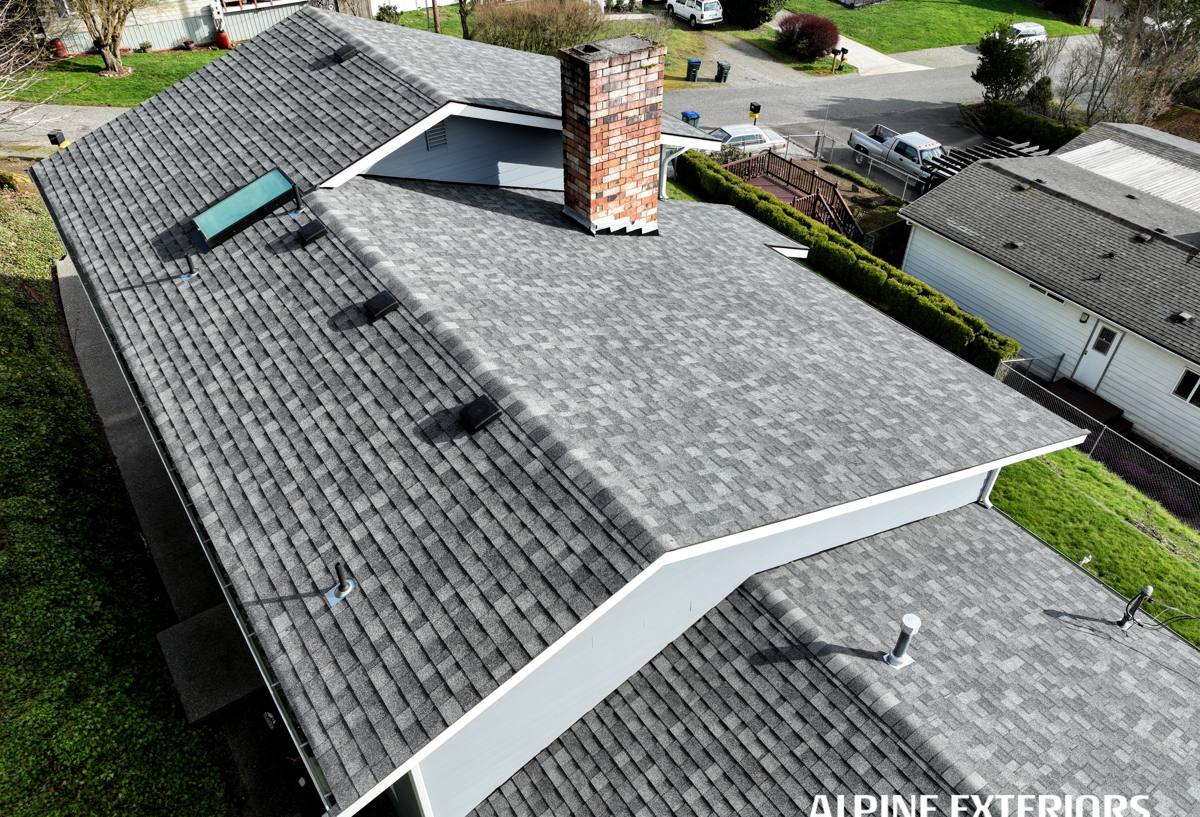
Driving rain doesn't fall straight down — wind pushes it sideways and up under laps, especially around chimneys, skylights, dormers, and roof valleys. Flashing that was installed correctly but has aged, or flashing that was undersized or poorly lapped to begin with, is one of the most common sources of leaks we're called out for in this area.
Gutter and Drainage Backups
Heavy leaf and needle drop combined with steady rainfall means gutters here clog faster than in drier climates. When gutters back up, water can back up under the roof edge itself, leading to fascia rot and edge-of-roof leaks that get mistaken for a roofing problem when the real cause is drainage.
Wind-Driven Nail Pops and Lifted Shingles
Salt-tinged coastal air combined with seasonal wind events can gradually work fasteners loose, especially on older roofs. A shingle that's lifted even slightly at a corner becomes an entry point the next time it rains hard.
What a Correct Roof Repair Actually Involves
Diagnosis Before Anything Else
The most important part of any roof repair happens before a single shingle is touched. A leak that shows up on your ceiling in one spot can originate several feet away, following the roof deck or rafters before dripping down. We trace the water path from the interior stain or the attic back to its actual entry point on the roof — not just the nearest visible damage.
Matching Materials, Not Just Covering the Hole
A repair that uses mismatched shingle profiles, the wrong underlayment, or flashing that doesn't match the original metal gauge might stop a leak temporarily but creates a weak point that fails again — often faster than the original damage did. We match existing materials as closely as possible, both for performance and so the repair doesn't stand out.
Underlayment and Decking Matter More Than the Shingle
In a marine climate, what's underneath the visible shingle often matters more than the shingle itself. If we open a section of roof and find the decking has softened from long-term moisture exposure, patching over it isn't a real repair — that decking needs to be replaced before new shingles or underlayment go back down. We'll always tell you if we find this, and explain the cost impact before doing the work, not after.
Cleanup and Debris Management
Old shingle material, nails, and moss debris left in gutters or on the ground creates its own problems — clogged downspouts, damage to landscaping, and nails in driveways. A repair job isn't finished until the site is cleaned up, gutters are cleared, and the area is walked for stray fasteners.
Our Roof Repair Process
- Inspection: We walk the roof (weather permitting) and check the attic from the inside where accessible, tracing any leak to its actual source rather than assuming based on where the stain shows up.
- Written Estimate: You get a clear explanation of what's actually wrong, what it will take to fix it correctly, and an honest price range before any work starts.
- Repair: We complete the work using materials matched to your existing roof, following manufacturer installation specs so any remaining warranty coverage isn't put at risk.
- Verification: Once the repair is complete, we check the area again — and check adjacent sections that share the same drainage path — to make sure the fix addresses the whole problem, not just the symptom.
Repair or Replace? How to Tell
Not every roof problem in Bellingham or Sudden Valley calls for a full replacement, and not every leak is fixable with a simple patch. The table below covers the general factors that push a decision one way or the other — your actual roof will still need an in-person look before we can tell you which side of the line it falls on.
| Factor | Leans Toward Repair | Leans Toward Replacement |
|---|---|---|
| Roof age | Under roughly 15 years, or well-maintained older roof | Near or past the material's expected service life |
| Extent of damage | Isolated to one section, flashing point, or valley | Multiple areas failing, widespread granule loss |
| Decking condition | Solid, dry decking under the damaged area | Soft, delaminating, or water-stained decking in several spots |
| Moss/algae history | First occurrence or recently treated | Repeated moss return despite cleaning, shingle lift underway |
| Cost relative to full re-roof | Repair cost is a small fraction of replacement | Repairs are becoming frequent and adding up |
Managing Moss and Moisture Long-Term
Whatcom County's moss season isn't a one-time problem you solve and forget — it's an ongoing maintenance factor for most roofs with any shade exposure. A single roof repair addresses the immediate damage, but the underlying conditions that caused moss to take hold — tree cover, north-facing shade, poor airflow — are usually still there afterward.
Zinc or copper control strips installed near the ridge can help slow moss regrowth on future rainfall by allowing trace metal to wash down the roof surface. They're not a substitute for periodic cleaning, but on a roof that's had repeat moss problems, they're worth discussing as part of the repair.
We'll also point out, honestly, when a moss problem is really a maintenance issue rather than a repair issue — sometimes what a roof needs is a proper soft wash and gutter clearing, not new shingles.
Timing a Roof Repair in This Climate
Roofing work can be done here in most seasons, but timing affects both the quality of the repair and how long it takes. Dry stretches in late spring through early fall give adhesive sealants and underlayment the best chance to cure properly before the next rain. That doesn't mean repairs can't happen in the wetter months — leaks don't wait for good weather — but urgent winter repairs sometimes call for temporary weatherproofing followed by a permanent fix once conditions allow, and we'll always explain which approach your situation calls for.
Signs You Shouldn't Wait to Call
- A ceiling stain that's new, growing, or reappears after rain
- Visible moss buildup, especially in valleys or along the roof edge
- Granules collecting in gutters or at downspout outlets
- Shingles that look lifted, curled, or are missing after a windstorm
- Daylight visible through the roof deck from inside the attic
- Sagging in any section of the roofline
- Flashing that looks rusted, separated, or loose around chimneys or vents
If you're seeing any of these, it's worth having someone look before the next heavy rain rather than after.
Why Hire a Crew That Already Works This Area
Roof repair done right in Bellingham and Sudden Valley takes more than general roofing knowledge — it takes familiarity with how local conditions actually behave on a roof over time. A crew that regularly works this part of Whatcom County has already seen how moss establishes on shaded slopes here, how driving rain off the water finds weak points in flashing, and how salt air interacts with fasteners and metal components over the years. That local pattern recognition shortens the diagnosis phase and reduces the odds of a repair that looks fine going in but doesn't hold up through the next wet season.
It also matters for practical reasons: knowing local permitting requirements, understanding typical roof pitches and access challenges in hillside and lakeside properties, and being available for a follow-up visit without a long drive. Some planned communities and neighborhoods in this area also have architectural or material guidelines worth checking before work begins — a contractor who's done work locally is more likely to know to ask.
Get a Straight Answer About Your Roof
If you're dealing with a leak, moss buildup, or damage from a recent storm, we're glad to take a look and give you an honest assessment — repair, maintenance, or replacement, whichever your roof actually needs. Request a free, no-pressure estimate using the form below, and we'll walk you through what we find and what it would take to fix it right.