 Sudden Valley
 Siding Replacement Built for Barkley's Weather, Not Just Its Curb Appeal
Homes in Barkley face a specific combination of punishment: salt-laden air drifting in off the water, driving rain that comes sideways for months at a stretch, and a moss season that seems to start earlier and last longer every year. Siding here isn't just cosmetic. It's the one layer standing between your framing and a climate that never really lets up. When we replace siding on a Barkley home, we're not just swapping old boards for new ones — we're solving for the specific ways this part of Whatcom County beats up an exterior.
That distinction matters because a lot of siding failure we see in this neighborhood isn't due to bad luck or old age. It's due to the wrong product, or the right product installed without accounting for local conditions. This page walks through what siding replacement actually requires for a Barkley home, what a correct job looks like, and why we've standardized on one product system instead of offering the usual menu of options.
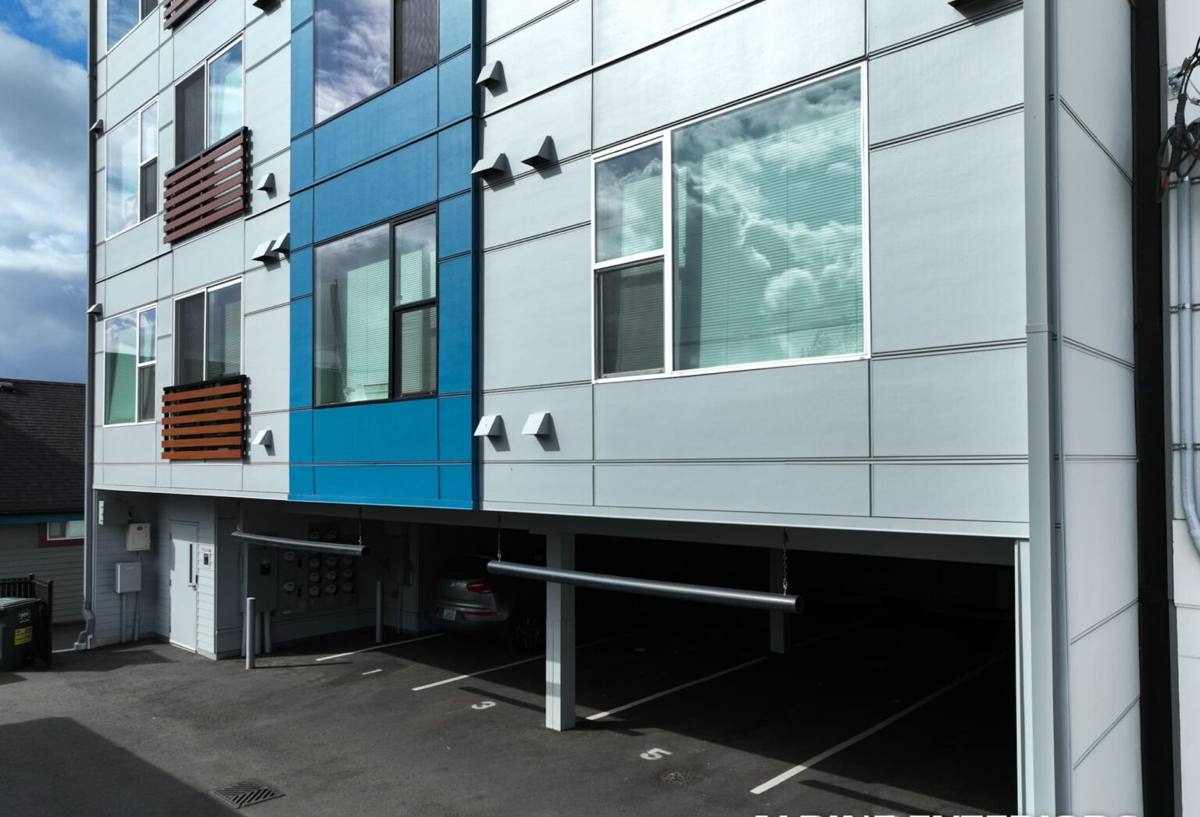
What Salt Air, Driving Rain, and Moss Season Actually Do to Siding
Salt Air
Airborne salt accelerates corrosion on fasteners, flashing, and any metal trim tied into the siding system. It also speeds up the breakdown of lower-grade paints and coatings, which is why siding that looked fine for a few years can start chalking, fading, or peeling well ahead of schedule. Homes closer to open water and higher ground catching prevailing wind tend to take the brunt of it.
Driving Rain
Whatcom County doesn't just get a lot of rain — it gets a lot of wind-driven rain, which behaves very differently than a straight-down shower. Wind-driven rain gets pushed up under laps, into butt joints, and around poorly flashed penetrations (light fixtures, hose bibs, vents). Siding that's water-resistant on paper can still let moisture in if the installation details — flashing, gaps, fastener placement — aren't right.
Moss Season
The long stretch of cool, damp months means moss and algae get a real foothold on north-facing and shaded walls, on trim, and in any spot where water doesn't shed cleanly. Moss holds moisture against the surface far longer than open air would, which is exactly the condition that rots wood-based siding and undermines caulking and coatings over time.
Signs a Barkley Home Needs Siding Replacement, Not Just a Repair
Not every problem calls for a full tear-off. But when several of these show up together, patching usually just delays the inevitable:
- Soft or spongy spots when you press on the siding, especially near the bottom courses or window trim
- Visible warping, bubbling, or separation at seams and butt joints
- Persistent moss or dark streaking that keeps coming back within a season of cleaning
- Paint that's peeling or alligatoring rather than just fading
- Rot or soft framing discovered around window and door trim
- Rising energy bills with no other obvious cause, suggesting moisture-compromised insulation behind the siding
- Siding that's original to a home built more than 20-25 years ago, especially if it's a wood composite or older masonite product
If you're only seeing one or two of these, a repair may buy you time. If you're seeing several, or if a contractor finds soft sheathing once the siding comes off in one area, full replacement is usually the more honest recommendation — patch jobs on compromised sheathing tend to fail again within a few years.
What a Correct Siding Replacement Actually Involves
The siding itself is only part of the job. A replacement done right addresses everything behind it:
Tear-Off and Inspection
Full removal of the old siding lets us actually see the sheathing and framing underneath — something you can't fairly evaluate from the outside. This is where hidden rot, prior water intrusion, or old flashing mistakes get found and fixed, not covered over.
Weather-Resistive Barrier
A correctly lapped, sealed water-resistive barrier is what actually keeps wind-driven rain out of the wall assembly. This step gets rushed on lower-quality jobs, and it's invisible once the new siding goes up — which is exactly why it matters who's doing the work.
Flashing at Every Penetration
Windows, doors, hose bibs, vents, and any other wall penetration need proper flashing integrated with the barrier, not just caulk. Caulk is a topcoat, not a waterproofing system — it fails, and when it does, flashing is what's still doing the job underneath.
Fastening and Clearances
Fiber cement siding has manufacturer-specified fastener patterns, gaps, and ground clearances for a reason — get them wrong and you invite the exact moisture and cracking problems the product is supposed to resist. This is where installer experience with the specific product matters more than most homeowners realize.
Trim, Caulking, and Finish Details
The last details — corner trim, caulk joints, touch-up paint at cut edges — are what determine whether the job looks clean in year one and still looks clean in year ten.
Why We Install Only James Hardie Fiber Cement
We don't offer vinyl, LP SmartSide, Cemplank, Allura, or primed wood siding, and that's a deliberate standard, not an oversight. Given what Barkley's climate does to an exterior — the salt exposure, the driving rain, the long damp moss season — we don't think it makes sense to install a product we'd have to caveat or maintain around. James Hardie fiber cement is non-combustible, holds up to moisture without swelling or rotting the way wood-based products can, and comes with a factory-applied ColorPlus finish that's engineered to resist fading and hold up to UV and salt air far longer than field-applied paint. Hardie also builds specific product lines (their HZ5 and HZ10 systems) engineered for different moisture and freeze exposure levels, which lets us match the product to the actual conditions a Barkley wall faces rather than using one generic board everywhere. The transferable warranty backing it is also meaningfully stronger than what you'll find on lower-cost alternatives. We'd rather install one product well than several products with asterisks.
Our Process, Start to Finish
| Step | What Happens |
|---|---|
| Estimate & Walkaround | We inspect the exterior, identify problem areas, and give you an honest read on repair vs. replacement |
| Scope & Product Selection | We spec the right James Hardie product line and finish for sun/shade exposure and moisture risk on each elevation |
| Tear-Off | Old siding comes off and sheathing/framing get inspected before anything new goes up |
| Repair Underlayment | Any rot or damaged sheathing is repaired; weather-resistive barrier and flashing are installed correctly |
| Install Siding | Hardie boards go up to manufacturer spec — fastening, clearances, and joint treatment done to code |
| Trim & Finish | Corner trim, caulking, and touch-up are completed for a clean, uniform finish |
| Final Walkthrough | We walk the job with you before calling it done, not before |
What Drives the Cost of a Barkley Siding Replacement
| Factor | Why It Matters |
|---|---|
| Home size and story count | More square footage and higher walls mean more material and labor, plus added scaffolding/access costs |
| Condition of existing sheathing | Hidden rot found at tear-off adds repair scope that can't always be quoted before the walls are open |
| Product line selected | Hardie's HZ5 vs. HZ10 lines and different plank profiles carry different material costs |
| Trim and detail complexity | Homes with more corners, dormers, and window trim take more labor per square foot than simple rectangular walls |
| Access and site conditions | Steep lots, tree cover, and tight side yards common around Sudden Valley can add setup time |
We give real numbers after a walkaround, not before — anyone quoting a full siding replacement over the phone without seeing your home is guessing.
Why It Matters That We Already Work in Barkley
A crew that's worked this neighborhood before already knows how the salt exposure, wind direction, and moss patterns tend to play out on specific lot orientations and elevations. That's not a marketing point — it changes real decisions, like which elevation gets the more moisture-resistant product line, where extra flashing attention pays off, and which trim details tend to fail first in this specific stretch of Whatcom County. It also means we're not learning the local permitting and inspection process on your project. Familiarity with a specific area is worth something on a job where the details that fail are the ones you can't see once the siding's back up.
Get a Straight Answer on Your Siding
If your Barkley home is showing any of the signs above, or you just want an honest read on whether repair or full replacement makes more sense, we're happy to take a look. The estimate is free, there's no pressure, and you'll get a straight answer about what your home actually needs — use the form below to get started.