 Sudden Valley
 Windows in Barkley Take a Different Kind of Beating
Barkley sits close enough to Bellingham Bay and Lake Whatcom that homes here deal with a mix of coastal moisture and inland shade that most window products were never really tested for. Salt-tinged air off the bay works on metal hardware and finishes. Driving rain, pushed sideways by wind off the water, finds every gap in a poorly flashed frame. And the long, wet, low-sun stretch from fall through spring keeps north- and east-facing walls damp long enough for moss and algae to take hold on sills, trim, and glazing beads. None of this is dramatic on its own, but stacked together year after year, it's exactly the kind of slow attrition that turns a fine window into a leaky, foggy, hard-to-open one a decade before it should.
Custom windows done right for a Barkley home aren't just about picking a style you like. They're about choosing the right frame material, the right glazing package, and the right installation detail for a specific wall, a specific exposure, and a specific slice of Whatcom County weather.
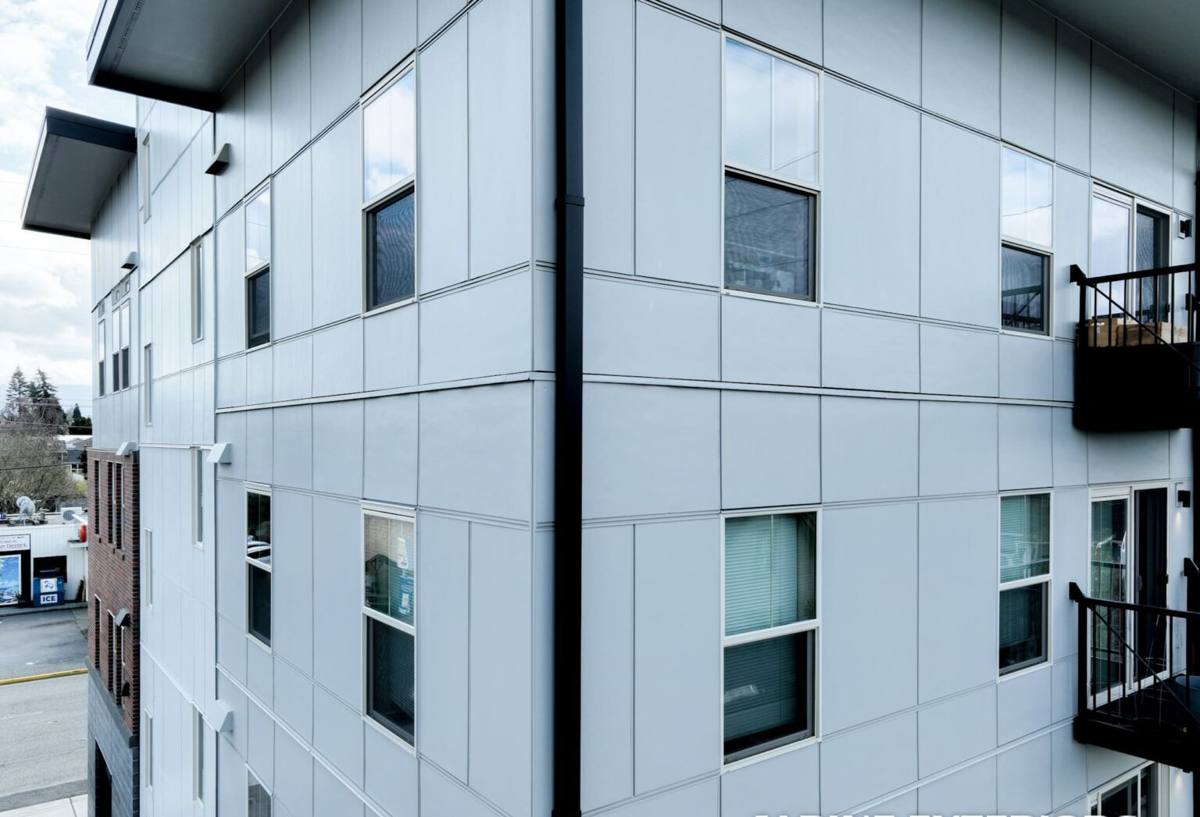
What Salt Air, Rain, and Moss Season Actually Do
Salt Air and Hardware
Homes closer to the water see faster corrosion on exposed screws, hinges, and locking hardware, especially anything not rated for coastal exposure. Cheaper mill-finish aluminum components and unprotected fasteners are usually the first things to show it — streaking, pitting, and stiff or sticking hardware within a handful of years.
Driving Rain and Wind-Driven Water
Whatcom County storms don't always come straight down. Wind-driven rain pushes water sideways into any seam that isn't properly flashed or sealed, which is why so many window failures we see aren't glass failures at all — they're water finding its way behind trim or under a sill because the original install skipped a flashing step or used the wrong sealant for the substrate.
The Long Moss Season
Shaded, north-facing walls near trees or close to the lake stay damp for months at a time. That moisture supports moss and algae growth on sills, exterior trim, and even glazing seals if drainage is poor. Beyond looking bad, sustained moisture against wood trim or an aging seal accelerates rot and seal failure — it's a slow problem that becomes an expensive one if it's ignored for a few seasons.
What a Correct Custom Window Job Actually Involves
"Custom" doesn't just mean a non-standard size or shape, though that's part of it. It means the window and its installation are matched to the specific wall assembly, exposure, and moisture path of that opening. A correct job includes:
- Accurate measurement and opening assessment — checking the existing framing, sill condition, and any signs of past water intrusion before ordering anything
- Proper flashing sequence — sill pan flashing, house wrap integration, and head flashing installed in the right order so water sheds outward at every layer, not just caulked over
- Correct fastening and sealant selection — hardware and sealants rated for the exposure, not just whatever's on the truck
- Insulation and air-sealing around the frame — gaps packed correctly so the window performs as well thermally as it does structurally
- Interior and exterior trim work finished to shed water away from the frame, not trap it against it
Skip any one of these steps and the window itself barely matters — a premium unit installed with a shortcut flashing detail will leak just as fast as a budget one, sometimes faster because the failure hides longer behind good-looking trim.
Choosing Frame Material and Glazing for This Climate
There's no single "best" window material — the right call depends on the wall's exposure, your budget, and how much upkeep you want to take on. Here's how the common options stack up for a Barkley home specifically:
| Material | How It Handles Local Weather | Maintenance | Typical Trade-Off |
|---|---|---|---|
| Vinyl | Won't corrode or rot; handles moisture well | Low — occasional cleaning | Frame flexes more in temperature swings; limited color/finish options |
| Fiberglass | Very stable in wet/dry cycling, resists warping | Low | Higher upfront cost than vinyl |
| Wood-clad | Good insulator; exterior clad protects against rain if detailed well | Moderate — clad exterior is low-maintenance, but any exposed wood needs attention | Interior wood needs occasional refinishing; more sensitive to installation quality |
| Aluminum | Strong but conducts cold and is more prone to condensation; hardware needs coastal-rated finish | Moderate — watch for corrosion near the bay | Best for large openings or modern aesthetics, less common for full-house residential replacement here |
For most Barkley homes we lean toward vinyl or fiberglass for standard openings because they shrug off the wet-dry cycling without asking for upkeep, and we reserve wood-clad for homes where the interior look matters more than minimizing maintenance. We don't push a single brand or material as the answer for every wall — the right pick depends on that wall's sun, shade, and wind exposure.
Our Process for a Barkley Window Project
- On-site assessment — we look at the existing openings, note any signs of past leaks or rot, and talk through what you want out of the new windows (light, ventilation, style, energy performance)
- Product selection — matching frame material and glazing package to each wall's exposure, not a one-size answer for the whole house
- Accurate ordering — precise measurements so units fit without excessive shimming or field modification
- Removal and opening prep — checking framing and sheathing condition once the old window is out, addressing any hidden rot or water damage before the new unit goes in
- Installation with full flashing detail — sill pan, house wrap integration, head flashing, and sealant appropriate to the substrate
- Trim and finish work — interior and exterior trim completed to shed water properly
- Final walkthrough — checking operation, seals, and finish before we call it done
Signs It's Time to Replace, Not Just Repair
- Fog or moisture between panes on a dual- or triple-glazed unit — the seal has failed and it can't be fixed, only replaced
- Windows that are hard to open, close, or lock, especially on the side of the house facing the water or prevailing wind
- Soft or discolored trim or sill wood, or moss establishing itself at the base of the frame
- Noticeable draft or cold spot near the frame in winter
- Visible daylight or a whistle around the frame during a windy storm
- Condensation on the interior glass that wasn't there a few years ago
What Affects the Cost
| Factor | Why It Matters |
|---|---|
| Frame material | Vinyl is generally the most budget-friendly; fiberglass and wood-clad run higher |
| Number and size of openings | More or larger windows means more material and labor |
| Wall condition | Hidden rot or water damage found during removal adds repair work before the new window goes in |
| Glazing package | Upgraded glass (better insulating or sound-dampening packages) adds cost but can pay off in comfort and energy use |
| Custom shapes or sizes | Non-standard openings cost more than stock sizes |
| Access and site conditions | Second-story or hard-to-reach openings take more time and equipment |
We'll always walk through actual numbers for your specific project during the estimate rather than quoting off a general range — every Barkley home's mix of openings and exposures is different enough that a blanket price doesn't tell you much.
Why It Matters That We Already Work This Neighborhood
A crew that's already worked in Barkley and around Sudden Valley knows which walls tend to take the worst of the wind-driven rain, which exposures grow moss fastest, and which older homes in the area were built with flashing details that don't hold up to today's storms. That's not something you get from a manufacturer's install manual — it's from having done the work here, seeing what fails and why, and adjusting the install detail accordingly. It also means we're not guessing at permitting, typical wall assemblies, or the kind of weather your new windows will actually be up against for the next twenty-plus years.
Good custom window work in Whatcom County isn't about the flashiest product on the shelf — it's about getting the material, the glazing, and the installation detail right for this specific climate, on this specific wall, so the windows still work the way they should long after the job is done.
If you're weighing a window replacement or thinking about custom sizes for a remodel in Barkley, we're glad to take a look and give you a straight, no-pressure estimate — just fill out the form below.