 Sudden Valley
 A Deck Built for the Barkley Area Has to Handle a Different Kind of Weather
Building a deck in the Barkley area isn't the same job as building one somewhere dry and sunny. Homes here deal with a long wet season, driving rain that comes in sideways off the water, salt-tinged air that speeds up corrosion on anything metal, and shade from mature evergreens that keeps wood surfaces damp for days after a storm passes. A deck that's designed for a drier climate — or built by a crew that doesn't normally work this part of Whatcom County — tends to show problems within a few seasons: soft spots, rust streaks around fasteners, slick moss growth, and boards that cup or crown as they take on and release moisture over and over.
None of that is inevitable. It just means the material choices, the framing details, and the drainage design all need to account for how wet this region actually gets, not just how it looks on a sunny installation day.
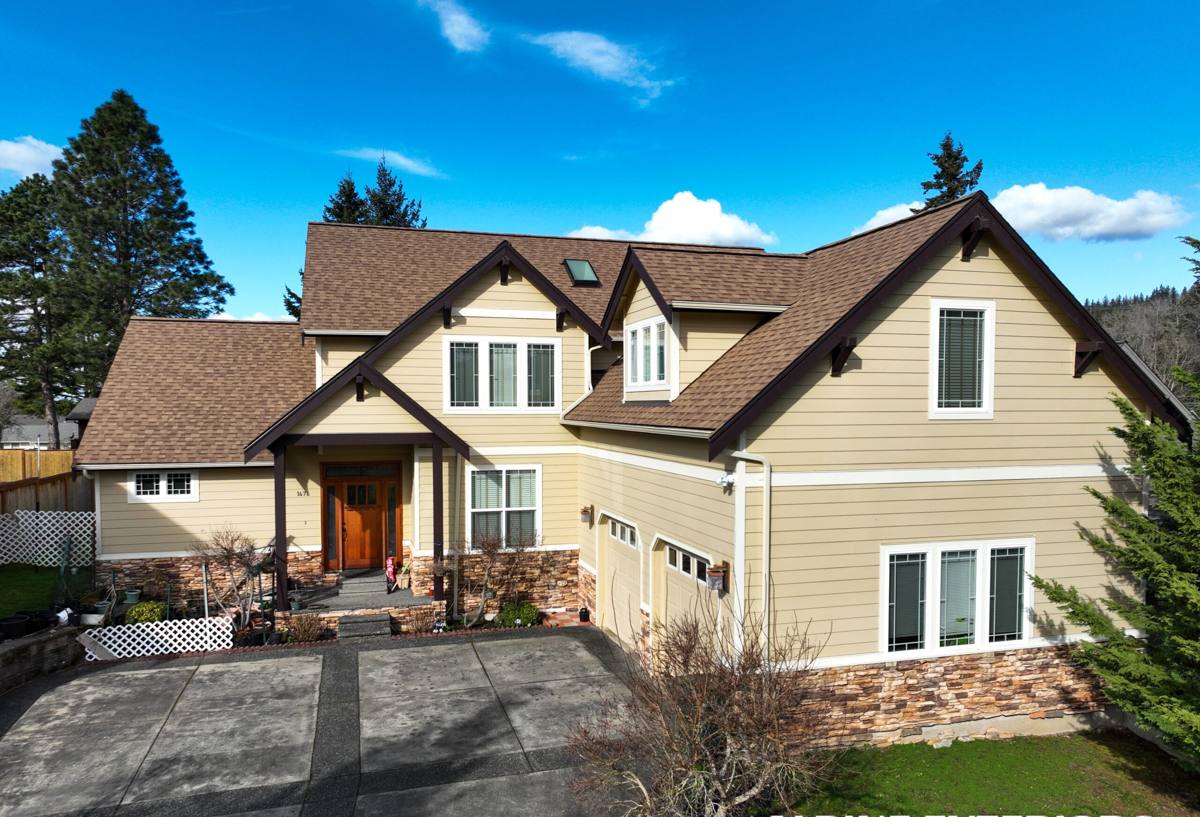
What Barkley Homes Need From a Custom Deck
Most of the decks we build or rebuild in this area share a few things in common that shape how we approach the job:
- Tree cover that limits direct sun on part or all of the deck for much of the year, which slows drying time and feeds moss and algae growth.
- Sloped lots, which affect footing depth, stair layout, and how water sheds away from the house.
- Long stretches of steady rain rather than short, heavy downpours — meaning a deck needs consistent drainage more than it needs to survive a single big event.
- Humid, moisture-laden air that keeps wood and hardware wet longer than in drier inland climates, which is what drives our fastener and coating choices.
A deck built without accounting for these conditions might look fine the day it's finished. Whether it still looks and performs well in five years comes down to the details below.
Choosing the Right Decking Material for This Climate
There's no single "best" decking material — there's a best material for your budget, your maintenance tolerance, and how much sun your deck actually gets. Here's how the common options hold up under the conditions typical around Barkley and Sudden Valley:
| Material | How It Handles Our Climate | Maintenance Reality |
|---|---|---|
| Pressure-treated fir/hem-fir | Affordable and structurally solid, but absorbs moisture readily and needs a quality finish to resist checking and mildew | Re-stain or seal every 1-2 years; more if shaded |
| Cedar | Naturally rot- and insect-resistant, handles wet cycling well, but greys and can support surface mold without upkeep | Annual cleaning, periodic oil or stain |
| Composite (capped) | Doesn't absorb water or rot, but can stay slick with algae film in shaded, damp spots without regular cleaning | Periodic wash-down; no staining or sealing |
| PVC decking | Fully impervious to moisture and rot, best option for heavily shaded or low-airflow areas | Occasional wash-down; higher upfront cost |
| Tropical hardwood (e.g., ipe) | Extremely dense and rot-resistant, but installation-sensitive and unforgiving of fastener or spacing mistakes | Periodic oiling to maintain color; low rot risk regardless |
For decks with good sun exposure, cedar or a mid-grade composite is usually the right balance of cost and looks. For heavily shaded decks under mature trees — common on wooded Barkley lots — we lean toward PVC or a well-ventilated composite, because those materials don't care how long they stay wet.
Hidden Fastener Systems
Hidden fastener clips do more than clean up the look of a deck — they eliminate the screw-head pockets where water and debris collect on top of the board, which is exactly where moss gets its start. We use hidden fastener systems on composite and PVC decking whenever the product supports it.
The Structural Details That Actually Determine How Long a Deck Lasts
The decking surface is what you see, but the framing underneath is what determines whether the deck is still solid in fifteen years. This is where a lot of corner-cutting happens on decks that aren't built for wet climates.
Footings and Frost Depth
Post footings need to be sized and set to the depth required by local code, which accounts for both frost and the load the deck will carry. On sloped or heavier clay-influenced soils common in this part of the county, we also pay attention to drainage around the footing itself — a footing sitting in standing water year-round will move differently than one in well-drained soil, even if both are poured to the correct depth.
Ledger Attachment and Flashing
The ledger board — where the deck attaches to the house — is the single most common failure point on decks in wet climates. If it isn't properly flashed to shed water away from the house's structural sheathing, moisture works its way behind the ledger and rots the rim joist from the inside, often invisibly for years. Correct flashing, done in the right order with the house's existing weather barrier, is non-negotiable on every deck we attach to a home.
Fasteners and Hardware
Given the salt air that reaches this region off the Sound, we use stainless steel or high-grade coated fasteners and structural hardware rated for corrosive exposure, not standard galvanized hardware. The cost difference is small relative to the whole project; the difference in how the connections look and perform after ten wet seasons is not.
Fighting Moss and Algae Before They Start
Moss doesn't show up because a deck was built poorly — it shows up because water and organic debris are allowed to sit somewhere long enough. A few design choices make a real difference over the life of the deck:
- Proper board spacing and consistent slope (typically a slight pitch away from the house) so water actually drains instead of pooling.
- Adequate ventilation underneath the deck so the framing and the underside of the decking can dry out between rain events.
- Decking profiles with grooved or textured surfaces in heavily shaded areas, which shed water faster than smooth-faced boards.
- Keeping planters, rugs, and furniture with solid bases off shaded deck sections, since anything that traps moisture against the surface accelerates growth.
We can't change how much sun a lot gets, but we can build the deck so it isn't fighting an uphill battle against its own site conditions.
Permits and Code Requirements for Barkley-Area Decks
Most raised decks require a building permit, and the permitting jurisdiction and requirements can vary depending on exactly where a property sits in unincorporated Whatcom County versus inside a city limit. Typical items reviewed include footing depth and size, ledger attachment method, guard and stair rail height and spacing, and beam/joist spans for the loads involved. If a property is part of a community association with its own design or setback guidelines, those need to be checked separately from the building permit process. We handle the permit application and inspection scheduling as part of the job, so it isn't something the homeowner has to chase down.
Our Process, Start to Finish
Every custom deck starts with a site visit, not a sales pitch. Here's what that process actually looks like:
- Site walk and assessment — we look at sun exposure, slope, drainage patterns, and the condition of the house wall where the deck will attach.
- Design and material selection — we go over the material comparison honestly, including what each option will actually require in year five and year ten, not just at installation.
- Written estimate — a clear scope and price range before any work begins, no vague allowances.
- Permit submission — we prepare and file the permit package and schedule inspections at the required stages.
- Framing and structural work — footings, posts, beams, joists, and ledger flashing, inspected before decking goes down.
- Decking, rails, and stairs — installed to the spacing and fastening specs the material manufacturer requires.
- Final walkthrough — we go over care and maintenance expectations specific to the material you chose and the amount of sun your deck gets.
Why Hiring a Crew That Already Works in This Area Matters
A deck built by a crew unfamiliar with this stretch of Whatcom County is more likely to run into surprises: soil conditions that don't match what worked on their last job somewhere drier, permit requirements they haven't dealt with before, or a material choice that looked fine on a spec sheet but wasn't picked with this much shade and rain in mind. A crew that regularly works the Sudden Valley and Barkley area already knows how the local moisture season behaves, what the permitting office expects to see in a submission, and which material and fastener choices actually hold up here rather than just on paper. That local track record shortens the learning curve on your project and reduces the number of things that get discovered the hard way after the deck is finished.
Keeping a Deck in Good Shape Through the Long Wet Season
A well-built deck in this climate still needs some seasonal attention. A simple annual routine goes a long way:
- Clear leaves, needles, and debris from between boards and off ledger flashing before the fall rains settle in.
- Check and clean gutters and downspouts near the deck so runoff isn't dumping directly onto or under it.
- Wash down the surface at least once a year to remove the organic film that moss and algae need to take hold.
- Inspect fasteners, rail connections, and stair treads for movement or corrosion, especially after the wettest months.
- Re-seal or re-stain wood decking on the schedule the product actually requires — skipping a cycle in a wet climate costs more later than it saves now.
If you're planning a new deck or replacing one that hasn't held up to the local weather, we're glad to come take a look and talk through what makes sense for your specific lot and sun exposure. There's no cost and no pressure to a first estimate — just an honest read on what your property needs.