 Sudden Valley
 Why Window Choice Matters More Out Here
Homes around Alger and the broader Sudden Valley area deal with a specific combination of weather that most window catalogs are not designed around: salt-laden air drifting in off the water, long stretches of driving, wind-pushed rain, and a moss season that can run most of the year in the shade of the fir and cedar cover common to this part of Whatcom County. None of these on their own is unusual for the Pacific Northwest. Together, over years, they find every weak point in a window installation — a poorly sealed nailing flange, an undersized sill pan, a frame material that was never meant to sit wet for days at a time.
"Custom" in this context doesn't mean fancier trim or a bigger price tag. It means the window is sized, built, and installed to match the actual opening and actual exposure of that specific wall, rather than forced to fit a stock size with extra caulk and hope. On a house catching the brunt of wind-driven rain, or on a north-facing wall that never fully dries out, that distinction is the difference between a window that lasts decades and one that starts failing at the sill in five or six years.
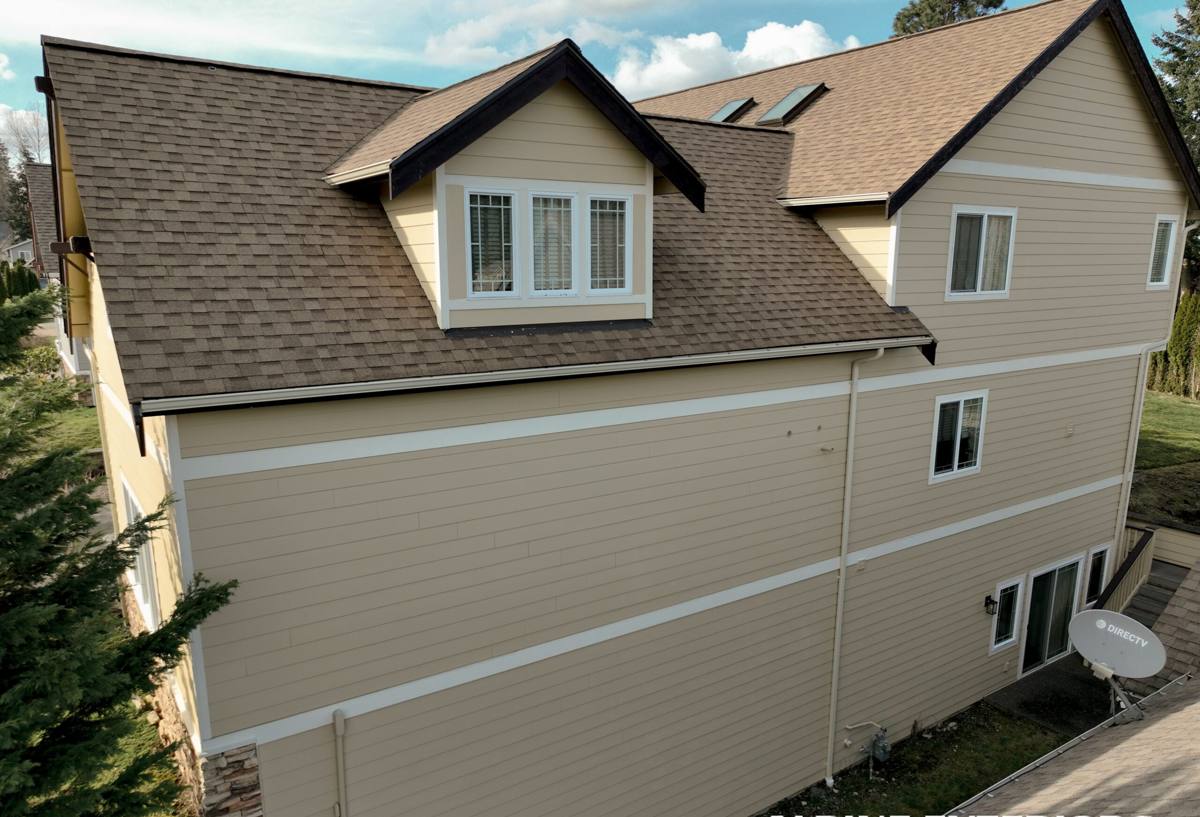
What "Custom" Actually Means for a Window Job
Measuring the Real Opening, Not a Standard Size
Older homes in this area were often built to dimensions that don't match today's standard window sizes, and decades of settling, moisture cycling, and previous repairs can leave an opening slightly out of square even if it started out true. A custom window is built to the actual rough opening after it's been checked for square, level, and plumb — not trimmed down to fit a stock unit. That matters because a window forced into an opening it doesn't quite match relies on caulk and shims to make up the difference, and caulk is not a structural or long-term moisture solution.
Matching the Frame to the Exposure
A window on a covered, south-facing wall and a window on an exposed, weather-facing wall are not the same job, even on the same house. Sun exposure, wind direction, roof overhang (or lack of one), and proximity to tree cover all change how much moisture and UV a given window actually sees over a year. Part of doing this correctly is choosing frame material and glass package based on that specific exposure, not applying one spec to the whole house.
Frame Material Comparison for This Climate
There is no single "best" window material — each comes with real trade-offs in moisture behavior, maintenance, and cost. Here's how the common options generally compare for a home dealing with salt air, sustained rain, and moss growth:
| Material | Moisture / Salt-Air Behavior | Maintenance | Typical Lifespan |
|---|---|---|---|
| Vinyl | Good resistance to moisture and salt corrosion; won't rot | Low — occasional cleaning | 20–30 years |
| Fiberglass | Excellent — dimensionally stable in wet/dry cycling, resists salt corrosion well | Low | 30–40+ years |
| Wood (unclad) | Attractive but vulnerable to rot and moisture absorption without diligent upkeep | High — refinishing, sealing | Varies widely with maintenance |
| Wood-clad (aluminum or vinyl exterior) | Good — exterior shell protects the wood core from direct weather | Moderate | 25–35 years |
| Aluminum | Prone to condensation and corrosion near salt air unless thermally broken | Moderate | 20–30 years |
For homes closer to the water and exposed to more direct salt air, we lean toward vinyl or fiberglass frames, or a wood-clad option where the homeowner wants the interior look of wood without the exterior maintenance. Bare wood exteriors are not something we recommend on exposed walls in this area — not because wood is a bad material, but because the maintenance schedule needed to keep it sound in this climate is more than most homeowners want to sign up for long-term.
What a Correct Installation Actually Involves
Most window failures we get called out to fix are not glass or frame failures — they're installation failures where water found a path in around the window rather than through it. A correct install addresses that at every layer, not just the visible trim.
- Rough opening checked for square, level, and plumb before the new window ever goes in
- Sill pan flashing installed to shed any water that gets past the window to the outside, not into the wall cavity
- Window flanges integrated with the house wrap or building paper in proper shingle-lap order — never just caulked on top
- Continuous, compatible sealant at all sides — not mismatched caulks that fail at the seam between them
- Proper shimming at structural points so the frame isn't relying on fasteners alone to stay square
- Insulation in the gap between frame and rough opening, without overpacking, which can bow the frame
- Interior and exterior trim finished so the window looks complete and any remaining seams are sealed
Skipping any one of these doesn't usually show up right away. It shows up two or three winters later as a soft spot at the sill, a stain on the interior drywall below the window, or fogging between panes that signals a failed seal. That delayed timeline is exactly why a rushed or corner-cutting install can look fine at the walkthrough and still be a problem down the road.
Where We See Windows Fail in This Area
Moss and Algae at the Sill
Shaded walls and window sills that don't get direct sun stay damp longer after rain, and that's exactly where moss and algae take hold first. Left alone, that buildup holds moisture against the sill and finish, accelerating wear on wood components and staining vinyl or fiberglass over time.
Sill Rot on Wood-Framed Windows
On older wood windows, or wood-clad units where the cladding has been compromised by a nail hole, hairline crack, or old caulk failure, moisture works its way into the sill first. By the time it's visible from inside, the wood underneath is often already soft.
Seal Failure From Repeated Wet-Dry Cycling
Insulated glass units rely on a sealed edge to keep the gas fill and airspace intact. Constant cycling between saturated and drying conditions puts more stress on that seal over the years than a drier climate would, which is part of why glass package and installation quality both matter more here than they would in a milder environment.
How We Approach a Custom Window Job
- On-site assessment — we look at each opening individually: exposure, current condition, any existing moisture damage, and what's actually driving the need for replacement.
- Measurement and material selection — openings are measured precisely, and frame material and glass package are recommended based on that wall's specific exposure, not a one-size spec for the whole house.
- Removal and opening prep — old units are removed carefully, and the opening is inspected for hidden rot or moisture damage before anything new goes in. Problems found here get flagged and addressed, not covered up.
- Installation — flashing, integration with the water-resistive barrier, sealing, shimming, and insulation are done in the order that actually sheds water, not just the order that's fastest.
- Trim and finish — interior and exterior trim completed to match the home, with all seams sealed.
- Final walkthrough — we go over the finished work with the homeowner before calling the job done.
Cost Factors Worth Understanding Before You Get Quotes
Window pricing varies a lot based on size, material, glass package, and how much of the surrounding wall or trim needs repair. Rather than quote a number that doesn't mean much without context, here's what actually moves the price on a typical job:
| Factor | Why It Affects Cost |
|---|---|
| Frame material | Fiberglass and wood-clad typically cost more upfront than vinyl; aluminum varies with thermal-break quality |
| Glass package | Double vs. triple pane, and low-E or gas-fill options, add cost but also affect comfort and condensation resistance |
| Opening condition | Hidden rot or framing damage found during removal adds labor and material to repair before the new window goes in |
| Window size and style | Larger units, custom shapes, and operable styles (casement, awning) cost more than standard fixed or single/double-hung |
| Number of openings | Whole-house replacement typically has a better per-window rate than one-off replacements done separately |
We'd rather find and disclose a rot problem during the estimate or during removal than let it sit hidden behind a new window for another five years. That honesty sometimes means a quote goes up once we're actually inside the wall — but it also means the job is actually solved, not just covered over.
Why Local Experience Actually Matters Here
A window crew that mostly works drier inland climates will still build you a window. What they won't necessarily have dialed in is the flashing detail order and sealant choice that actually holds up against sustained, wind-driven rain, or the judgment to flag a sill that's starting to go soft before it becomes a bigger repair. Working regularly in and around Sudden Valley and communities like Alger means we've seen how these specific conditions — salt air, rain load, shade-driven moss — actually play out on real houses over real years, not just on a spec sheet. That's the kind of thing you can't fully learn without doing the work in this exact climate.
After Installation: Keeping New Windows Performing
A well-installed window still benefits from basic upkeep, especially in this climate:
- Rinse sills and tracks periodically to keep moss and algae from taking hold, particularly on shaded walls
- Check exterior caulk lines annually and re-seal if you see cracking or gaps
- Keep gutters and downspouts clear so roof runoff isn't dumping extra water directly onto window heads
- Operate hardware (locks, cranks, rollers) a few times a year even on windows you rarely open, to keep mechanisms from seizing
None of this is high-maintenance, but a few minutes a couple times a year goes a long way toward getting the full lifespan out of a properly installed window in this climate.
If you're weighing whether it's time to replace a window, patch a problem area, or plan a full-home upgrade, we're happy to take a look and give you a straightforward, no-pressure estimate — just fill out the form below.