 Sudden Valley
 Windows That Have to Work Year-Round in Acme's Climate
Acme sits in the kind of Whatcom County terrain that makes windows earn their keep. You're not dealing with a dry four-season climate here — you're dealing with driving rain that comes sideways off the foothills, damp marine air that never fully clears, and a moss season that seems to stretch longer every year. That combination is hard on wood sills, hard on old aluminum frames, and hard on any seal that was installed a little too loose or a little too fast. Windows in this area don't just need to look good; they need to shed water, resist condensation, and keep conditioned air where it belongs through months of gray, wet weather.
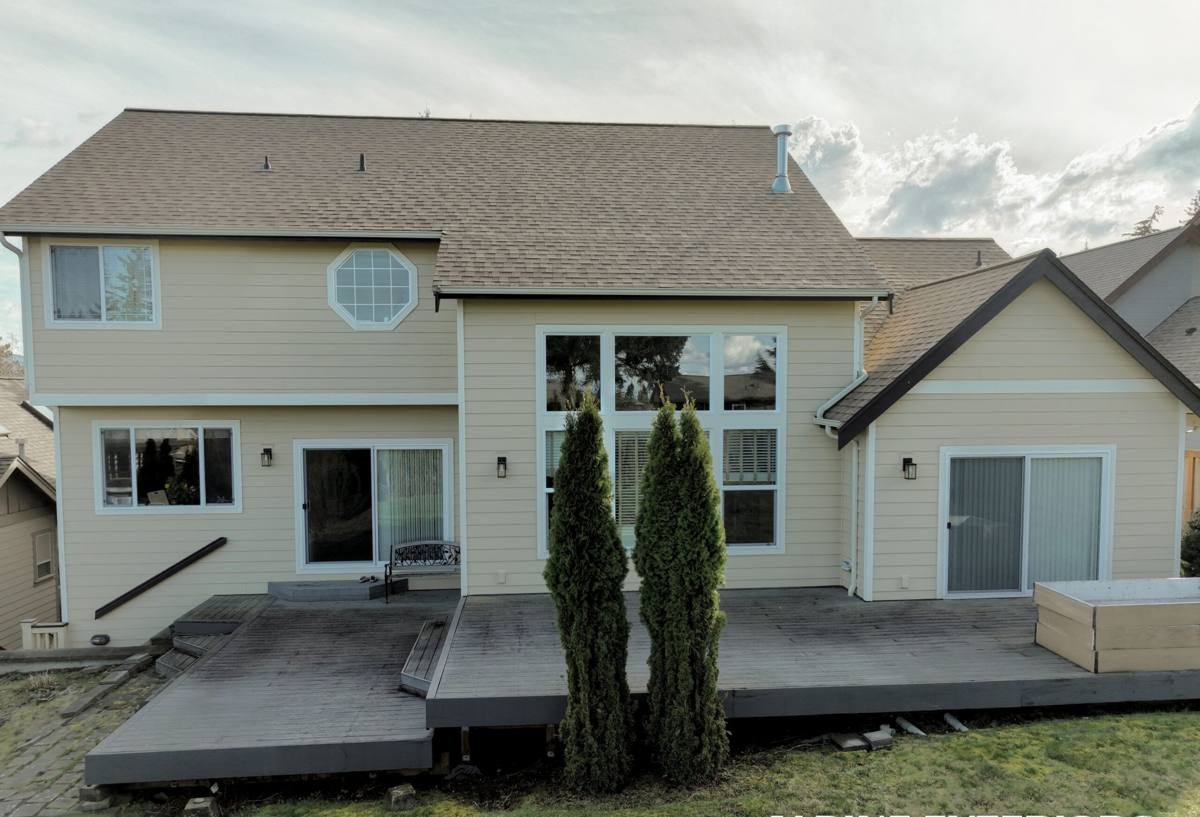
We work on homes throughout the Sudden Valley area, and Acme has its own particular mix of older cabins, mid-century ranch homes, and newer builds tucked into wooded lots. Each of those housing types has different window problems, but the underlying issue is almost always the same: moisture finds a way in, and heat finds a way out. A correctly installed, well-chosen window solves both problems at once. This page is about what that actually takes — not a sales pitch, just what a straight-up honest job looks like.
What "Energy-Efficient" Actually Means Here
Energy-efficient windows get marketed with a lot of numbers — U-factor, SHGC, air infiltration ratings — and most of that is genuinely useful information, but it only matters if the window is installed correctly. A high-performance window installed with gaps in the flashing or a sloppy sill pan will underperform a mid-grade window installed right. In a climate like ours, installation quality and window quality carry roughly equal weight.
The Numbers Worth Understanding
- U-factor: measures how well the window resists heat loss. Lower is better for our winters.
- SHGC (Solar Heat Gain Coefficient): measures how much solar heat passes through the glass. Matters more on south- and west-facing walls that get direct sun through gaps in the tree canopy.
- Air leakage rating: lower numbers mean less drafty air movement around the sash and frame — directly tied to comfort near the window on a windy, rainy day.
- Condensation resistance: in a damp climate like Whatcom County's, this rating tells you how well the window handles the moisture load inside the home during cold, wet stretches.
None of these numbers fix a bad installation. We treat them as a baseline for product selection, not the whole story.
Signs Your Current Windows Are Costing You Money
Most homeowners don't call about windows until something is visibly wrong, but the damage usually starts long before that. A few things worth checking on an Acme-area home:
- Fogging or moisture trapped between panes — the seal has failed and the insulating gas is gone.
- Soft or discolored wood at the sill or lower frame corners, often the first sign of long-term moisture intrusion.
- Visible moss or algae growth on the frame or exterior trim, which holds moisture against the wood far longer than a clean surface would.
- Cold drafts near the window even with it fully latched, usually a sign the weatherstripping or frame seal has broken down.
- Condensation forming on the inside of the glass regularly through fall and winter — this points to both window performance and interior humidity levels.
Any one of these can usually be repaired if caught early. Left alone through another wet season, they tend to turn into full frame or sill replacement, which costs a lot more than a window swap would have.
What a Correct Window Installation Actually Involves
Moisture Management Comes First
In a low-rain climate, a window can be installed with minimal flashing and get away with it for years. That is not the case here. The sill pan, flashing tape, and house wrap integration around a new window have to be done in the right order and lapped correctly so that any water that gets behind the siding is directed back out — not down into the wall cavity. This is the step that gets skipped or rushed on cheap installs, and it's also the step you can't inspect once the trim goes back on. It has to be done right the first time.
Frame and Glass Selection for This Climate
Vinyl, fiberglass, and wood-clad frames all perform differently in sustained damp conditions. We steer most Acme-area homeowners toward vinyl or fiberglass for exposed elevations because they don't absorb moisture or require repainting, and toward double- or triple-pane low-E glass for the energy performance our winters call for. Wood-frame windows can still be the right call on certain older or historic-style homes, but we're upfront that they carry a real maintenance commitment in a climate this wet — that's a trade-off we explain honestly rather than talk you out of if it's what you want.
Sealing and Insulation Around the Frame
Low-expansion spray foam or backer rod and sealant around the perimeter of the frame closes the air gap without bowing the frame out of square. This step matters as much for comfort as for energy bills — a poorly insulated gap is one of the most common sources of a cold draft that homeowners can feel but can't pinpoint.
Our Process, Start to Finish
- On-site assessment: we look at every window being considered, check for existing moisture damage, and measure openings precisely rather than relying on rough estimates.
- Honest product recommendation: we walk you through frame and glass options that fit your home's exposure, budget, and how long you plan to stay in the house.
- Written estimate: a clear scope of work and price before anything is ordered — no vague allowances.
- Removal and prep: old windows come out carefully, and we inspect the rough opening for rot or damage before anything new goes in.
- Flashing and installation: sill pan, flashing, and the window itself installed to shed water outward, shimmed and squared before fastening.
- Insulation and sealing: perimeter gaps filled and sealed properly, interior and exterior trim reset.
- Final walkthrough: we test every operable window, check the seals, and make sure the job matches what was scoped.
Comparing Frame Materials for an Acme-Area Home
| Frame Type | Moisture Resistance | Maintenance | Typical Cost Range |
|---|---|---|---|
| Vinyl | Excellent — won't rot or absorb moisture | Low — occasional cleaning | Lower to mid-range |
| Fiberglass | Excellent — very stable in wet/cold swings | Low | Mid to upper-mid range |
| Wood | Moderate — needs protection from standing moisture | High — periodic repainting/sealing | Upper range |
| Wood-clad (exterior clad, wood interior) | Good on exterior, wood interior needs care | Moderate | Upper range |
| Aluminum (older stock, rarely recommended new) | Poor thermal performance, prone to condensation | Low physical maintenance, high energy cost | Varies |
We don't push any one material on every job. A shaded, rain-exposed north wall calls for different priorities than a sheltered porch window, and we'll tell you which factors actually matter for each opening rather than upselling across the board.
Why Hiring a Crew That Already Works This Area Matters
A window contractor who mostly works dry-climate jobs or moves between wildly different regions doesn't always build in the flashing detail and material choices that Whatcom County's rain and moss season demand. Crews that regularly work Sudden Valley and the surrounding Acme area have already seen how the local combination of shade, standing damp air, and heavy rain events plays out on real houses over a few winters. That experience shows up in small decisions — how much flashing overlap to use, which sills need extra attention, when a wood-frame choice needs a candid conversation about upkeep. It's the difference between a window that looks fine at handoff and one that's still performing five wet winters later.
Maintenance That Actually Extends the Life of New Windows
- Clear leaves, needles, and moss buildup from window tracks and sills at least twice a year, especially heading into fall.
- Check exterior caulking annually for cracking or separation, particularly on sun-exposed sides where material expands and contracts more.
- Wipe down interior sills during winter if condensation collects, and run bathroom or kitchen exhaust fans to keep indoor humidity in check.
- Inspect weatherstripping for compression or gaps every couple of years — it's a cheap fix that prevents draft complaints.
- Don't paint over vinyl or fiberglass weep holes at the base of the frame; they're there to let trapped water drain back out.
What Drives the Cost of a Window Project
| Factor | Why It Matters |
|---|---|
| Number and size of openings | Larger and more numerous windows increase material and labor directly. |
| Frame material chosen | Vinyl is typically the most budget-friendly; fiberglass and wood cost more upfront. |
| Glass package | Double-pane low-E is standard; triple-pane or specialty coatings add cost but improve performance in our climate. |
| Condition of the rough opening | Hidden rot or water damage found during removal adds repair scope before the new window goes in. |
| Access and site conditions | Second-story openings, tight lots, or difficult staging can add labor time. |
We give a written estimate after seeing the actual openings, not a phone-quoted average — too many of these factors vary from one Acme home to the next to price accurately sight unseen.
Get a Straight Answer on Your Windows
If your windows are fogging, drafting, or showing moisture damage at the sill, it's worth having someone look before another wet season passes. We offer free, no-pressure estimates for Acme-area homes and will tell you honestly whether you need full replacement, a repair, or nothing at all yet. Fill out the form below and we'll set up a time to take a look.