 Sudden Valley
 Building Decks for Acme's Wet, Wooded Conditions
Acme sits in a quieter, more heavily wooded stretch of Whatcom County than most of the neighborhoods we work in around Sudden Valley and Lake Whatcom. That tree cover is part of what makes the area, but it also means decks here deal with more shade, more standing moisture, and a longer stretch of the year where wood and composite surfaces simply don't dry out between rains. Add in the driving rain that moves through this part of Washington most winters and the long moss season that follows, and a deck built without those conditions in mind will show problems well before it should.
We build and repair siding on homes throughout this area, which means we spend as much time thinking about how water moves off a house as we do about how a structure looks. A deck is really an extension of that same problem: get the water management wrong, and everything from the ledger board to the footings pays for it over time.
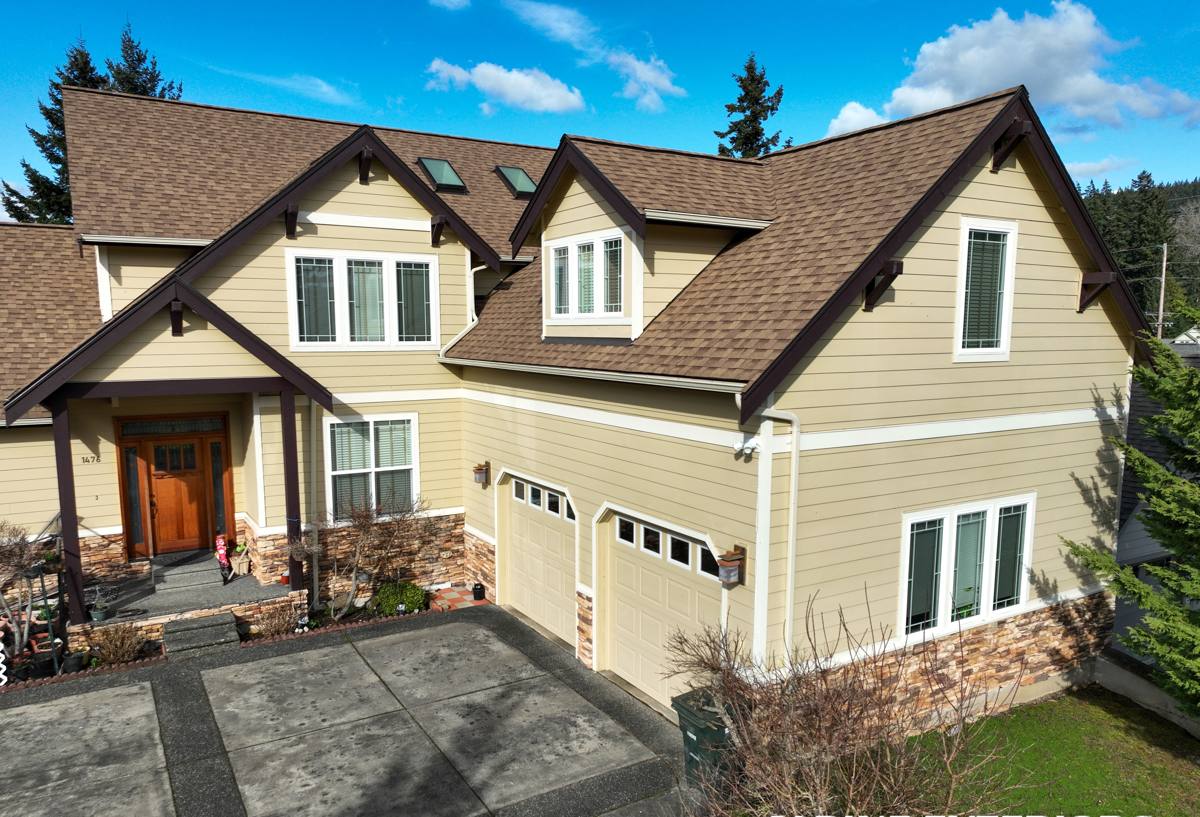
What the Local Climate Does to a Deck Over Time
None of these pressures are unique to one property, but they add up differently depending on how much sun and airflow a lot gets. Acme's mix of heavy tree cover, filtered sunlight, and low-lying, moisture-holding ground means decks here face three specific issues worth understanding on their own.
Moss, Algae, and a Season That Never Fully Dries
Whatcom County's damp stretch runs long — often eight months or more where surfaces stay wet more often than they're dry. On a shaded, tree-covered lot like many in Acme, that translates into moss and algae growth on horizontal deck surfaces faster than it would on an open, sunny site. Moss holds moisture against the board, and moisture held against wood or composite decking for weeks at a time is exactly what shortens its life, whether that shows up as rot in solid wood or surface staining and slow degradation in composite products.
Ground Moisture and Wood Movement
Low, wooded lots also tend to hold groundwater closer to the surface longer into the season than open, sloped ground does. Footings, posts, and any framing near grade need to be detailed for that reality, not for a dry-summer assumption that doesn't hold for most of the year here. Wood that sits in contact with damp soil or wet mulch, even briefly during construction, starts a clock on decay that a homeowner won't notice until years later.
Driving Rain and Fastener Corrosion
Whatcom County's proximity to salt water means the air here carries more corrosive moisture than a dry inland climate would, even on lots like Acme's that sit back from the shoreline. Combine that with wind-driven rain that gets pushed sideways into every gap and seam, and hardware that isn't rated for the exposure will corrode faster than most homeowners expect. We build every deck in this area to the same fastener and hardware standard regardless of how close it sits to the water, because damp, mineral-heavy air and years of exposure will eventually find the weak link in cheap hardware.
What a Correctly Built Deck Needs Here
A deck that holds up in this climate isn't built dramatically differently from one anywhere else — it's built to the same code, just without skipping the details that matter most in a wet environment:
- Ledger boards properly flashed and separated from the house's water-resistive barrier, not just lag-bolted through the siding
- Footings poured below frost depth and sized for the soil conditions on the actual lot, not a generic assumption
- Joist hangers, screws, and structural hardware rated for exterior, high-moisture use — stainless steel or heavy hot-dip galvanized, not standard zinc-coated fasteners
- Decking gaps sized to let water and debris pass through instead of collecting between boards
- Post bases that keep wood off concrete and off standing water, with a capillary break at the base
- Railings and guardrails built to code height and load requirements, not just to what looks right
The Ledger Connection: Where Most Deck Problems Start
If a deck attached to a house is going to fail early, it almost always starts at the ledger board — the framing member bolted directly to the house that carries one whole edge of the deck's structural load. This is also exactly the point where deck framing meets the building's siding and weather barrier, which is why a crew that handles both jobs tends to get this detail right more consistently than a deck-only crew would.
Done correctly, the ledger gets flashed so that water shed off the house wall is directed out and away from the connection, not down behind it. Done poorly — a common shortcut on lower-bid jobs — the ledger gets bolted through the siding with sealant standing in for real flashing. Sealant alone will fail eventually, and when it does, water tracks down behind the siding at the exact spot where it's hardest to see and most damaging: right where structural framing meets the house's wall assembly. We treat the ledger connection as siding work first and framing work second, because that's genuinely what it is.
On existing decks, the warning signs are usually visible if you know where to look: soft or spongy siding right above where the ledger attaches, a dark stain trailing down the wall below the connection, or a deck that has developed a slight sag or bounce along the house-side edge. Any of those is worth a professional look before the damage spreads into the wall framing itself, which turns a simple deck repair into a siding repair.
Decking Material Options for This Climate
There's no single right answer for every homeowner, but the trade-offs are worth understanding before you choose:
| Factor | Wood (Cedar / Pressure-Treated) | Composite / PVC |
|---|---|---|
| Upfront cost | Lower | Higher |
| Moss and algae resistance | Lower — needs regular cleaning and treatment | Higher, especially with capped boards |
| Maintenance | Annual cleaning, periodic sealing or staining | Occasional washing, no sealing or staining |
| Appearance over time in shade | Grays and can stain from moss and tannins without upkeep | Holds color longer, though algae film can still develop |
| Long-term cost | Lower material cost, higher maintenance cost over years | Higher material cost, lower maintenance cost over years |
| Repairability | Easy to replace individual boards, close color match | Easy to replace, but matching older, sun-faded boards can be harder |
Homeowners on shaded, wooded lots — which describes a lot of Acme — tend to lean toward composite decking simply because the maintenance burden of keeping wood clean and sealed in constant shade is real and recurring. That said, well-maintained cedar still has a place, especially where a homeowner wants a more traditional look and is willing to stay on top of cleaning and sealing on a regular schedule.
Our Deck Building Process
- Site walk and assessment. We look at drainage, sun exposure, tree cover, soil, and how the deck will tie into the house before drawing anything up.
- Design and permitting. We handle the plan and permit submission to the county so the footings, framing, and guardrails meet current code from the start.
- Footings and framing. Posts and footings go in first, sized for the actual soil and load, followed by proper ledger attachment and joist framing.
- Decking and railing installation. Boards, fascia, and railing go on last, with attention to board spacing and drainage beneath the surface.
- Final walkthrough. We check fastener placement, railing rigidity, and drainage before calling the job finished.
Permits, Railings, and Code Basics
Most new decks in Whatcom County need a building permit before work starts, and any deck significantly elevated above grade needs code-compliant guardrails — generally required once the walking surface reaches roughly 30 inches or more above the ground below. Larger decks, multi-level decks, or any deck built over habitable space typically need stamped engineering in addition to a standard permit, and we bring in an engineer when a project calls for it rather than guessing at spans. We pull permits as part of the job rather than leaving that step to the homeowner, because an unpermitted deck can become a real problem later, whether that's at resale or during an insurance claim after a failure.
Keeping a Deck Healthy Through a Long Moss Season
Even a well-built deck needs some seasonal attention in a climate like this one. A short list of what actually matters:
- Sweep debris out of the gaps between boards before it composts in place and holds moisture
- Rinse or treat moss and algae growth before it gets established, rather than after it's thick
- Keep nearby gutters and downspouts clear so overflow isn't draining directly onto the deck surface
- Check the ledger flashing area annually for any sign of staining or soft wood at the house wall
- Trim back overhanging branches where possible to cut down on shade and falling debris
- Reseal or refinish wood decking on a regular schedule rather than waiting until it's visibly gray
Why Hire a Crew That Already Works in Acme
A deck built by a crew unfamiliar with this area's ground conditions, tree cover, and rainfall pattern can still meet code on paper and still fail early, because code sets a minimum standard — it doesn't account for a specific shaded, low-lying lot's particular moisture load. Working throughout Sudden Valley and the surrounding communities means we've watched how these lots behave across multiple wet seasons, not just read about it. Because we also install and repair siding, we look at a deck attachment the same way we look at any other penetration through a wall: as a place water needs to be directed away from, not just sealed over and hoped for. It also means the deck and the siding get held to the same standard, with no gap in fastener quality or flashing practice between the two systems for a homeowner to manage separately.
If you're planning a new deck in Acme or need an existing one evaluated for rot, movement, or a failing ledger connection, we're glad to take a look. Reach out for a free, no-pressure estimate — the form below only takes a minute.