 Sudden Valley
 Storm Damage Roof Repair Built for the Yew Street Area
Homes along Yew Street sit inside one of the wetter, wind-exposed pockets of Sudden Valley, and the roof usually takes the brunt of it. When a windstorm rips through Whatcom County off the lake and the surrounding ridgelines, it doesn't just knock down branches — it lifts shingle tabs, drives rain sideways under flashing, and finds every weak seam a roof has. If you've had a storm come through and you're seeing a stain on a ceiling, missing shingles in the yard, or granules collecting in the gutter, this page walks through what an honest, correctly-done repair looks like for a home in this specific area.
We're not going to give you a generic "roofs get damaged in storms" overview. This is about what Yew Street homes specifically need, given the climate here, the age and construction of houses in this part of Sudden Valley, and what actually holds up long-term versus what just looks fixed for a season.
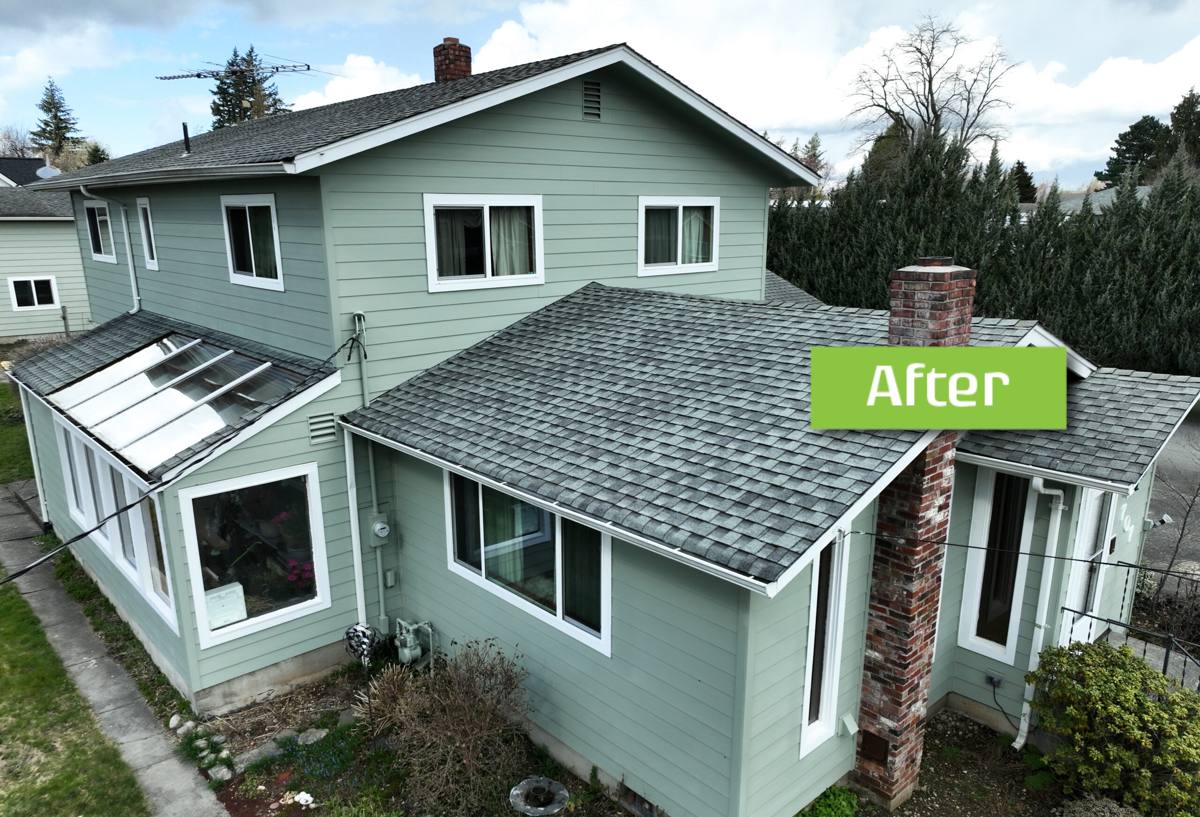
Why Storms Hit This Area the Way They Do
Sudden Valley's location means homes deal with a combination most other Washington towns don't get in the same mix: salt-laden air moving in off the water, long stretches of driving rain, and a moss season that can run most of the year in shaded, north-facing sections. Each of these does something different to a roof, and a repair that only addresses the visible damage without accounting for the other two tends to fail again within a year or two.
Salt Air
Salt-carrying wind accelerates corrosion on exposed metal — flashing, nail heads, gutter fasteners, and any galvanized hardware that isn't fully coated. A storm repair that reuses corroded fasteners or bare metal flashing is patching over a problem that will resurface as a leak within a couple of seasons.
Driving Rain
Wind-driven rain doesn't fall straight down — it gets pushed sideways and upward under shingle edges, ridge caps, and around chimneys or vent boots. Standard nailing patterns and sealant lines that work fine in calmer climates can underperform here because the wind pushes water where it normally wouldn't reach.
Moss Season
Shaded roof sections in this part of Sudden Valley can stay damp for weeks after a storm passes, which is exactly what moss and lichen need to take hold. Moss growth lifts shingles at the edges, holds moisture against the roof deck, and hides storm damage — a curled or cracked shingle under a moss mat can go unnoticed until it's leaking.
What Storm Damage Actually Looks Like Here
Homeowners often expect obvious damage — a hole, a tree limb through the roof. Most storm damage in this area is quieter than that.
- Lifted or creased shingle tabs where wind got underneath the edge
- Torn or missing ridge cap shingles along the roof peak
- Flashing pulled loose or bent around chimneys, skylights, and vent pipes
- Granule loss showing up as dark grit in gutters or downspout runoff
- Soft spots or discoloration on interior ceilings days or weeks after the storm
- Moss mats that have shifted or lifted, exposing bare shingle edges underneath
- Loose or missing fasteners on gutters and drip edge, especially on the windward side of the house
That last point matters: on most Yew Street lots, one side of the roof takes more wind exposure than the other depending on how the house sits relative to the tree line and the slope. Damage is rarely spread evenly — it clusters where the wind actually hit.
What a Correct Repair Involves
A storm repair that's done right isn't just "replace what's missing." It's diagnosing why the damage happened where it did and making sure the fix doesn't just delay the next failure.
1. Full Roof Assessment, Not Just the Obvious Spot
We check the entire roof, not just where you saw the leak. Wind damage often has a secondary spot nearby that hasn't leaked yet but will. This includes checking flashing, boots, ridge lines, and gutter attachment — the areas most affected by driving rain and salt air.
2. Matching Materials, Not Just Patching
Where shingles need replacing, we match the existing product as closely as possible in style and color so the repair doesn't stand out, and so the new section performs the same as the surrounding roof under wind load. Mismatched or incompatible shingle types can create a weak seam right at the repair boundary.
3. Corrosion-Resistant Fasteners and Flashing
Given the salt air here, we use fasteners and flashing rated for coastal-adjacent exposure rather than standard interior-grade hardware. It costs a little more up front and saves you a second repair call in two or three years.
4. Sealing for Wind-Driven Rain, Not Just Vertical Rain
Ridge caps, valleys, and penetration points get sealed and fastened with the area's wind patterns in mind — meaning we don't assume rain only comes straight down. This is one of the most common things an out-of-area crew gets wrong on a one-off repair visit.
5. Moss and Debris Clearing Before Any Patch Goes On
If moss or built-up debris is present near the damaged area, it comes off before repair work starts. Patching over moss just traps moisture under the new material.
Our Process for a Yew Street Storm Repair Call
- Contact and initial description: You tell us what you're seeing — visible damage, a leak, or just concern after a storm. We ask a few questions to understand the likely scope before we come out.
- On-site inspection: We walk the roof (or use a lift/drone where a walk-on inspection isn't safe) and photograph the damage and surrounding areas.
- Written assessment and options: You get a plain explanation of what's damaged, what's contributing to it (age, moss, prior repairs, exposure), and what repair versus partial re-roof would involve, with honest ranges — not a hard sell toward the most expensive option.
- Insurance documentation, if needed: If you're filing a claim, we document damage in a way that's useful for your adjuster. We work for you, not the insurance company.
- Repair work: Scheduled around weather — we don't do rushed patch jobs in the middle of another storm system if it can be avoided safely.
- Final walkthrough: We show you what was done and what to watch for going forward, including moss-prevention pointers specific to your roof's exposure.
Repair vs. Replacement: How We Help You Decide
Not every storm-damaged roof needs full replacement, but sometimes a repair is a short-term fix that doesn't make sense given the roof's overall condition. Here's how we think through it.
| Factor | Leans Toward Repair | Leans Toward Replacement |
|---|---|---|
| Roof age | Under 12-15 years, otherwise sound | Nearing or past expected lifespan for its material |
| Damage location | Isolated to one section or slope | Spread across multiple slopes |
| Moss/moisture history | Minor, recently addressed | Long-term moss damage to the deck itself |
| Prior repairs | Few or none | Multiple past patches in different spots |
| Underlying decking | Solid, no rot found | Soft spots or rot discovered during inspection |
We'll tell you honestly which side of this table your roof falls on. If a repair is the right call, that's what we'll recommend — we don't push replacement on a roof that doesn't need it.
Why It Matters That the Crew Already Works This Area
A roofer unfamiliar with Sudden Valley's specific conditions can do technically fine work and still leave you with a repair that underperforms here, simply because they're used to a different climate profile. Knowing how driving rain behaves against this area's roof slopes, which sections of a Yew Street home tend to hold moss the longest, and how quickly salt air corrodes exposed hardware changes what materials and techniques get used. It also means faster response — when a storm hits the whole area at once, a crew that already knows the neighborhood's roofs and common trouble spots can prioritize and move efficiently instead of starting from zero on every call.
Simple Storm-Damage Checklist for Homeowners
- Check the yard and gutters for shingle pieces or unusual amounts of granules after any significant wind event
- Look at ceilings and attic spaces for new staining, especially a few days after a storm, not just immediately after
- Note which side of the house faced the wind — that's usually where to look first
- Avoid walking on the roof yourself after a storm; wet, moss-covered, or wind-loosened shingles are easy to slip on or damage further
- Get a professional assessment before a small issue turns into a deck-level (structural) repair
- Keep photos and notes if you plan to file an insurance claim
Get an Honest Look at Your Roof
If a recent storm has left you with damage, or you just want a professional set of eyes on your roof before the next system rolls through, we're glad to take a look. If you'd like a free, no-pressure estimate for storm damage roof repair on your Yew Street home, fill out the form below and we'll get back to you.