 Sudden Valley
 Why Ferndale Roofs Wear Out Faster Than the Brochure Says
Ferndale sits close enough to Bellingham Bay and the Strait of Georgia that salt-laden air is a real factor here, not a talking point. Combine that with Whatcom County's long wet season and the shaded, moisture-holding roof lines common on wooded Ferndale lots, and you get a climate that's genuinely hard on roofing. Salt air accelerates corrosion on exposed metal fasteners and flashing. Driving rain off the water finds every weak seam, nail pop, and undersized flashing detail. And months of overcast, damp weather each year give moss and moss-feeding algae plenty of time to take hold on north-facing slopes and anywhere a roof doesn't get much sun or airflow.
None of that means a roof here is doomed to fail early. It means the installation details that get skipped in drier climates — the ones that don't show up as a problem for a few years — can't be skipped in Ferndale. A roof built for a dry inland climate and a roof built for this one look similar from the street but perform very differently after year five.
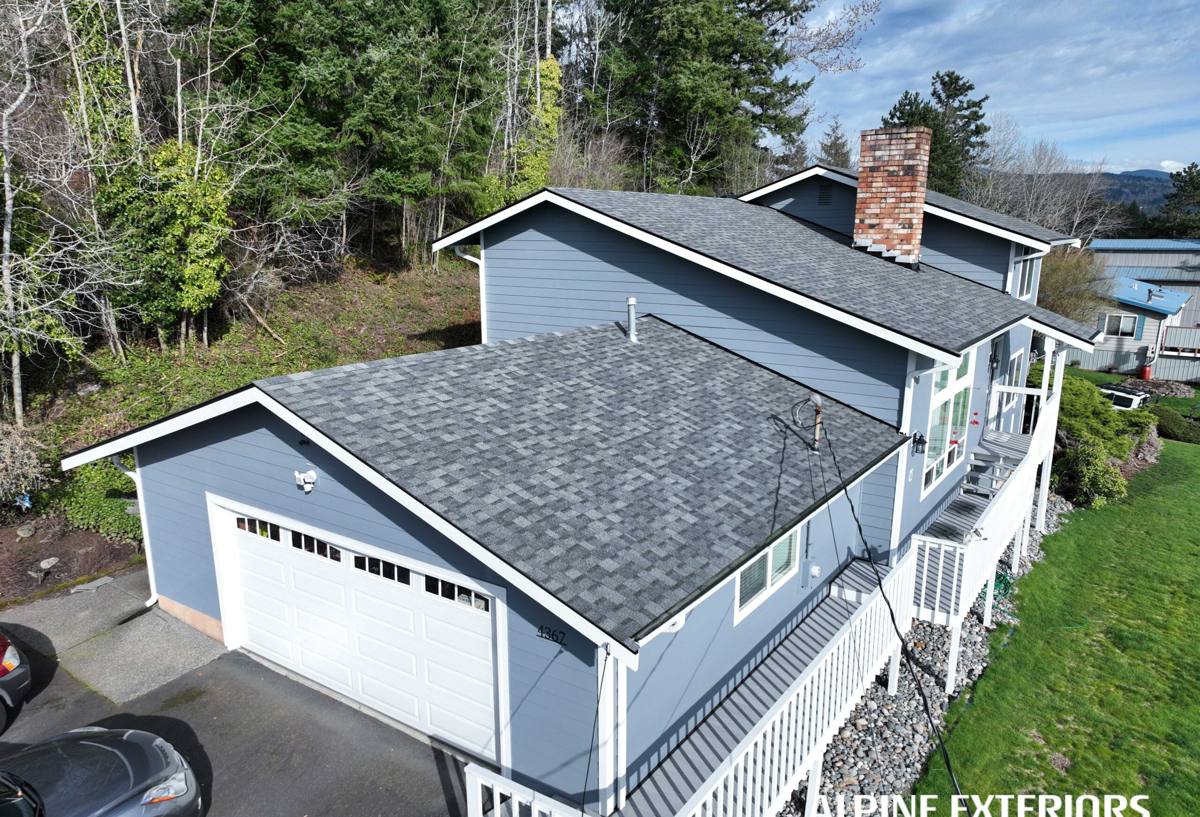
What a Correct Installation Actually Involves
Starting With the Deck, Not the Shingles
A new roof is only as good as what's underneath it. Before any new material goes down, the old roofing comes off completely and the deck gets inspected board by board. Soft spots, delaminated plywood, and any water-stained sheathing get replaced — not covered up. Roofing over a compromised deck is one of the most common shortcuts in this trade, and it's also one of the most expensive mistakes to inherit later, because by the time it shows up as a sag or a soft spot inside, the damage has usually spread.
Underlayment and Ice/Water Protection
Given how much of Whatcom County's precipitation arrives as steady, wind-driven rain rather than a quick downpour, we treat underlayment as a real second layer of protection, not a formality. Synthetic underlayment across the whole deck, with self-adhering ice-and-water membrane at eaves, valleys, and around every penetration, gives the roof a backup when wind pushes rain up under the shingle tabs — which it will, at some point, on an exposed or waterfront-adjacent lot.
Flashing Details
Chimneys, skylights, dormers, and sidewall intersections are where roofs actually fail — rarely in the open field of shingles. Correct step flashing, counter-flashing, and properly lapped valley metal (not just caulk over old flashing) are non-negotiable on a new install. Given the salt air exposure this area gets, we also pay attention to fastener and flashing material choice so corrosion doesn't undercut a good installation years early.
Roofing Materials: What Actually Holds Up Here
There's no single "best" roofing material for every Ferndale home — it depends on the roof's pitch, sun exposure, tree cover, and your budget. Here's an honest comparison of the options we install most often in this area.
| Material | Typical Lifespan Here | Moss/Moisture Behavior | Relative Cost |
|---|---|---|---|
| Architectural asphalt shingle | 25–30 years | Good with proper ventilation; algae-resistant granules recommended for shaded roofs | $ |
| 3-tab asphalt shingle | 15–20 years | More prone to moss holding moisture in shaded areas | $ |
| Standing seam metal | 40–50+ years | Sheds moisture fast; moss struggles to establish; needs coastal-rated fasteners | $$$ |
| Synthetic/composite shake | 30–40 years | Good moisture resistance; holds up well under sustained rain | $$ |
For most Ferndale homes, a mid-to-upper-tier architectural shingle with algae-resistant granules is the practical choice — it balances upfront cost against the moss and moisture reality of this climate. On heavily shaded lots or homes closer to the water, standing seam metal earns its higher price tag through decades of lower maintenance. We'll walk your specific roof and tell you honestly which category fits, rather than defaulting to whatever's easiest to install.
Ventilation: The Detail Most Roofs Get Wrong
A roof that traps heat and moisture in the attic ages faster from the inside out, and it also stays damper on the outside, which feeds moss growth. Balanced intake (soffit vents) and exhaust (ridge vent) ventilation lets the attic breathe, which keeps the underside of the deck dry and helps the shingles shed the surface moisture that's constant here for much of the year. On older Ferndale homes we tear off, undersized or blocked soffit ventilation is one of the most common issues we find — it's rarely visible from the ground, but it shortens the life of everything above it.
Our Installation Process, Step by Step
- On-site inspection and estimate. We walk the roof, check the attic for ventilation and moisture issues, and give you a written scope — not a verbal ballpark.
- Material selection. We go over the tradeoffs for your roof's exposure and shade pattern so you're choosing based on how the roof will actually perform, not just the sample color.
- Permit and scheduling. We handle the permitting process and schedule around the weather window — timing matters more here than in drier climates.
- Tear-off and deck inspection. Old roofing comes off, the deck is inspected and repaired as needed, and you're shown any damage before it's covered up.
- Underlayment and flashing. Ice-and-water membrane at vulnerable areas, synthetic underlayment across the field, and new flashing at every penetration and intersection.
- Ventilation correction. Intake and exhaust ventilation is checked and corrected if the existing setup is inadequate.
- Shingle or panel installation to manufacturer specification — proper nailing pattern, exposure, and fastener count, not shortcuts to save time.
- Final walk-through and cleanup, including a magnetic sweep for stray nails and a review of your warranty paperwork.
Moss and Moisture: Managing It Long-Term
No roofing material is permanently moss-proof in a climate this wet and shaded, but a correctly installed roof gives moss far less to hold onto. A few habits go a long way toward protecting that investment:
- Keep overhanging branches trimmed back so the roof gets more sun and airflow, especially on north-facing slopes.
- Clean gutters at least twice a year — clogged gutters back water up under the shingle edge and keep the roof deck wetter longer.
- Have moss physically removed (not pressure-washed, which damages granules) rather than left to spread.
- Consider zinc or copper strips near the ridge on shaded roofs — they release trace metals with rainfall that inhibit new moss growth.
- Schedule a roof check after major windstorms, which are common off the Strait, to catch lifted shingles or damaged flashing early.
Cost Factors Homeowners Should Know
Every roof estimate should reflect your specific situation, not a flat per-square rate pulled from a national average. The factors that actually move the number for a Ferndale home are:
- Roof size and pitch — steeper roofs require more labor and safety equipment.
- Number of penetrations and valleys — every chimney, skylight, and valley adds flashing labor.
- Deck condition — rot or soft sheathing found during tear-off adds material and labor.
- Material choice — asphalt versus metal versus composite shifts cost significantly, as shown above.
- Ventilation corrections — adding or upgrading soffit and ridge venting if the current setup is inadequate.
- Access and site conditions — tree cover, tight lots, and driveway access affect crew logistics.
We'd rather walk you through these line by line during an in-person estimate than quote a number over the phone that doesn't hold up once we're on the roof.
Signs Your Roof Needs Replacement, Not Another Patch
Not every roof problem calls for a full tear-off. But there's a point where repeated repairs cost more over time than one correct installation. Watch for:
- Shingles that are cupping, curling, or losing granules across large sections rather than one isolated spot.
- Daylight visible through the attic roof boards, or damp insulation after a rainstorm.
- Moss or algae covering more than a quarter of the roof surface, especially on shaded slopes.
- A roof original to the home and past 20–25 years old, even if it looks intact from the ground.
- Multiple past repairs in different spots — a pattern that usually means the underlying materials are simply worn out.
Why Local Experience on This Roofline Matters
A crew that regularly works Ferndale and greater Whatcom County knows which roofs in this area fail from moss-trapped moisture versus wind-driven rain intrusion versus plain old age, and installs accordingly instead of applying a one-size-fits-all approach. We know which slopes in this region need extra ventilation attention, which fastener and flashing choices hold up against the salt air, and how to schedule a tear-off around a weather window that isn't always generous. That local pattern recognition is the difference between a roof that looks right on installation day and one that's still performing correctly in year fifteen.
If your Ferndale roof is aging, showing moss, or due for replacement, we're happy to take a look and give you a straightforward, no-pressure estimate — no obligation, just an honest read on where your roof actually stands. The form below gets you started.