 Sudden Valley
 Lake Whatcom Puts Extra Demands on a Home's Exterior
Homes around Lake Whatcom sit in a pocket of Whatcom County's marine climate that's a step wetter and shadier than a typical suburban lot. The lake holds humidity close to the ground long after a storm passes, the surrounding tree cover keeps north- and east-facing walls damp and shaded for most of the day, and the broader Puget Sound region's salt-tinged marine air adds another layer of exposure to anything exterior-grade. Add in driving, wind-pushed rain off the water and a moss season that can run from October into May, and you have siding conditions that are noticeably harder on a wall system than a dry, open site across town.
This isn't a reason to over-engineer a siding job with gimmicks — it's a reason to use a product and installation method that were built for wet climates in the first place, and to install it the way the manufacturer actually specifies. That's the whole basis of this page: what James Hardie siding needs to do differently on a Lake Whatcom home, and what it takes to get that installation right.
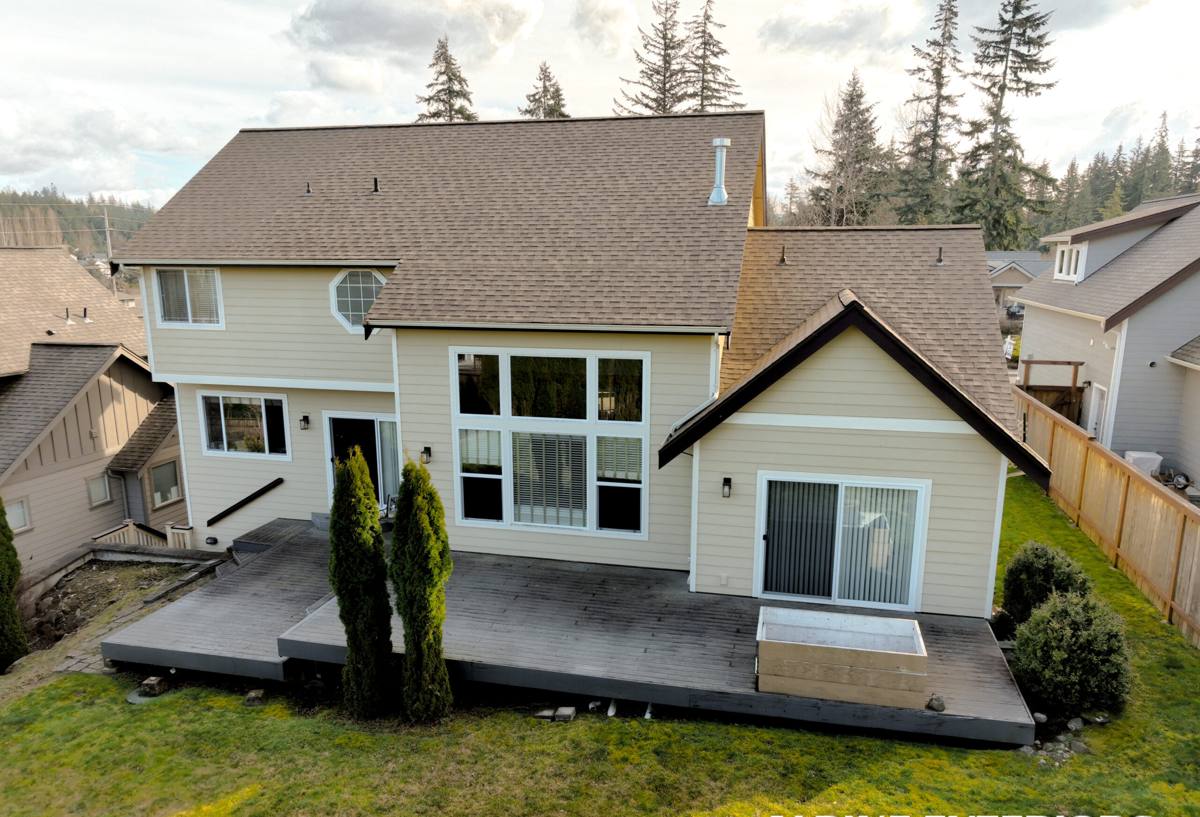
Why We Only Install James Hardie Here
We don't install LP SmartSide, vinyl, Cemplank, Allura, primed spruce, or cedar — not because those products have no merit, but because we've standardized on one system we can stand behind on every job, and James Hardie fiber cement is that system. It's non-combustible, it doesn't rely on a wood substrate that can swell or rot when it takes on moisture, and its factory-applied ColorPlus finish is baked on under controlled conditions rather than field-painted on a job site where humidity and temperature vary by the hour. For a lake property that spends a good part of the year damp, that combination matters more than it would on a dry inland lot.
James Hardie also builds its HZ5 product line specifically for the Pacific Northwest's wet, temperate climate — engineered moisture and warping resistance that's tuned to regions like ours rather than a one-size-fits-all national spec. That's the version we install on every Whatcom County job, Lake Whatcom included.
What HZ5 Actually Changes
- Formulated for high-moisture, freeze-thaw-prone climates rather than hot, dry regions
- Backed by a strong transferable limited warranty when installed to Hardie's published specifications
- Compatible with Hardie's full lap, panel, and trim lineup, so the whole exterior — not just the field siding — comes from one engineered system
What a Correct Installation Involves on a Lake Whatcom Home
Fiber cement siding is only as good as the water-management details behind it. Most of the siding failures we get called out to inspect on older homes near the lake aren't the siding itself failing — they're a flashing, clearance, or fastening detail that was skipped, and years of driving rain and shade finally caught up with it.
The details that matter most here
- Weather-resistive barrier and flashing: a continuous drainage plane behind the siding, with proper flashing at every window, door, and roof-to-wall intersection so water that gets behind the cladding has somewhere to go
- Ground and roof clearance: Hardie specifies minimum clearances from grade, decks, and roof lines — on a lake lot with landscaping, retaining walls, and mature trees close to the house, these clearances get compromised more often than people realize
- Fastening pattern: correct nail placement and depth so boards can move slightly with seasonal moisture cycles without cracking or blowing out at the fastener
- Joint treatment: factory or field-primed cut edges sealed per spec, since an unsealed cut edge is one of the fastest ways moisture gets into the board
- Caulking discipline: caulk where Hardie calls for it, and — just as important — no caulk where it isn't called for, since sealing a joint that's designed to drain traps water instead of shedding it
None of this is exotic. It's just detail work that has to be done in order, every time, and it's exactly where a rushed installation shows up as a problem five or ten years later instead of five or ten days later.
Where We See Problems Around the Lake
After working on homes throughout Sudden Valley and the greater Lake Whatcom area, a few patterns repeat:
| Problem spot | Why it happens here | What we do differently |
|---|---|---|
| North and east walls under tree cover | Stay damp longest, grow moss and algae fastest | Verify drainage plane and clearances are correct before re-siding; don't just cover the problem |
| Low decks and grade near the lakeside | Siding installed too close to grade or deck framing traps moisture at the bottom course | Hold to Hardie's minimum clearance specs even when it means adjusting trim or grading |
| South and west walls | More sun and wind exposure, faster wear on caulk and paint lines over time | Use ColorPlus factory finish so color and coating aren't relying on field-applied paint |
| Older homes with wood or hardboard siding | Original installation predates current moisture-management standards | Full tear-off and inspection of sheathing before new Hardie goes on, not a re-side over hidden damage |
Our Process, Start to Finish
1. On-site assessment
We walk the whole exterior, not just the side that prompted the call. On a lake property that often means checking shaded walls, deck-adjacent siding, and anywhere landscaping has grown up against the house — the spots most likely to be hiding moisture issues.
2. Scope and product selection
We spec HZ5 lap, panel, or shingle siding and matching trim based on the home's style and exposure, and walk through ColorPlus color options that hold up to this climate rather than fade or chalk early.
3. Tear-off and substrate check
Existing siding comes off and the sheathing gets inspected before anything new goes up. If there's rot or water damage behind the old siding, that gets addressed first — covering it with new siding doesn't fix it.
4. Weather barrier, flashing, and install
New drainage plane and flashing go in per Hardie's fastening and clearance specifications, then the siding itself, in the sequence that keeps every joint and penetration properly protected.
5. Final walkthrough
We go over caulking, trim, and touch-up with the homeowner before calling the job done.
Cost Factors for a Lake Whatcom Project
Every home is different, so we don't quote a number until we've walked the property, but the factors that move the price on a lake-area job tend to be consistent:
| Factor | Why it affects cost |
|---|---|
| Tear-off scope | Full removal of old siding and any hidden sheathing repair adds labor before new siding can start |
| Home access and site slope | Sloped lake lots, retaining walls, and limited equipment access can add setup time |
| Siding profile and trim complexity | Lap vs. panel vs. shingle, plus the amount of trim and detail work around windows and rooflines |
| Color and finish selection | Standard ColorPlus colors vs. custom or premium finish options |
| Extent of moisture damage found | Rotted sheathing or framing discovered during tear-off has to be repaired before siding goes back on |
Why It Matters That We Already Work This Area
A crew that's worked Lake Whatcom and Sudden Valley knows which walls on a given orientation tend to hold moisture, how close local landscaping and grade typically sit to the foundation, and what the moss and shade patterns look like through a full year — not just on a sunny estimate day. That local pattern recognition is part of what keeps a siding job from being installed to a generic spec sheet without accounting for how this specific microclimate actually behaves.
It also means we're not guessing at clearances, flashing details, or product selection — we're applying what we've already seen hold up, and what we've already seen fail, on homes near this same lake.
What to Ask Before You Hire a Siding Crew Here
- Are they James Hardie certified or manufacturer-trained, and can they explain the HZ5 spec for this climate?
- Will they tear off and inspect the sheathing, or side over what's already there?
- Can they describe their flashing and clearance approach for grade, decks, and rooflines specifically?
- Do they follow Hardie's caulking guidelines, including where caulk should not be used?
- Have they worked on homes in Sudden Valley or elsewhere around the lake before?
If your Lake Whatcom home is due for new siding, or you want a second opinion on a quote you've already received, we're happy to walk the property and give you a straightforward, no-pressure estimate using the form below.