 Sudden Valley
 Siding Installation Built for Geneva's Conditions
Geneva sits close enough to Lake Whatcom and the surrounding hillsides that homes here take a steady beating from moisture year-round. Between the salt-tinged air moving in off the coast, driving rain that comes sideways during winter storms, and a moss season that can stretch from October well into spring, exterior siding in this pocket of Whatcom County works harder than it does in drier parts of the state. A siding installation that isn't planned around those specifics will show problems within a few years — not because the product failed, but because the install didn't account for where the water actually goes.
We install James Hardie fiber cement siding exclusively, and Geneva is one of the areas where that decision matters most. Fiber cement doesn't absorb moisture the way wood-based products do, it doesn't provide the organic surface that moss and algae feed on the way some other sidings do, and it holds a factory finish that doesn't need to be repainted every few years just to keep water out. Getting the material right is half the job. The other half is installing it correctly for this specific climate — and that's where most of the long-term performance actually comes from.
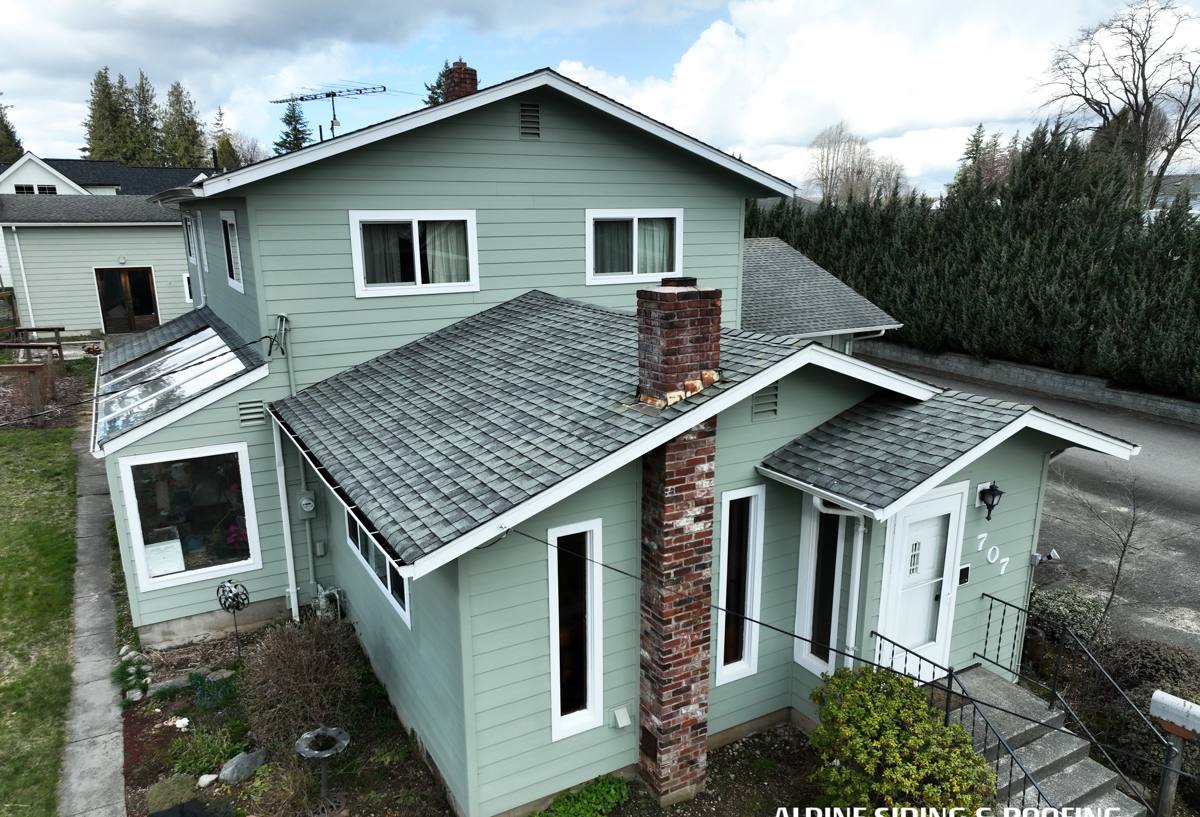
What Local Homes Actually Need From a Siding Job
Every siding installation has to solve the same basic problem: keep water out of the wall assembly while letting any moisture that does get in dry out again. In Geneva, that problem is harder than average for a few reasons.
- Wind-driven rain pushes water sideways and upward at wall penetrations, not just straight down — flashing details matter more here than in calmer inland areas.
- Extended damp periods mean any trapped moisture has less opportunity to dry between rain events, so a proper drainage plane and rainscreen gap behind the siding aren't optional extras.
- Moss and algae growth thrives on north-facing walls, shaded elevations, and anywhere siding stays damp longer — surface texture and finish quality affect how much organic growth takes hold.
- Salt-influenced air accelerates corrosion on fasteners, flashing, and trim if lower-grade materials are used.
None of this is exotic — it's standard Pacific Northwest coastal exposure. But it means a siding installer working in Geneva needs to build in margin that a crew from a drier climate might not think to include.
Why Moss Season Changes the Calculus
Moss doesn't just grow on roofs. Given a damp, textured, shaded surface, it will colonize siding too — especially at the lower courses near grade, behind shrubs, and on the north and west elevations that see the least sun. Once moss establishes itself on a porous or poorly finished surface, it holds moisture against the wall and accelerates whatever deterioration is already happening underneath. A smooth, factory-cured fiber cement finish gives moss and algae far less to grip onto than raw wood, primed spruce, or a field-applied paint film, and that alone reduces how often a homeowner needs to get up on a ladder with a scrub brush and moss treatment.
What a Correct Installation Involves
James Hardie siding is only as good as the installation behind it. The manufacturer's own instructions are specific, and skipping steps is the single biggest reason fiber cement siding underperforms in wet climates like this one. A correct job includes:
- A weather-resistive barrier installed and lapped correctly, with all penetrations sealed before siding goes up.
- A rainscreen gap (typically furring strips or a purpose-built drainage mat) behind the siding so bulk water and incidental moisture can drain and the wall can dry.
- Correct fastener placement and spacing per Hardie's published specs — over-driven nails, wrong fastener types, or improper spacing are common causes of premature cracking and reduced wind resistance.
- Proper flashing at every penetration — windows, doors, hose bibs, light fixtures, and anywhere else the wall is broken.
- Correct clearances from grade, roof lines, and horizontal surfaces (decks, patios) so siding isn't sitting in standing water or constant splash-back.
- Factory-cut and factory-primed edges wherever possible, with any field cuts sealed per manufacturer specification.
Skip any one of these and you can still end up with moisture problems behind James Hardie siding — the product isn't magic, it's a system, and the system only works when every part of it is installed to spec.
Our Process in Geneva
We approach every Geneva job the same structured way, adjusted for the specific exposure of that lot — corner lots and elevations facing prevailing weather get extra attention at flashing and drainage details.
1. Assessment and Measurement
We walk the exterior, note existing moisture damage, check current flashing and drainage conditions, and identify which elevations are taking the most weather exposure. This is also when we flag any sheathing or framing issues that need attention before new siding goes on — covering up a problem is worse than not starting.
2. Tear-Off and Substrate Prep
Old siding comes off, sheathing is inspected and repaired as needed, and the weather-resistive barrier goes on correctly — lapped shingle-style, taped, and sealed at every penetration.
3. Rainscreen and Drainage Plane
We install a furring or drainage mat system behind the siding so the wall assembly can drain and dry, rather than trapping moisture directly against the back of the cladding.
4. Hardie Installation to Spec
Panels or planks go up per James Hardie's fastening schedule and clearance requirements, with flashing integrated at every window, door, and penetration as we go — not added as an afterthought.
5. Trim, Caulking, and Finish Details
Trim boards, corners, and joints are sealed with products compatible with ColorPlus finishes, and every seam is checked before we call the job done.
6. Final Walkthrough
We walk the finished exterior with the homeowner, point out what was done and why, and answer questions about care and warranty coverage.
Comparing Siding Approaches for This Climate
| Factor | James Hardie Fiber Cement | Vinyl | Wood / Primed Spruce |
|---|---|---|---|
| Moisture absorption | Very low — engineered cement composite | None, but traps moisture behind panels if drainage isn't planned | High — absorbs and swells if finish fails |
| Moss/algae resistance | Smooth ColorPlus finish resists growth | Textured panels can still host growth | Porous surface, favorable for moss |
| Fastener/corrosion exposure | Standard corrosion-resistant fasteners hold well | Low fastener load, but can warp/crack in wind | Fasteners and surface both degrade over time |
| Repainting needed | Factory finish, repaint interval measured in decades | Never painted, but fades and can't be color-matched easily | Repaint every 3-7 years in this climate |
| Fire resistance | Non-combustible | Combustible, can melt/deform | Combustible |
We don't install vinyl, LP SmartSide, primed spruce, or cedar — not because those products can't work anywhere, but because our standard is a siding system that holds up to Geneva's specific mix of driving rain, salt air, and extended damp seasons with the least long-term maintenance burden. James Hardie's engineered fiber cement, backed by a factory finish and a strong transferable warranty, is what we're willing to put our name behind here.
Why It Matters That We Already Work This Area
A crew that already works Geneva and the broader Sudden Valley area knows which elevations catch the worst weather, which lots sit in perpetual shade where moss takes hold fastest, and how local drainage and grading tend to run. That's not something you get from a spec sheet — it's from having done the work here before. It also means we're not guessing at code requirements, permitting expectations, or how a given product performs a few years down the road in this specific microclimate, because we've seen it.
Signs It's Time to Consider Replacement
- Visible moss, algae, or persistent green staining that returns shortly after cleaning
- Soft spots, bubbling, or peeling paint on existing siding
- Cracked, warped, or separating boards, especially near ground level or roof lines
- Rising energy bills that suggest the wall assembly is no longer insulating or sealing properly
- Visible gaps at trim, corners, or window flashing
- Interior moisture signs — musty smells or staining on walls that share an exterior wall
Any one of these on its own isn't necessarily an emergency, but a few together usually mean the existing siding and its drainage plane are no longer doing their job.
What to Expect Cost-Wise
Siding installation cost depends on the size and complexity of the home, how much of the existing wall assembly needs repair before new siding goes on, and which Hardie product line and finish are chosen. Homes with straightforward elevations and sound sheathing cost less than homes with extensive trim work, multiple stories, or substrate repair needed underneath the old siding. We won't quote a number without seeing the house, but we'll walk you through exactly what's driving the estimate before any work starts.
If you're weighing a siding replacement in Geneva, we're happy to come take a look and give you a straightforward, no-pressure estimate — no obligation, just an honest read on what your home needs.