 Sudden Valley
 Roof Replacement Built for Ferndale's Coastal Climate
Ferndale sits close enough to the water that salt air is a real factor in how a roof ages, and far enough into Whatcom County's rain belt that moisture management matters more here than it does further inland. Homeowners who call us about a roof replacement in Ferndale are usually dealing with one of three things: a roof that's past its service life and starting to show it, moss and moisture damage that's been ignored a season too long, or storm damage that needs to get fixed before the next system rolls through. Whatever the starting point, the job is the same underneath — get water off the house and keep it off, in a climate that gives you very little room for error.
A roof replacement isn't just swapping old shingles for new ones. It's an opportunity to fix whatever caused the old roof to fail early, correct ventilation and moisture problems that are invisible from the ground, and set the house up to handle another two to three decades of Pacific Northwest weather without drama.
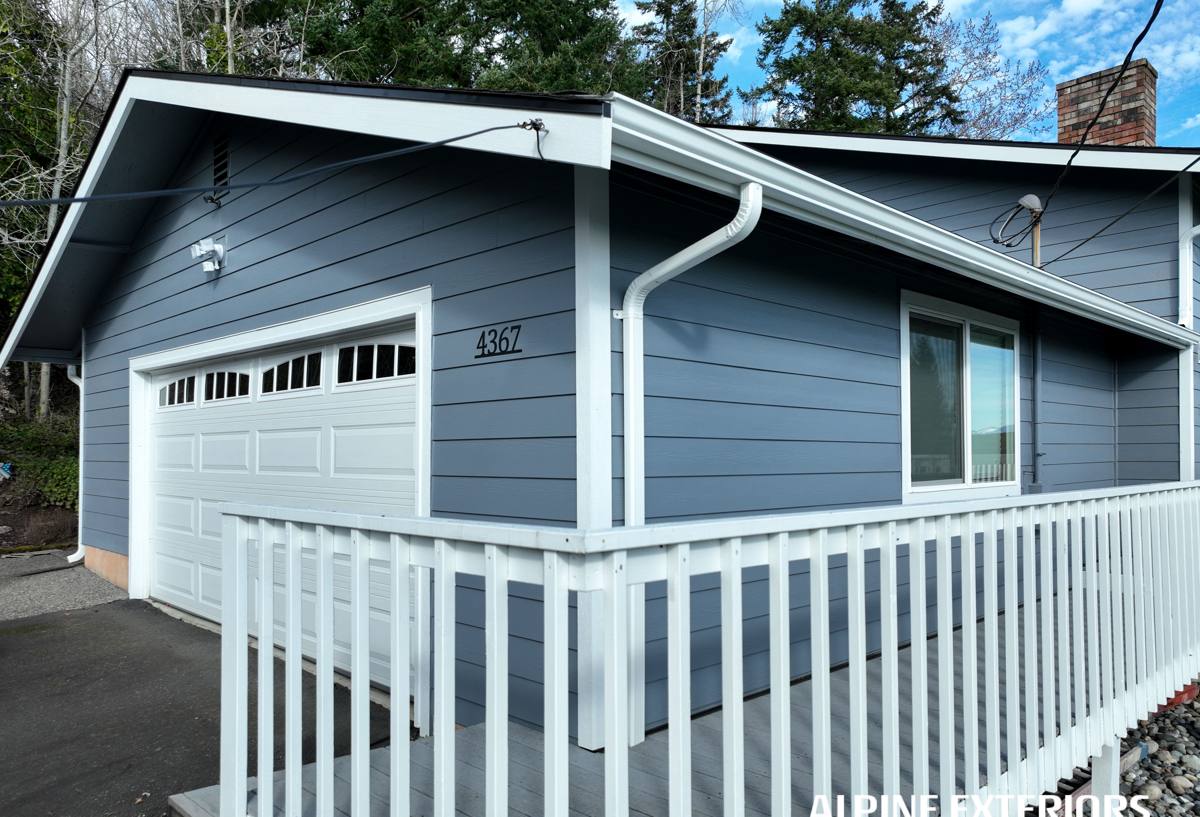
What Ferndale's Weather Actually Does to a Roof
Three things stand out for roofs in this part of Whatcom County, and they compound each other.
Salt Air and Metal Fatigue
Proximity to the Strait of Georgia and Bellingham Bay means airborne salt reaches roofs here more than it does in inland Washington. Salt accelerates corrosion on exposed metal — flashing, fasteners, gutter hardware, and any exposed metal roofing components. Cheap or under-spec metal fails faster near the coast than it would in a dry inland climate. This is why fastener and flashing quality matters more here than the shingle brand printed on the wrapper.
Driving Rain
Storms off the water don't just fall straight down — wind-driven rain gets pushed sideways under shingle tabs, around poorly sealed penetrations, and into any gap in the underlayment. A roof that would hold up fine in a calm-rain climate can leak here if the underlayment, flashing details, and shingle sealing aren't done correctly. Driving rain finds every shortcut in a roof system.
Moss Season
Whatcom County's cool, damp stretch runs long — moss and algae get a real foothold on north-facing slopes and shaded roof sections, especially under tree cover. Moss isn't just cosmetic. It holds moisture against the roofing material, lifts shingle edges as it grows, and works its way under tabs over time. A roof that's been fighting moss for years often has soft or damaged decking underneath that isn't visible until the old roofing comes off.
Signs a Ferndale Home Needs a Roof Replacement, Not Another Repair
Not every roof problem calls for a full replacement — plenty of issues are legitimately fixable with a repair. Here's how we tell the difference:
- Shingles that are cupping, cracking, or losing granules across large sections rather than in one isolated spot
- Multiple past repairs that haven't stopped the leaking, meaning the underlying system is compromised
- Soft or spongy decking discovered during inspection, which points to sustained moisture intrusion
- Heavy, persistent moss coverage that's been present long enough to affect the material underneath, not just the surface
- A roof at or past the manufacturer's expected service life, where patching one area just shifts the problem to the next
- Visible daylight or water staining in the attic that traces back to widespread wear rather than a single failed flashing point
If a roof is showing one or two of these in a contained area, a repair is often the honest answer, and we'll say so. Replacement makes sense when the damage is spread out or the system as a whole is at the end of its life.
What a Correct Roof Replacement Involves
The visible shingles get most of the attention, but the parts that actually determine how long a roof lasts in this climate are the ones underneath.
Tear-Off and Deck Inspection
We remove the old roofing down to the deck and inspect every square foot. This is the point where moss- and moisture-related decking damage shows up, and it's far cheaper to address during tear-off than to discover as a leak two years later. Any soft or compromised sheathing gets replaced before anything new goes down.
Underlayment
Given how much wind-driven rain this area sees, underlayment isn't a place to cut corners. A quality synthetic or self-adhered underlayment, installed with proper overlaps, is the actual waterproofing layer — the shingles are the first line of defense, but the underlayment is what keeps a home dry if wind pushes water past them.
Flashing and Penetrations
Chimneys, vents, skylights, and roof-to-wall transitions are where the majority of leaks start. Correct flashing — properly lapped, sealed, and tied into the underlayment — matters more than shingle selection in preventing leaks. Corrosion-resistant flashing is worth the modest upcharge this close to the water.
Ventilation
Poor attic ventilation traps moisture, which shortens the life of the decking and roofing material from underneath. A roof replacement is the right time to correct inadequate intake or exhaust ventilation, since the roof deck is already exposed.
Final Roofing Material and Detailing
Shingles get installed with attention to nailing pattern, exposure, and sealing — details that matter far more in high-wind, driving-rain conditions than in calmer climates. Edge metal, ridge caps, and valley work are finished to shed water in every direction the wind can push it.
Comparing Roofing Options for This Climate
| Material | How It Handles Local Conditions | Maintenance Considerations |
|---|---|---|
| Architectural asphalt shingles | Good wind rating, solid moisture performance with correct underlayment; widely used and well-understood in this climate | Benefits from periodic moss treatment on shaded slopes; moderate upfront cost |
| Standing seam metal | Excellent water shedding and wind performance; needs marine-grade or coated fasteners near the coast to resist salt corrosion | Low ongoing maintenance if installed with proper coastal-rated hardware; higher upfront cost |
| Basic 3-tab shingles | Lower wind rating and shorter service life; more vulnerable to driving rain over time | Lower upfront cost but more frequent replacement in this climate |
We'll talk through which option fits your budget and the specific exposure of your roof — a heavily shaded, north-facing roof has different priorities than one that's more open and sun-exposed.
Our Process for a Ferndale Roof Replacement
- On-site inspection — we look at the current roof, attic ventilation, and any visible trouble spots before quoting anything
- Written estimate — a clear scope of work and material selection, no vague allowances
- Tear-off and deck assessment — old material removed, decking inspected and repaired as needed
- Underlayment and flashing installation — the waterproofing layer that does the real work in this climate
- Roofing material installation — installed to manufacturer spec with attention to local wind and rain exposure
- Final walkthrough — we go over the finished roof with you before calling the job done
Why a Crew That Knows This Area Matters
A roof replacement done for a dry inland climate and one done for coastal Whatcom County shouldn't look the same on paper, even if the shingle brand is identical. The difference is in the underlayment spec, the flashing material, the fastener choice, and knowing which roof slopes in Ferndale are going to fight moss for the next fifteen years versus which ones won't. A crew that's replaced roofs across Sudden Valley and the surrounding Whatcom County area has already seen how the local weather treats different materials and details over time — that's the kind of judgment that keeps a callback list short.
We're also straightforward about cost factors. A few things that typically move the price on a Ferndale roof replacement:
- Roof size, pitch, and number of facets — steeper and more complex roofs take longer to work safely
- Extent of deck repair needed once the old roofing comes off
- Material selection — architectural shingles versus metal versus premium shingle lines
- Number and complexity of penetrations (chimneys, skylights, multiple vents)
- Access and staging — tree cover, driveway space, and roof height all affect labor time
We won't know your exact number until we've looked at the roof in person, but we'll walk you through what's driving the cost so there are no surprises on the estimate.
Get a Free, No-Pressure Estimate
If your roof is showing wear, fighting moss, or just old enough that you're wondering how much time is left on it, we're happy to take a look and give you an honest read on where things stand. Use the form below to request a free estimate for your Ferndale roof replacement — no pressure, just a straight answer about what your roof needs.