 Sudden Valley
 Windows Built for the Alger Climate
Homes around Alger sit close enough to the water and the open flats between Sudden Valley and the Skagit line to catch the worst of what Whatcom County weather throws at a house: salt-laden air moving in off the bay, driving rain that comes sideways for days at a time, and a moss season that runs longer here than it does thirty miles inland. Windows take a beating in that environment in ways that aren't always obvious from inside the house. Seals degrade faster in salt air. Wood sashes hold moisture longer under constant damp. Aluminum frames pit and corrode. And older single-pane or early double-pane units simply weren't built with this specific combination of exposure in mind.
Energy-efficient windows aren't just about a lower heating bill, though that matters in a county where the heating season runs long. They're also your first line of defense against moisture intrusion, drafts around failing seals, and the slow rot that starts at a window's weakest point and works into the wall framing behind it. For Alger homeowners, getting this right means choosing the right glass package, the right frame material, and the right installation detail for a specific kind of coastal-adjacent weather — not just picking whatever's on sale.
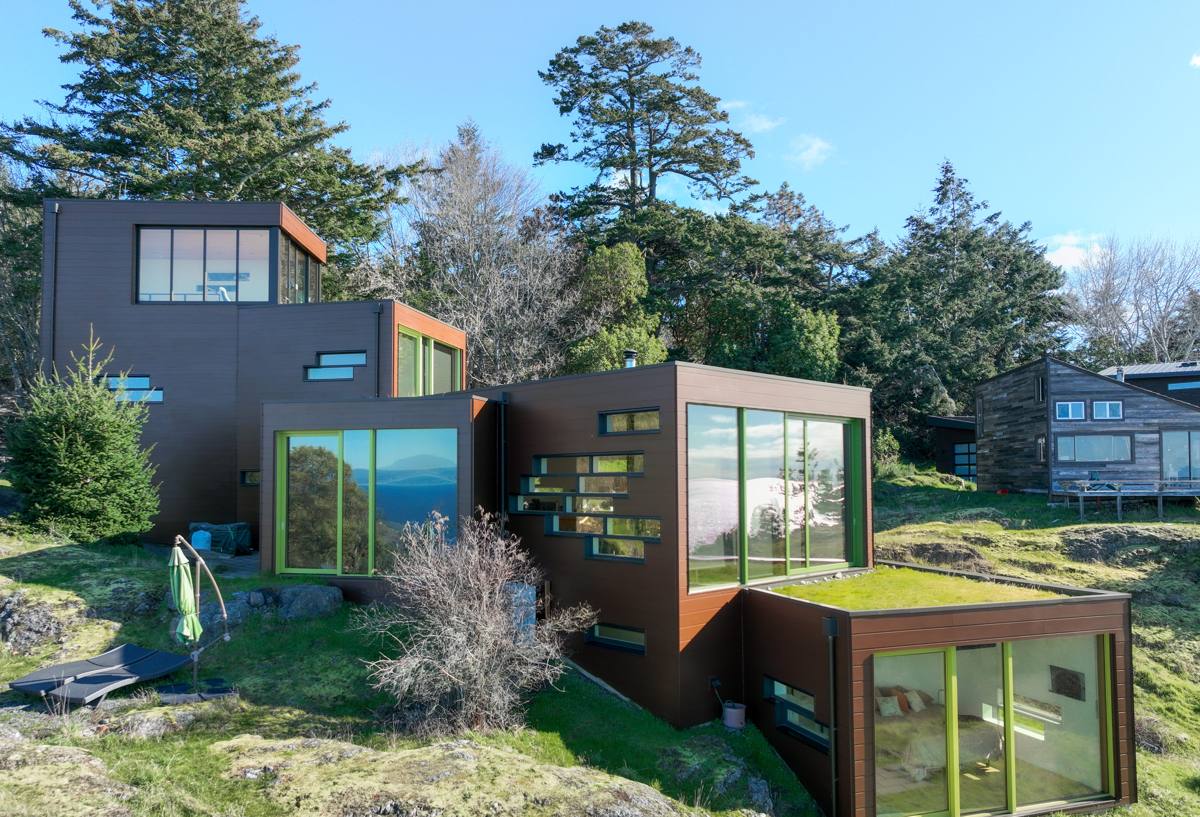
What Local Homes Actually Need
Moisture and Seal Performance
The biggest failure point we see on older windows in this area isn't the glass — it's the seal. Insulated glass units (IGUs) rely on a perimeter seal to keep argon or air trapped between panes. Once that seal fails, you get fogging between the panes, and no amount of cleaning fixes it. Salt air and constant humidity cycling accelerate seal breakdown compared to drier inland climates. When we spec windows for Alger properties, seal warranty and manufacturer track record on IGU longevity carry real weight in the decision, not just the U-factor on the label.
Frame Material Trade-Offs
Every frame material has a honest trade-off in this climate:
| Frame Material | Strengths Here | Watch-Outs |
|---|---|---|
| Vinyl | No corrosion, low maintenance, good insulating value, wide price range | Can expand/contract with temperature swings; quality varies a lot by manufacturer |
| Fiberglass | Very stable dimensionally, holds paint well, strong in wet/salt exposure | Higher upfront cost |
| Wood (clad or unclad) | Classic look, good insulator | Unclad wood needs real maintenance discipline in constant damp; higher moss/mildew risk on exterior faces |
| Aluminum | Strong, slim sightlines | Poor insulator unless thermally broken; prone to pitting/corrosion near salt air over time |
For most Alger homes we steer clients toward vinyl or fiberglass with a quality thermal break, reserving wood-clad for homeowners who specifically want that look and understand the maintenance commitment. This isn't a knock on any manufacturer — it's a straightforward read on which materials hold up with the least ongoing work in this specific weather pattern.
Glass Packages That Make Sense for This County
Low-E coatings and gas fills matter more here than the glossy brochures suggest, but not every home needs the top-tier package. A double-pane unit with a good Low-E coating and argon fill covers most Whatcom County homes well. Triple-pane makes sense on north-facing walls, homes with high heating costs, or rooms that never seem to hold heat — but it's not automatically the right call for every window on every wall, and we'll tell you plainly when it isn't worth the added cost.
What a Correct Installation Involves
The window itself is maybe half the equation. The other half is installation detail, and this is where a lot of energy-efficient window projects quietly fail. A premium window installed with poor flashing will underperform a mid-grade window installed correctly, especially in a climate that sees this much wind-driven rain.
The Steps That Actually Matter
- Rough opening inspection: checking for existing rot, soft framing, or prior water intrusion before the new window ever goes in
- Proper flashing sequence: sill pan flashing first, then side flashing, then head flashing — layered shingle-style so water always sheds outward, never behind the housewrap
- Air sealing, not just caulk: low-expansion foam or backer rod and sealant at the right depth around the frame, avoiding both gaps and over-compression
- Interior and exterior sealant compatible with your siding type so the seal doesn't fail at the transition point in a year or two
- Level, plumb, and square set — even a slightly racked frame stresses the sash and shortens the life of weatherstripping and locking hardware
- Final operation check on every window before we consider the job done — smooth operation, tight seal when locked, no binding
Skipping or rushing any one of these steps is how a homeowner ends up with a brand-new window that still drafts, still fogs, or still lets water into the wall cavity within a couple of seasons.
Our Process for Alger Projects
1. On-Site Assessment
We look at every window being considered for replacement — not just the ones you've noticed problems with. Seal failure and hidden moisture damage often show up on windows the homeowner assumed were fine. We check framing condition, current flashing (if any is visible), and how each window is oriented relative to prevailing wind and rain direction.
2. Honest Recommendation
You'll get a straight answer on which windows genuinely need replacement now, which can wait, and which glass/frame combination fits your budget and the specific exposure of that wall. We don't upsell a whole-house replacement when three windows on the weather side are doing the real work of letting in drafts and moisture.
3. Installation
Full flashing and air-sealing detail on every unit, coordinated with your existing siding and trim so the finished look is clean, not patched. If siding needs to come off around an opening to do the flashing correctly, we do that rather than caulking around the problem.
4. Final Walkthrough
Every window gets operated, checked for level and seal, and reviewed with you before we call the job finished.
Cost Factors to Understand Before You Budget
Window project costs vary widely based on a handful of real factors, not just window count:
| Factor | Why It Moves the Price |
|---|---|
| Frame material | Vinyl, fiberglass, and wood-clad sit at different price tiers before labor |
| Glass package | Double vs. triple pane, Low-E coating tier, and gas fill add cost but also long-term efficiency |
| Existing damage | Rotted framing or old flashing failures found during removal add repair time and material |
| Window size and type | Standard double-hung costs less than large picture windows, bays, or custom shapes |
| Retrofit vs. full-frame replacement | Full-frame replacement (removing to the studs) costs more but is often the right call when flashing or framing is compromised |
| Access and site conditions | Second-story windows, steep grades, or tight clearances add labor time |
We'll walk through which of these apply to your specific home during the estimate, so there aren't surprises once work starts.
Signs Your Windows Are Underperforming
- Fogging or condensation between the panes that doesn't clear with cleaning
- Visible gaps or drafts you can feel with a hand near the frame on a windy day
- Difficulty opening, closing, or locking a window that used to operate smoothly
- Soft or discolored trim or siding around a window frame
- Noticeably higher heating bills compared to similarly sized rooms in the house
- Visible moss or persistent green growth building up on exterior sills or trim
- Peeling paint or finish on interior sills, which often points to moisture working its way in from outside
Why a Crew That Already Works This Area Matters
A contractor who works Alger and the broader Sudden Valley area regularly knows which wall orientations catch the worst wind-driven rain, how the local moss season behaves against different siding and trim combinations, and which flashing details actually hold up against this specific weather pattern year after year — not just in a lab test. That local pattern recognition is the difference between a window installation that looks fine on day one and one that's still performing correctly in ten years. We're not guessing at how Whatcom County weather treats a window assembly; we've seen it firsthand on homes like yours.
Maintenance That Extends the Life of New Windows
Even a correctly installed, high-quality window benefits from a little seasonal attention in this climate:
- Clear debris and moss from sills and tracks before it holds moisture against the frame
- Check and refresh exterior caulking at the frame-to-siding joint every couple of years
- Operate windows a few times a year even if you don't regularly open them, so hardware and seals don't seize or dry out
- Watch for early condensation between panes and address it before the whole unit needs replacement
If you're weighing whether it's time to replace windows on your Alger property or just want an honest read on what condition they're really in, we're glad to take a look. The estimate is free, there's no pressure, and you'll get a straight answer about what your home actually needs — just fill out the form below to get started.