 Sudden Valley
 Decking Built for the Columbia Stretch of Sudden Valley
Homes in the Columbia area near Sudden Valley deal with a specific combination of weather that most decking never has to survive: long stretches of driving rain, moisture-laden marine air that moves through Whatcom County most of the year, and a moss season that can run from fall well into spring. A deck out here isn't just a place to put a grill and a couple of chairs — it's a structure that sits exposed to standing moisture, shaded tree cover, and freeze-thaw swings for months at a time. Composite decking, installed correctly, handles that combination far better than dimensional lumber, but "composite" isn't a single product with one set of rules. Getting it right in this specific area means understanding how the local climate actually attacks a deck, not just picking a board off a sample rack.
What the Climate Actually Does to a Deck Here
Driving rain doesn't just fall on a deck — it gets pushed sideways into ledger connections, railing posts, and any gap where water can pool instead of shed. Combined with the region's persistent moss growth, that moisture sits on horizontal surfaces longer than it would in a drier climate, feeding algae and mildew on any board that isn't built to resist it. Add in the salt-tinged marine air common across Whatcom County and you get accelerated corrosion on fasteners, brackets, and any hardware that isn't rated for a coastal-adjacent environment. None of this is unique to Columbia, but it's more pronounced here than in drier, more open parts of the county, especially on lots with tree cover or limited afternoon sun exposure.
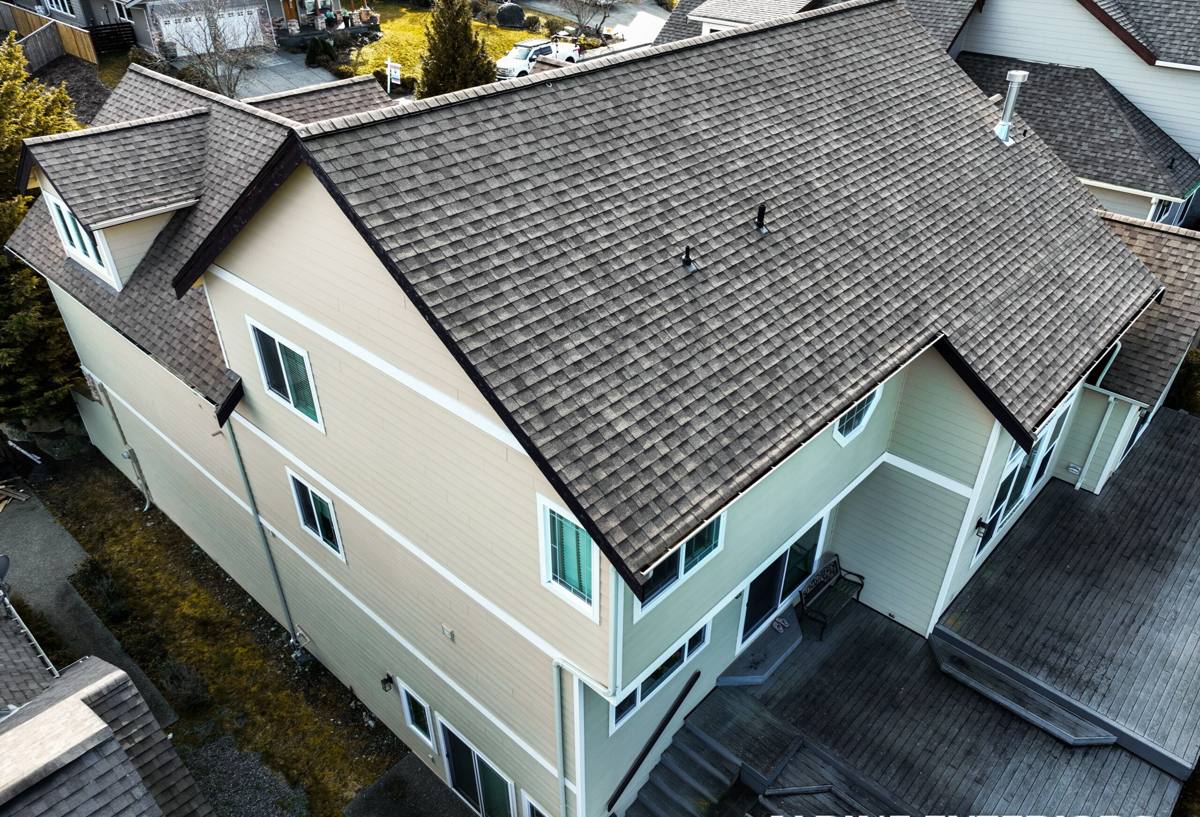
Why Composite Makes Sense for This Location
Wood decking can absolutely be built well, but it demands a maintenance schedule most homeowners don't keep up with — annual sealing, regular moss and mildew treatment, and periodic board replacement as sections rot or cup. In an area with this much sustained moisture, that maintenance gap shows up fast: gray, splintering boards, soft spots near the ledger, and moss establishing itself in the grain within a couple of seasons. Composite decking, particularly capped composite, gives up some of that natural wood look in exchange for a board that doesn't absorb water the same way, doesn't need annual finishing, and resists the mold and algae staining that's constant in this climate.
Composite vs. Wood vs. PVC — Honest Trade-offs
| Factor | Pressure-Treated Wood | Capped Composite | PVC/Cellular |
|---|---|---|---|
| Moisture resistance | Low — absorbs, warps, checks | High — resists moss and rot | Highest — fully synthetic |
| Maintenance | Annual sealing/staining | Occasional washing | Minimal washing |
| Upfront cost | Lowest | Mid-range | Highest |
| Lifespan (this climate) | 8–15 years with upkeep | 25–30 year warranties common | 25–30+ year warranties common |
| Feel/appearance | Natural, warmest look | Wood-grain textures, more color options | Cooler surface, more uniform look |
We install composite most often on Columbia projects because it's the point where cost, appearance, and moisture performance line up best for this climate. PVC has its place, especially on decks with heavy shade and near-constant dampness, but it's a real cost jump and not every homeowner needs that extra margin. We'll walk you through both honestly rather than pushing the more expensive option by default.
What a Correct Composite Installation Actually Involves
The board itself is only part of what makes a composite deck last out here. Most of the failures we get called out to inspect on older decks — composite or wood — trace back to the substructure and connection details, not the decking surface.
The Details That Matter in This Climate
- Ledger board flashed and sealed properly where it meets the house, since this is the single most common point of hidden water intrusion
- Joist spacing tightened to the composite manufacturer's spec, which is often closer than standard wood-deck framing
- Joist tape or a moisture barrier on top of framing lumber, so the substructure isn't absorbing the water the decking sheds
- Hidden fastener systems set up for consistent gapping, which allows water to drain instead of pooling between boards
- Stainless or coated hardware throughout, given the corrosive effect of sustained marine air on standard fasteners
- Positive drainage slope away from the house, so water is directed off the structure rather than back toward the foundation
- Ventilation underneath the deck where skirting or lower framing could otherwise trap moisture and encourage moss and mildew
Skip any one of these and the composite board on top can be a premium product and still fail early — usually through substructure rot, fastener corrosion, or standing water that leads to moss and algae on the deck surface within a couple of seasons.
Picking the Right Board for Columbia Conditions
Not all composite decking is built the same. The main distinction that matters here is capped versus uncapped composite.
Capped vs. Uncapped Composite
Uncapped composite is a wood-plastic blend all the way through, which means the exposed wood fibers can still absorb moisture and are more prone to surface mold in a wet, shaded climate. Capped composite wraps that core in a polymer shell, which is what actually gives it the moss and stain resistance homeowners are paying for. For a shaded, moisture-heavy lot near Sudden Valley, we generally steer people toward capped boards — the price difference is usually worth it given how much more resistant the surface is to the algae and mildew staining common in this area.
Color and Texture Considerations
Darker composite boards run hotter in direct sun, which matters less here than in drier inland climates, but they can also show pollen, dust, and water spotting differently than lighter tones. Deeper wood-grain textures hide surface debris and light moss growth better between cleanings than smooth, uniform finishes — a small detail, but a relevant one on a deck that's going to collect windblown debris under tree cover for most of the year.
How We Approach a Columbia Deck Project
A composite deck is a significant investment, and the process should reflect that rather than rushing straight to a quote.
Our Typical Process
- On-site assessment of the existing structure or build site, including drainage patterns, sun/shade exposure, and any ledger or foundation issues
- Discussion of board options and hardware based on your specific site conditions, not a one-size-fits-all recommendation
- A written estimate that separates substructure work, decking material, and railing/finish work so you can see where the cost is going
- Permitting handled on our end where required, since deck permitting requirements vary by structure size and height
- Installation following manufacturer spacing, fastening, and ventilation specs — not shortcuts that void the warranty
- A final walkthrough covering drainage, gaps, and basic care before we consider the job finished
Living With a Composite Deck Here
Composite decking is lower-maintenance than wood, not maintenance-free. In a climate with this much rain and moss pressure, a little seasonal attention goes a long way toward keeping the deck looking and draining the way it should.
Seasonal Maintenance Checklist
- Sweep debris and standing organic matter (leaves, needles, pollen) off the surface regularly, especially under tree cover
- Rinse or lightly scrub with a composite-safe cleaner a couple of times a year to prevent moss and algae from establishing
- Check that gaps between boards stay clear so water continues to drain rather than pool
- Inspect railing posts and ledger connections annually for any sign of movement or water staining
- Avoid pressure washing at close range or high PSI, which can damage the cap layer on composite boards
- Clear leaves and debris from underneath the deck periodically to maintain airflow and reduce trapped moisture
What Drives Cost on a Columbia Composite Deck
Every deck quote should be able to explain itself. The board price you see advertised is rarely the full picture — the factors below tend to move the total more than the composite brand itself.
| Cost Factor | Why It Matters Here |
|---|---|
| Substructure condition | Rotted or undersized existing framing often needs replacement before new decking goes down |
| Deck height and railing code | Higher decks require code-compliant railing and sometimes engineered stair/landing details |
| Drainage and grading | Sites with poor natural drainage may need additional grading or a drainage system underneath |
| Fastener and hardware grade | Corrosion-resistant hardware costs more but is worth it given the marine air exposure in this area |
| Board tier (capped vs. uncapped) | Capped composite costs more upfront but holds up better against moss and moisture over time |
| Access and site layout | Sloped, wooded, or tight-access lots common around Sudden Valley can add labor time |
Why It Matters That We Already Work in This Area
A deck built by a crew unfamiliar with Whatcom County's rain patterns, moss cycles, and drainage challenges tends to look fine on installation day and show problems two or three winters later — moss between boards, a soft spot near the ledger, hardware starting to streak with rust. We've built and repaired enough decks around Sudden Valley and the surrounding Columbia area to know which details actually matter here: where water collects on a given lot, how much shade a deck will realistically get through the year, and what hardware holds up against the marine air rather than just what's cheapest to source. If your property falls under an HOA or community design guideline, we'll work within that as part of the planning conversation rather than as an afterthought.
We also stand behind the work with a clear scope from the start — what's substructure, what's decking, what's railing and finish — so there's no ambiguity about what you're paying for or what's covered if something needs attention down the road.
If you're considering a new composite deck or replacing an aging one in the Columbia area, we're happy to take a look and give you a straightforward, no-pressure estimate. Use the form below to get started.