 Sudden Valley
 Siding Installation in Bellingham: What This Climate Actually Demands
Homes in and around Bellingham sit in a specific weather pattern that most siding products were never designed for. You get salt-laden air moving in off the bay, driving rain that comes in sideways during winter storms, and a moss season that can stretch from late fall through spring in shaded, north-facing spots. Any siding installed here has to handle all three at once, year after year, without babysitting from the homeowner. That's the lens we use on every Bellingham-area siding job, and it's why we've standardized on one product system rather than offering a menu of options that perform differently in this specific environment.
Whatcom County's marine climate isn't harsh in the way a desert or a hard-freeze region is harsh. It's harsh in a slow, cumulative way — moisture that never fully dries out between rain events, wind-driven water finding its way behind poorly lapped panels, and organic growth that thrives in the shade and humidity common to wooded lots around the lake. Siding here fails less often from a single storm and more often from years of small moisture intrusions nobody caught early.
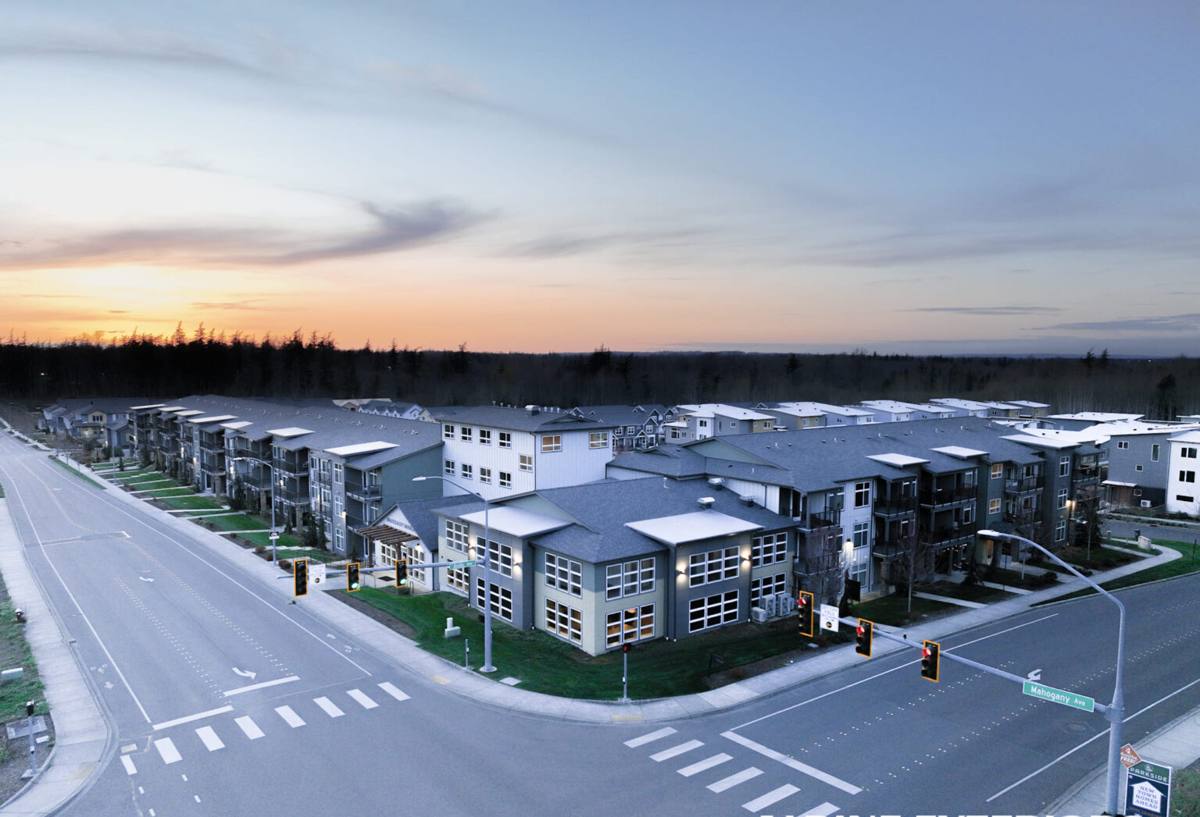
Why We Only Install James Hardie Fiber Cement
We install James Hardie fiber cement siding exclusively. We don't offer vinyl, LP SmartSide, primed spruce, cedar, or other fiber cement brands as alternatives — not because those products have no place anywhere, but because we've made a professional decision about what we're willing to put our name on in this specific climate.
What Fiber Cement Solves Here
- Moisture stability: Fiber cement doesn't swell, warp, or rot when it stays damp for extended periods, which matters in a region where siding can go weeks without a full dry-out cycle in winter.
- Non-combustible core: Hardie panels are made from cement, sand, and cellulose fiber — they don't feed a fire the way wood-based products can.
- Factory-cured finish: ColorPlus finish is baked on at the factory under controlled conditions, which holds up better against UV and salt exposure than field-applied paint.
- Pest resistance: Carpenter ants and moisture-loving insects that go after wood-based siding have nothing to eat in a cement-based product.
Vinyl siding is inexpensive and low-maintenance in mild climates, but it can warp under sustained heat exposure on south and west-facing walls and it relies heavily on caulking at seams to stay weathertight — caulking that needs periodic inspection and renewal. Wood-based products like LP SmartSide, primed spruce, and cedar offer a warmer, more traditional look, but they're organic materials, and organic materials in a wet, mossy climate need a level of ongoing maintenance — recaulking, repainting, moisture monitoring — that a lot of homeowners underestimate when they choose based on upfront cost alone. We'd rather tell you that plainly upfront than sell you something we know will demand more from you over the next fifteen years.
What Correct Siding Installation Looks Like in This Region
The product matters, but installation quality is what actually determines whether a home stays dry. A high-end product installed poorly will fail faster than a mid-grade product installed correctly. In a climate with this much driving rain, the details around water management are non-negotiable.
The Water Management Details We Don't Skip
- Weather-resistant barrier installed continuously behind the siding, lapped correctly top-over-bottom so water sheds outward rather than tracking behind the panel.
- Rainscreen or drainage gap where the wall assembly calls for it, giving any moisture that does get behind the siding a path to drain and dry rather than sitting against the sheathing.
- Proper flashing at every window, door, and roof-to-wall intersection — the places where the vast majority of siding leaks actually originate.
- Correct fastener placement and nailing pattern per Hardie's published installation specs, since under- or over-driven fasteners are one of the most common causes of early panel failure.
- Factory-recommended clearances at grade, decks, and roof lines so panels aren't sitting in standing water or snow load.
- Caulked and painted cut edges on every field cut, since an unsealed cut edge is the one place fiber cement can absorb moisture.
Skipping any one of these doesn't usually cause an immediate problem. It causes a problem in year four or five, after enough wet seasons have found the gap. That's the trap with siding work in a climate like this — bad installation and good installation look identical on day one.
Moss, Algae, and Siding: What's Actually Preventable
Bellingham's tree cover and shade patterns create ideal conditions for moss and algae growth on exterior surfaces, especially on north-facing walls and anywhere siding sits close to landscaping. Siding installation itself won't eliminate moss risk entirely — that's a function of sun exposure, grading, and nearby vegetation — but correct installation reduces how much moisture the siding holds onto in the first place, which is what moss and algae need to establish.
What Helps Reduce Moss and Algae Pressure
| Factor | Why It Matters |
|---|---|
| Proper rainscreen/drainage gap | Lets siding dry faster between rain events instead of staying damp against the wall |
| Correct panel clearance from grade and hardscape | Reduces splash-back moisture and soil contact that feeds growth |
| Trimmed vegetation clearance | Improves airflow and sun exposure on shaded wall sections |
| Factory-cured ColorPlus finish | Denser, more consistent surface than field-applied paint, which resists organic growth adhesion better |
| Gutter and downspout function | Prevents overflow water from running down and saturating wall sections repeatedly |
None of this makes siding maintenance-free. It just means the siding isn't working against you — it's not a food source and moisture trap the way a poorly ventilated wood product can become.
Our Process for Bellingham-Area Siding Jobs
Every job follows the same sequence, whether it's a full re-side or a section replacement.
- On-site assessment. We walk the exterior, check for existing moisture damage, evaluate current flashing and drainage conditions, and look at sun/shade exposure per elevation — north walls near the trees get evaluated differently than south-facing walls in the open.
- Written scope and estimate. You get a clear breakdown of what's included — tear-off, house wrap or rainscreen, trim, flashing, panel install, caulking, and paint touch-up — before any work starts.
- Tear-off and substrate check. Old siding comes off and we inspect the sheathing underneath for rot or existing moisture damage before anything new goes up. Problems found here get addressed, not covered.
- Weather barrier and drainage plane installation. This is the step that determines long-term performance, and it's the step that's invisible once the siding goes on — which is exactly why we don't rush it.
- Panel installation to Hardie spec. Correct fastener schedule, clearances, and flashing integration at every penetration.
- Final detailing. Caulked joints, painted cut edges, and a walk-through so you know what was done and why.
Why a Crew That Already Works This Area Matters
Siding installation isn't identical from one region to the next, and it isn't even identical from one wall of a house to another once you factor in sun exposure, shade, and prevailing wind direction. A crew that regularly works Bellingham and the greater Sudden Valley area already knows which elevations tend to hold moisture longer, which lots have the shade and tree cover that raise moss risk, and how driving rain off the water tends to hit certain wall orientations harder than others. That's not something you get from a general installation manual — it's pattern recognition built from doing this work in this specific place, repeatedly.
It also means we're not guessing about permitting, local inspection expectations, or how a given neighborhood's homes were originally built and wrapped. Whatcom County's building stock spans a wide range of eras and original construction quality, and knowing what's commonly hiding behind older siding in this area shapes how we scope a job before we ever remove the first panel.
Cost Factors for Bellingham Siding Installation
We don't publish fixed pricing because every home is different, but the main cost drivers are consistent from job to job:
| Factor | How It Affects Cost |
|---|---|
| Home size and wall complexity | More square footage and more corners, gables, and cutouts increase labor and material |
| Current substrate condition | Rot repair or sheathing replacement adds cost but is essential to fix, not cover |
| Tear-off vs. new construction | Removing and disposing of old siding adds labor versus a bare-wall install |
| Panel profile and trim selection | Lap width, shingle-style panels, and trim detail level affect material cost |
| Access and site conditions | Steep lots, limited access, or multi-story walls affect equipment and labor time |
| Drainage plane requirements | Adding a rainscreen system where none exists is additional labor and material but pays off in longevity |
Signs Your Current Siding Needs Attention
- Soft or spongy spots when pressed, especially near the bottom courses or below windows.
- Persistent moss or algae staining that returns quickly after cleaning.
- Visible warping, buckling, or gaps at panel seams.
- Peeling or bubbling paint, which often signals moisture trapped underneath rather than just an aging paint job.
- Rising energy bills that could point to compromised insulation behind failing siding.
- Visible rot or staining on trim boards, fascia, or corner boards.
What to Ask Before Hiring Anyone for Siding Work
Whether you call us or someone else, these are the questions that separate a contractor who understands moisture management from one who's just hanging panels:
- Will you install a drainage gap or rainscreen, and under what conditions do you recommend it?
- How do you handle flashing at windows, doors, and roof-to-wall transitions?
- What's your fastening schedule, and is it to the manufacturer's published spec?
- Will cut edges be sealed and painted before or immediately after installation?
- What does your written warranty actually cover — labor, product, or both — and for how long?
If your Bellingham-area home is due for new siding or you're seeing early signs of moisture or moss trouble, we'll come take a look and give you a straightforward, no-pressure estimate — no obligation, just an honest read on what your home needs.