 Sudden Valley
 Board & Batten in Bellingham: A Look That Has to Work as Hard as It Looks Good
Board and batten is one of the most requested siding profiles we install in Bellingham, and it's easy to see why. The vertical lines read as clean and modern on newer builds, and they read as classic Pacific Northwest farmhouse on older homes and additions. But a Bellingham homeowner isn't just buying a look. They're buying a siding system that has to survive salt air drifting in off the water, driving rain that comes in sideways for months at a time, and a moss season that can run from fall through spring. Board and batten done wrong — wrong material, wrong fastening, wrong flashing — turns that beautiful vertical line into a moisture trap. Board and batten done right is one of the most durable, low-maintenance profiles available. This page is about what "done right" actually means for a Bellingham home.
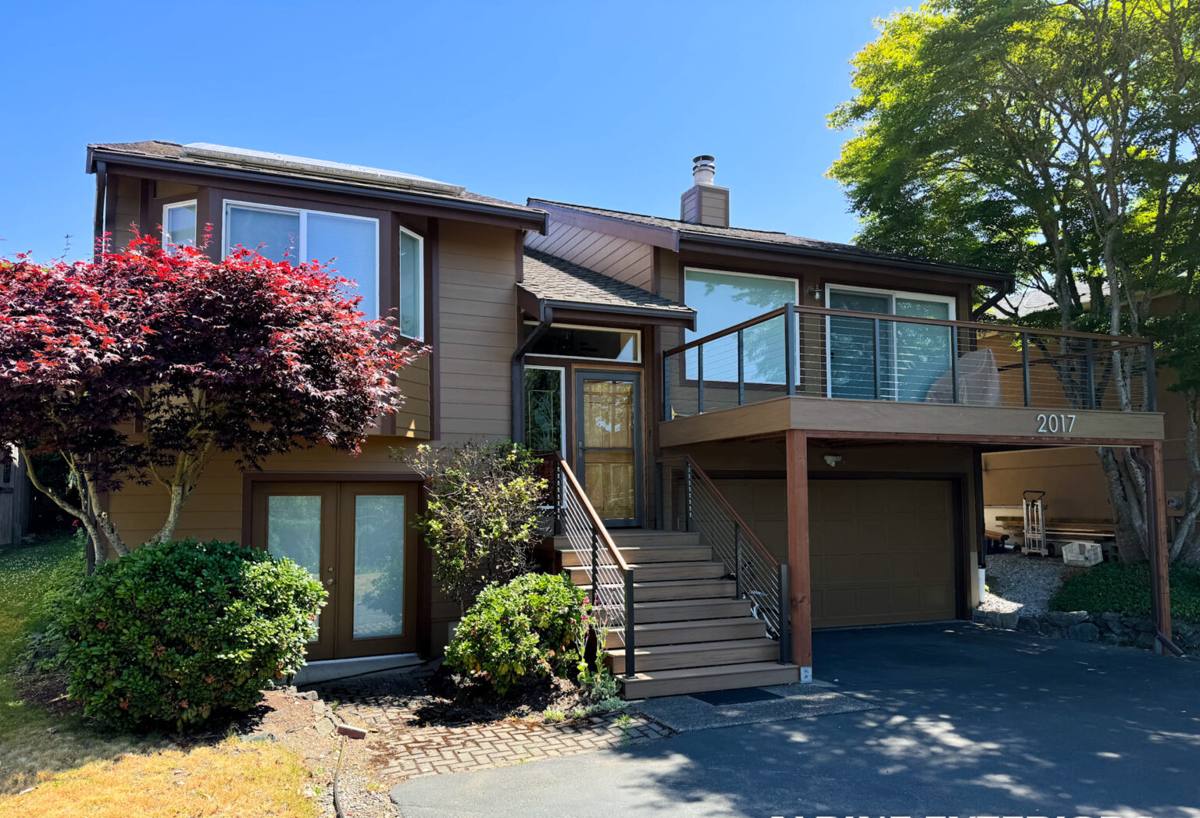
What Bellingham's Climate Actually Does to Vertical Siding
Board and batten siding has more seams than horizontal lap siding — every batten strip covers a joint, and every joint is a place water can try to get behind the wall. In a dry climate, that's a minor detail. In Whatcom County, it's the whole ballgame.
Salt Air
Proximity to marine air means airborne salt settles on exterior surfaces and accelerates corrosion of fasteners, trim, and any metal flashing components. Materials and hardware that aren't rated for coastal exposure corrode faster here than they would inland, and once a fastener starts to fail, the panel it's holding starts to move.
Driving Rain
Wind-driven rain doesn't just fall on a wall — it gets pushed into it. Vertical board and batten profiles rely on the battens shedding water away from the seams beneath them. If the batten spacing, fastening, or water-resistive barrier behind the panel is off, driving rain will find the gap and work its way behind the siding over time.
Moss and Sustained Moisture
Long, cool, wet stretches from fall through spring keep exterior surfaces damp for extended periods, which is exactly the environment moss and mildew need to take hold. Siding material that absorbs moisture stays wetter longer and gives moss more of a foothold than material that sheds water and dries out between rain events.
How Board & Batten Siding Is Actually Built
Board and batten isn't a material — it's a pattern. Wide flat panels are installed first, then narrower strips (the "battens") are fastened over the seams between panels, creating the signature vertical shadow lines. That means the performance of the whole system depends entirely on what the panels and battens are made of, and how carefully the seams underneath are managed.
The Substrate Behind the Panels
Every board and batten installation needs a properly lapped water-resistive barrier, correctly flashed openings, and attention to how water that does get past the outer layer will drain and dry. This part of the job is invisible once the siding is up, which is exactly why it's the part that separates a durable installation from a problem waiting to surface in five to ten years.
Why Panel Material Is the Deciding Factor
Because board and batten has more seams per square foot than lap siding, the panel material's ability to resist moisture absorption, hold paint, and stay dimensionally stable matters more here than on almost any other siding profile. This is where the choice of material stops being cosmetic and starts being structural.
Why We Install Board & Batten Only in James Hardie Fiber Cement
We don't offer board and batten in vinyl, engineered wood, or primed spruce, and it's not because those materials can't be shaped into a board and batten pattern — they can. It's because of what happens to them over years of Bellingham's specific weather.
Vinyl board and batten is lightweight and low-cost up front, but it expands and contracts with temperature swings, which stresses the seams that board and batten depends on, and it can become brittle over time in ways that show up as cracking around fasteners. Engineered wood products use wood fiber with a resin binder, which performs fine in dry, moderate climates but is more sensitive to sustained moisture exposure at cut edges and seams — exactly what a marine climate with a long wet season delivers. Primed spruce is real wood, and real wood siding needs consistent repainting and edge sealing to keep moisture out, which is a maintenance commitment most homeowners underestimate until the first signs of rot show up at the battens.
James Hardie fiber cement doesn't share those weaknesses. It's non-combustible, dimensionally stable across temperature and humidity swings, and manufactured with a factory-applied ColorPlus finish that's baked on rather than field-applied, so the color holds up to UV and salt air exposure far longer than a job-site paint job. Hardie also engineers its products by climate zone — homes in our region use the HZ5 product line, which is formulated for areas with freeze-thaw cycles and sustained moisture, rather than the HZ10 line built for warm, dry climates. That's the kind of climate-specific engineering that matters when the siding has to survive a Whatcom County winter, not just look good on install day.
What a Correct Board & Batten Installation Involves
The difference between board and batten that lasts 30-plus years and board and batten that needs rework in year eight almost always comes down to details most homeowners never see once the job is finished. Here's what we hold every crew to:
- Properly lapped and sealed water-resistive barrier behind every panel, with no gaps at seams or penetrations
- Correct panel spacing to allow for material expansion and contraction without stressing the battens
- Fasteners rated for coastal/marine exposure, driven at the manufacturer-specified pattern and depth
- Flush, properly flashed transitions at windows, doors, and roof lines — the most common source of hidden leaks
- Battens installed with consistent reveal and secure fastening into structural framing, not just into the panel
- Factory-finished ColorPlus panels caulked and touched up per Hardie spec, not field-painted as a substitute
- Proper clearance at the base of the wall so board and batten doesn't sit in contact with soil, deck surfaces, or standing water
Board & Batten vs. Other Siding Profiles for Bellingham Homes
Board and batten isn't the right fit for every home or every budget, and part of an honest consultation is talking through how it compares to the alternatives.
| Profile | Look | Seam Exposure | Best Fit |
|---|---|---|---|
| Board & Batten | Vertical, farmhouse/modern | Higher — more seams to manage | Homes wanting a distinct vertical look, gables, accent walls |
| Horizontal Lap | Traditional, widely used | Lower — fewer seams, simpler water path | Full-home siding where low maintenance is the top priority |
| Shingle/Shake Panel | Textured, traditional coastal | Moderate | Homes wanting a textured, traditional PNW look |
A lot of Bellingham homeowners land on a mixed approach — board and batten on gables or an accent section, lap siding on the main field — which gets the visual impact without maximizing seam count across the whole home.
What Drives the Cost of Board & Batten Siding
| Factor | Why It Matters |
|---|---|
| Home size and wall complexity | More corners, gables, and dormers mean more cuts, seams, and flashing detail |
| Existing siding removal | Tear-off and disposal of old siding adds labor beyond a straightforward re-side |
| Substrate condition | Sheathing repair or replacement if moisture damage is found once old siding comes off |
| Panel and batten dimensions | Wider reveals and custom batten spacing take more material and labor time |
| Trim and accent detail | Window/door trim, corner boards, and transition detailing add finish-carpentry time |
We don't quote board and batten off a square-footage guess. Every estimate is based on an actual walk of the home, because the condition of what's underneath the existing siding affects the job as much as the size of the house does.
How Our Process Works
1. On-Site Walkthrough
We look at the whole exterior, not just the walls you want re-sided — moss buildup, existing trim condition, and any signs of past moisture intrusion all factor into the plan.
2. Honest Scope and Estimate
You get a written estimate that spells out what's included: tear-off (if needed), substrate prep, water-resistive barrier, panels, battens, trim, and finish detail. No vague allowances.
3. Removal and Substrate Check
If we're removing old siding, we check the sheathing before covering anything back up. Hidden rot doesn't get sealed behind new siding — it gets addressed and documented first.
4. Installation to Manufacturer Spec
Panels, fastening, flashing, and battens go in per James Hardie's published installation requirements, which is also what keeps the manufacturer's warranty intact.
5. Final Walkthrough
We walk the finished job with you before we call it done.
Why It Matters That We Already Work in Bellingham
A crew that installs siding here regularly already knows how Bellingham's mix of salt air, driving rain, and moss season plays out on real homes — which wall orientations take the worst weathering, where moisture problems tend to originate, and what fastening and flashing details actually hold up here versus in a drier inland climate. That local pattern recognition is the difference between a generic installation and one that's specifically built for what this area throws at a house year after year. We're not learning Whatcom County's climate on your home — we already know it.
If you're considering board and batten siding for a home in Bellingham or elsewhere around Sudden Valley, we're happy to walk your property and give you a straightforward, no-pressure estimate — just fill out the form below.