 Sudden Valley
 Why Acme Roofs Take a Different Kind of Beating
Homes around Acme sit in a stretch of Whatcom County where the weather doesn't let up for long. Moist Pacific air moves through the valley for most of the year, rainfall is frequent and prolonged rather than just heavy, and the tree cover that makes this area attractive also means shaded, damp roof surfaces that stay wet longer after every storm. Add in the salt-laden air that reaches inland from the Sound on a west wind, and you've got three separate stressors working on a roof at once: moisture intrusion, organic growth, and slow metal corrosion if the wrong materials or fasteners were used.
A roof that's correctly built for this climate doesn't fight these conditions with brute force. It's designed so water sheds fast, moss has less to grab onto, and every metal component is rated to hold up to the salt exposure common in this part of Washington. That's a different design brief than a roof built for a dry inland climate, and it's why we treat Acme jobs as a climate-specific install, not a generic one.
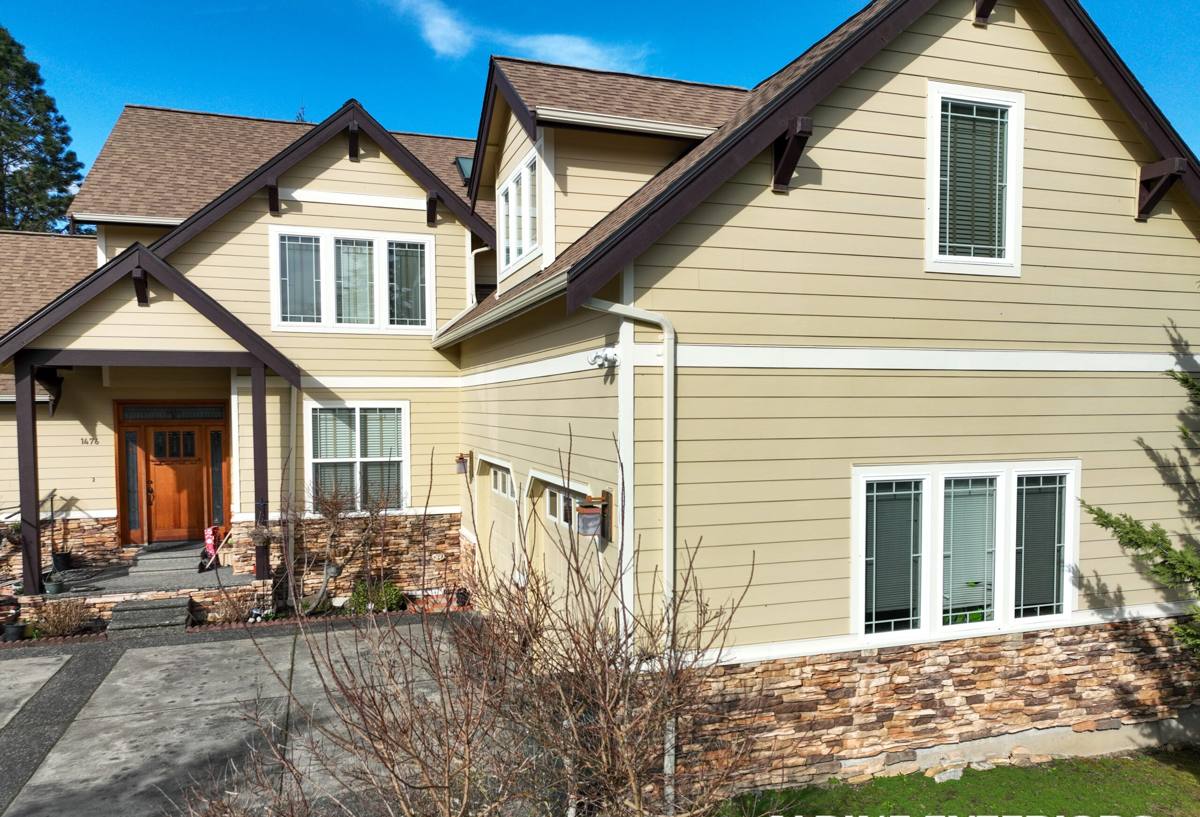
What Salt Air, Rain, and Moss Actually Do to a Roof
Driving Rain
It's not just rainfall totals that matter — it's wind-driven rain hitting a roof at an angle instead of falling straight down. That pushes water sideways into laps, seams, and penetrations that a fair-weather install might get away with. Underlayment, seam design, and flashing details all have to account for water moving uphill or sideways under wind pressure, not just gravity.
Long Moss Season
Shaded roof sections and north-facing slopes stay damp for extended stretches, which is exactly what moss and algae need to establish. On composition shingle roofs this means gradual granule loss and mat degradation. Metal roofing doesn't feed moss growth the way shingles do, but debris and organic buildup can still collect in low-slope areas, valleys, and against trim if the roof wasn't detailed to shed debris cleanly.
Salt Air
Coastal-influenced air carries chloride that accelerates corrosion on unprotected steel, low-grade fasteners, and cut edges that weren't properly sealed. This is the factor most often overlooked on inland-adjacent properties like those around Acme — homeowners assume salt exposure is a beachfront-only problem, but airborne salt travels well inland on prevailing winds, especially at elevation or in open exposure.
What a Correctly Installed Metal Roof Actually Involves
A metal roof is only as good as what's underneath it and how the details are handled. The visible panel is the easy part. The parts that determine whether the roof performs for decades are mostly things you won't see once the job is done:
- A high-temp, self-adhered underlayment at eaves, valleys, and penetrations — standard felt breaks down under the moisture cycling common here
- Panel fasteners and clips matched to the panel metal to avoid galvanic corrosion between dissimilar metals
- Closed or vented ridge detailing that keeps wind-driven rain out while still allowing the attic to breathe
- Properly lapped and sealed flashing at every wall intersection, chimney, and vent penetration
- Correct panel fastening pattern and spacing for local wind exposure, not just manufacturer minimums
- Ice-and-water shield or equivalent protection at eaves and valleys where water concentrates
Skip any one of these and the roof can still look right for a few years before a leak shows up — usually in the exact spots this list covers.
Choosing a Metal Roofing System for an Acme Property
Not every metal roofing system is the right fit for every house. The two most common options we install differ in seam design, fastener exposure, and long-term maintenance — all of which matter more in a wet, salt-influenced climate.
| Factor | Standing Seam | Exposed-Fastener Panel |
|---|---|---|
| Fasteners | Concealed under seams — not exposed to weather | Visible screws through the panel face |
| Water resistance | Excellent — seams interlock, no penetrations in the field of the panel | Good, but exposed fasteners are the most common source of future leaks |
| Maintenance | Minimal; no fasteners to re-tighten or reseal | Fastener washers can compress or degrade and need periodic checking |
| Upfront cost | Higher | More budget-friendly |
| Best fit | Full re-roofs, homes with heavy rain/wind exposure | Outbuildings, budget-conscious full replacements, lower-slope sections |
For most primary Acme homes, we recommend standing seam given the rain and salt exposure in this area — the lack of exposed fasteners removes the single most common long-term failure point. Exposed-fastener panels are still a legitimate option and can make sense on a garage, shop, or secondary structure where budget is the priority.
Our Process, Start to Finish
- On-site assessment — we look at slope, existing decking condition, ventilation, and any moisture damage from the prior roof before quoting anything
- System recommendation — we walk you through panel type, gauge, and finish options suited to your home's exposure, not a one-size answer
- Tear-off and deck inspection — old roofing comes off and we check the deck for rot or soft spots before anything new goes down
- Underlayment and flashing — the moisture barrier and all flashing details get installed correctly the first time, since this is what actually keeps water out
- Panel installation — panels are fastened and sealed to the specified pattern for wind and rain exposure
- Final walkthrough — we go over the finished roof with you, including what maintenance (if any) it needs going forward
Maintenance: What an Acme Metal Roof Actually Needs
One of the real advantages of metal roofing in this climate is how little ongoing maintenance it requires compared to shingles — but "little" isn't "none." A few simple habits keep a metal roof performing for its full service life:
- Clear debris (needles, leaves, branches) from valleys and low-slope transitions once or twice a year, especially under mature trees
- Rinse off accumulated pollen, dust, or light algae film with a garden hose — avoid pressure washing, which can damage seams and finishes
- Have gutters checked and cleared regularly so water isn't backing up against the eave edge
- After any major windstorm, do a visual check for lifted trim, dented panels, or displaced flashing
- Watch for any fastener or flashing issues at the annual point if the system uses exposed fasteners
Because metal doesn't provide the organic surface moss needs to root into, homes that switch from composition shingles to metal typically see a noticeable drop in moss and algae maintenance — a real benefit given how long the moss season runs in this part of Whatcom County.
Mistakes We See on Roofs Installed by Out-of-Area or Inexperienced Crews
Metal roofing looks straightforward, and a lot of crews will install it — but installing it correctly for this climate is a narrower skill set. The problems we get called out to fix most often trace back to a handful of shortcuts:
- Standard felt underlayment used instead of a high-temp, moisture-rated product
- Mismatched metals between panels and fasteners causing galvanic corrosion within a few years
- Flashing details that weren't sealed or lapped correctly at wall and chimney intersections
- Insufficient attic ventilation, leading to condensation issues underneath an otherwise sound roof
- Fastener patterns spaced for a calmer climate than what Acme actually sees
None of these show up on day one. They show up two, five, or eight years later — which is exactly why the installation details matter more than the panel itself.
What Affects the Cost of a Metal Roof in This Area
| Factor | Why It Matters |
|---|---|
| Panel system | Standing seam costs more upfront than exposed-fastener panel, but has a lower long-term maintenance cost |
| Roof complexity | Valleys, dormers, and multiple roof planes add labor and flashing work |
| Existing deck condition | Rot or soft decking found during tear-off needs repair before new roofing goes down |
| Underlayment upgrade | Full moisture-barrier coverage costs more than minimum code but pays off in this rainfall pattern |
| Access and pitch | Steep or hard-to-access roofs take longer and require more safety setup |
We don't quote a job until we've actually looked at the roof — broad online estimates for metal roofing rarely reflect what a specific Acme property needs once slope, decking condition, and complexity are factored in.
Why a Local, Sudden Valley-Area Crew Makes a Difference
A crew that regularly works Acme and the broader Sudden Valley area already understands what this specific stretch of Whatcom County throws at a roof — the rainfall pattern, the moss pressure under tree cover, and the salt exposure that catches a lot of homeowners off guard. That's not something you get from a national installer parachuting in for a single job. It shows up in the underlayment spec, the fastener choice, and the flashing details that don't get cut corners because the crew has seen what happens when they are.
It also means we're not going anywhere once the job is done. If a question comes up about maintenance, a storm causes damage, or you just want a second opinion before winter, you're calling a crew that's still working in your area, not chasing down a company that moved on to the next region.
If you're weighing a metal roof for your Acme home, we're happy to take a look and walk you through what your specific roof needs — no pressure, no obligation. Use the form below to request a free estimate.