 Sudden Valley
 Roof Repair Built for Ferndale's Climate
Ferndale sits close enough to the water and open farmland that roofs here take a specific kind of beating: salt-tinged air drifting in off the Strait, driving rain that comes in sideways during fall and winter storms, and a moss season that seems to start earlier and last longer every year. A roof repair that works in a drier inland climate can fail fast out here if it doesn't account for those three things together. We repair roofs in and around Ferndale on a regular basis, and almost every call starts the same way: a homeowner noticed a stain on a ceiling, a shingle in the yard, or a patch of moss that finally got out of hand, and wants to know what's actually going on up there before they spend money.
This page is about roof repair specifically — not full replacement, not general roofing information. If your roof is basically sound but has a problem area, this is what a correct repair looks like and what we do differently because we work Whatcom County roofs every week.
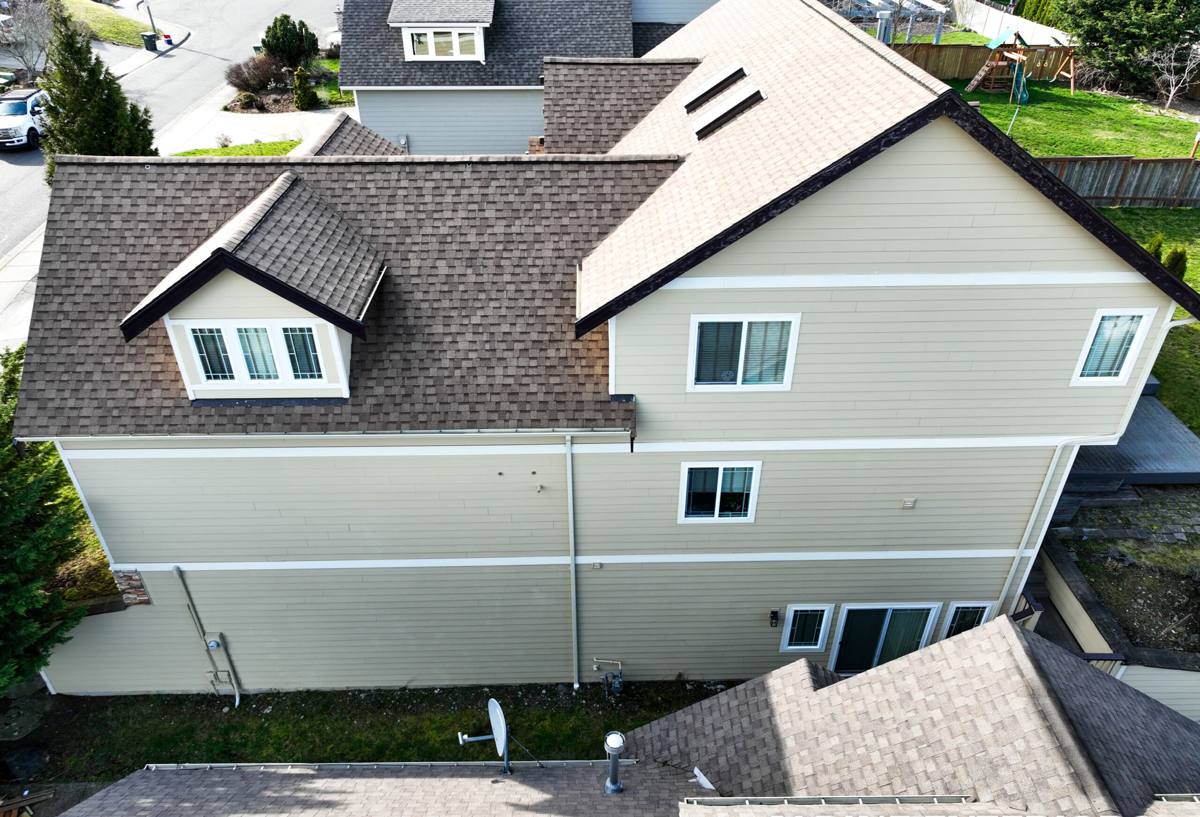
What Ferndale's Weather Actually Does to a Roof
Salt Air and Metal Fatigue
Homes closer to Bellingham Bay and the Strait of Georgia get a steady, low-level dose of salt-laden air. It's not dramatic like a beachfront property, but over years it accelerates corrosion on exposed fasteners, flashing, and any unpainted or thin-gauge metal. We see this most on older step flashing and drip edge that was installed with standard fasteners instead of corrosion-resistant ones. A repair that reuses corroded fasteners or bare metal flashing in a salt-influenced zone is a repair that will need redoing sooner than it should.
Driving Rain and Wind-Driven Water
Whatcom County storms don't always drop rain straight down. When wind pushes rain sideways, water gets forced up under shingle tabs, sideways through poorly lapped flashing, and into any gap that would stay dry in a calm rain. This is why so many "mystery leaks" in Ferndale homes only show up during specific storm conditions — the water is entering horizontally, not just pooling. Any repair has to account for wind-driven water, not just gravity drainage.
Moss, Shade, and Extended Wet Season
Between the tree cover common in this area and a wet season that can run from October well into spring, moss and moisture-loving growth get a long runway. Moss holds water against the roofing material, works its way under shingle edges as it grows, and can lift tabs enough to create an entry point for water even without any storm damage at all. North-facing slopes and areas shaded by trees are almost always the first place we check.
Signs a Ferndale Roof Needs Repair, Not Just Watching
- Ceiling stains that appear or darken after a windy rainstorm specifically, not every rain
- Granules collecting in gutters or at downspout outlets in noticeably larger amounts than before
- Visible moss or dark streaking concentrated on shaded or north-facing sections
- Shingle tabs that look lifted, curled, or cracked, especially near valleys or roof-to-wall transitions
- Flashing around chimneys, skylights, or vent pipes that looks rusted, separated, or caulked-over as a patch
- Daylight visible through the roof deck from inside the attic
- Soft or spongy spots when walking the roof (a sign of deck damage underneath)
Any one of these on its own might be minor. Several together, especially combined with the age of the roof, usually means it's worth a proper inspection before the next big storm rather than after.
What a Correct Roof Repair Actually Involves
A lot of roof "repairs" in this region are really just surface patches — a bead of roofing cement over a visible gap, a shingle nailed back down without checking what's underneath it. That approach hides a symptom without fixing the cause, and on a Ferndale roof dealing with wind-driven rain and moss, it tends to fail again within a season or two. A correct repair follows a different sequence.
1. Find the Actual Entry Point
Water travels. A stain on a bedroom ceiling might trace back to a flashing failure several feet away, following a rafter or the underside of the deck before it shows up as a visible mark. We trace the path from the interior damage back to the exterior cause rather than assuming the leak is directly above the stain.
2. Check the Roof Deck, Not Just the Shingles
If water has been getting in for any length of time, the plywood or OSB deck underneath may be soft, delaminating, or rotted. Repairing the surface layer over a compromised deck doesn't hold — the new material has nothing solid to attach to, and the underlying rot keeps spreading. Deck condition gets checked before any surface repair is done.
3. Match Materials and Method to What's There
Repairs need to tie into the existing roofing system correctly — matching shingle type and exposure, lapping flashing the right direction relative to water flow, and using fasteners and underlayment appropriate for this climate rather than whatever's fastest. A patch that doesn't integrate properly with the surrounding roof just creates a new weak point.
4. Address the Cause, Not Just the Hole
If moss caused the lift that let water in, the moss gets removed and the area treated, not just covered. If a flashing detail was undersized or installed wrong originally, it gets corrected, not replicated. A repair that reproduces the original mistake is a repair you'll pay for twice.
Repair vs. Replacement: How We Make the Call
| Factor | Favors Repair | Favors Replacement |
|---|---|---|
| Roof age | Well within expected lifespan for the material | At or past expected lifespan for the material |
| Extent of damage | Isolated to one section or detail (flashing, one slope, one penetration) | Spread across multiple slopes or recurring in different spots |
| Deck condition | Solid, no widespread rot | Soft or rotted decking found in multiple areas |
| Underlying cause | A specific fixable defect (bad flashing, moss buildup, storm damage) | General material failure (widespread granule loss, brittle shingles) |
| Repair history | First real issue on the roof | Roof has needed several repairs in recent years |
We'll tell you honestly which side of that table your roof falls on. If a repair genuinely solves the problem, that's what we recommend — there's no reason to sell a full roof when a targeted fix does the job. If the roof is past the point where repairs make sense, we'll explain why in plain terms, not just point at a number.
Common Repair Areas on Ferndale Roofs
Flashing at Chimneys, Skylights, and Vents
These penetrations are where most leaks originate, not the open field of shingles. Step flashing, counter-flashing, and pipe boots all age at different rates, and rubber pipe boot collars in particular tend to crack years before the shingles around them show wear. This is a frequent, relatively contained repair.
Valley Leaks
Valleys concentrate water from two roof slopes into one channel, which means they take more volume during a driving rain than any other part of the roof. Worn valley material or debris buildup here is a common source of interior leaks during storm season specifically.
Wind and Storm Damage
After a significant wind event, missing, cracked, or lifted shingles need attention quickly — an exposed area of underlayment or deck won't hold up long against the next round of driving rain.
Moss-Related Lifting
Sections of roof with heavy moss growth often have tabs lifted just enough to let water track underneath, even without any other damage. Removing the moss and correcting the lifted material addresses the leak at its source.
Our Repair Process
- Inspection and honest assessment. We walk the roof, check the attic side where accessible, and identify the actual cause — not just the visible symptom.
- Clear explanation before any work starts. You'll know what we found, why it's happening, what fixing it involves, and what it costs before we do anything.
- The repair itself. Deck checked and addressed if needed, matching materials used, flashing and details corrected properly, area cleaned of moss or debris where relevant.
- A finished area that blends in and holds up. The goal is a repair that performs like the rest of the roof, not a visible patch that becomes the next problem spot.
Why a Crew That Already Works Ferndale Roofs Matters
Roofing crews who don't work this specific climate regularly tend to miss the details that matter here — using standard fasteners where corrosion-resistant ones belong near the water, underestimating how far wind-driven rain will travel under a shingle edge, or treating moss as a cosmetic issue instead of a structural entry point. We work on homes across Whatcom County, including Ferndale, on an ongoing basis, so these aren't unusual conditions to us — they're what we plan for by default. That shows up in which flashing details we correct without being asked, which areas we check first during an inspection, and which repairs we're willing to say aren't worth doing because a bigger issue needs attention first.
Maintenance That Prevents the Next Repair
A repair fixes the current problem. A few habits reduce how often you need one:
| Task | Why It Matters Here |
|---|---|
| Keep gutters clear, especially before fall storms | Backed-up gutters push water under the roof edge during driving rain |
| Address moss before it spreads, not after | Early moss removal avoids the lifting that leads to leaks |
| Trim back overhanging branches | Less shade means faster drying and less moss growth |
| Have flashing checked every few years | Salt air and fasteners age faster than shingles do |
| Get a post-storm check after major wind events | Lifted or cracked shingles are easiest to fix before the next rain gets under them |
If you've noticed a stain, a soft spot, or a section of moss that's gotten out of hand, it's worth having someone look before the next storm rolls through. We offer free, no-pressure estimates for roof repair in Ferndale and the surrounding area — use the form below to get a straightforward assessment of what your roof actually needs.