 Sudden Valley
 Metal Roofing on Yew Street: What the Job Actually Requires
Yew Street sits inside Sudden Valley the way most of this community does — surrounded by trees, exposed to whatever Whatcom County's weather is doing that week, and far enough from a hardware store that a roofing mistake doesn't get fixed on a whim. Homes here take a specific kind of beating: long stretches of steady rain, humid air that never fully dries out the shade side of a roof, and moss that starts creeping back within a season of being cleaned off. A metal roof installed correctly can shrug most of that off for decades. One installed carelessly — wrong fasteners, wrong underlayment, flashing details rushed — will show problems in the exact spots you'd expect: valleys, penetrations, and anywhere water is asked to change direction.
This page is about doing that job right for houses in the Yew Street area specifically, not a generic overview of metal roofing. If you're comparing bids, the difference between a roof that lasts and one that leaks in year four almost always comes down to details covered below.
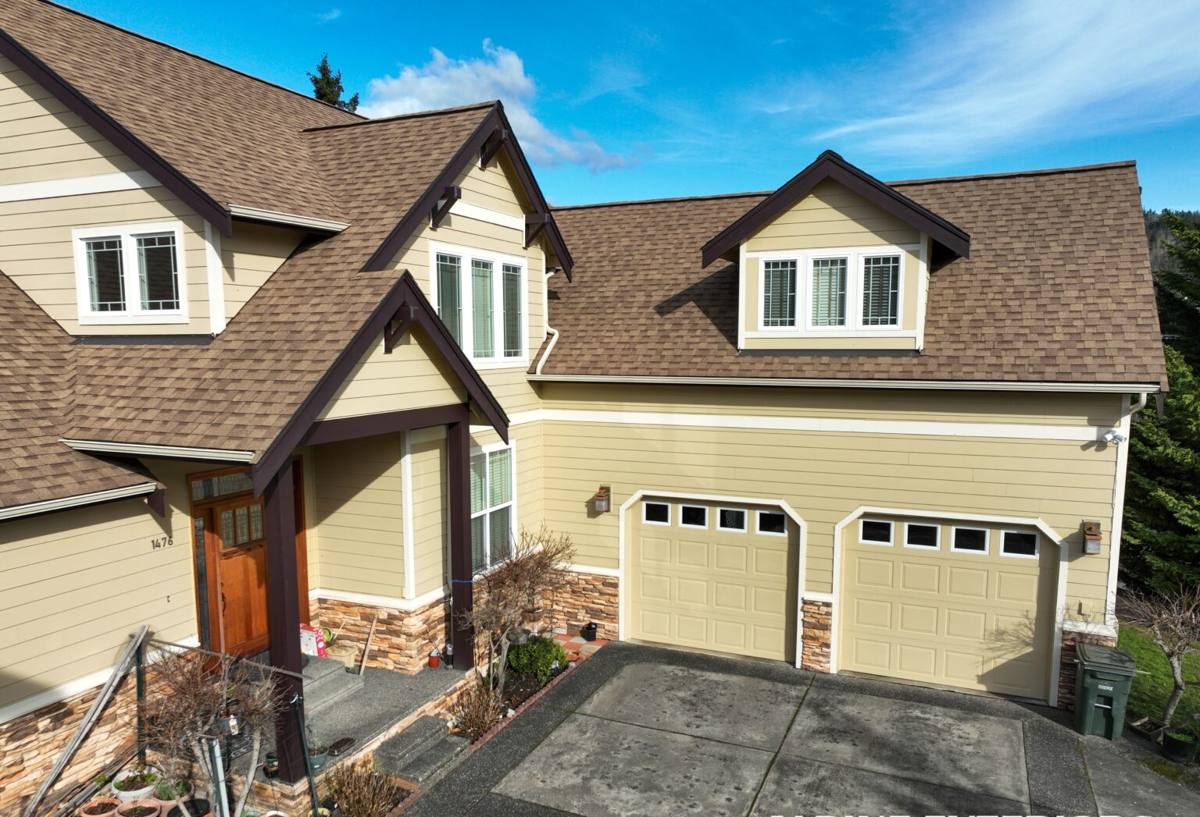
What Local Weather Does to a Roof Over Time
Whatcom County's climate isn't dramatic, but it's relentless. That's the part that catches homeowners off guard — no single storm does the damage, it's the accumulation.
Driving Rain
Rain here doesn't always fall straight down. Wind-driven rain pushes water sideways under shingle edges, around flashing, and into any gap a roofing crew left "close enough." Metal roofing handles this well when panels, seams, and flashing are installed with the right overlap and sealed at the right points — but a metal roof with a lazy flashing detail can actually funnel water somewhere worse than a shingle roof would, simply because metal sheds volume so fast.
Moss and Organic Growth
The long moss season in this area is the single biggest maintenance issue we see on local roofs. Moss holds moisture against the roof surface, works into seams, and lifts material over time. Metal roofing doesn't stop moss from landing on it, but it gives moss almost nothing to grip compared to the rough texture of shingles, and smooth painted or coated metal sheds spores and debris far more easily during normal rain.
Marine and Salt-Influenced Air
Salt air adds a corrosion variable that inland roofing crews sometimes underestimate. It's not just about picking "metal" — it's about picking the right metal, the right coating, and the right fasteners so galvanic corrosion and coating breakdown aren't a five-year problem instead of a thirty-year non-issue.
Why Metal Roofing Fits Yew Street Homes Specifically
We don't push metal roofing on every house — it's not the right call everywhere. But for the combination of tree cover, moisture, and moss pressure typical around Yew Street, it solves problems that keep coming back with other materials:
- Steep or moderately pitched roofs shed rain and debris faster off smooth metal panels than off shingles
- Fewer seams and laps mean fewer places for wind-driven rain to find an entry point
- A properly coated metal surface resists moss anchoring far better than granulated shingle surfaces
- Snow load (when it happens) and heavy rain both move off metal quickly instead of pooling in shingle valleys
- Long service life reduces how often a roof gets torn off and reinstalled — fewer chances for something to go wrong
What a Correct Metal Roofing Job Involves
This is where most of the value — and most of the risk — actually lives. A metal roof is only as good as what's underneath it and how the details are handled.
Underlayment
In a wet climate like this one, we don't treat underlayment as an afterthought. A high-temperature, self-adhering underlayment at eaves, valleys, and penetrations gives the roof a real second line of defense if wind-driven rain gets past the panel seams — which, over decades, it eventually will somewhere.
Fasteners and Metal Compatibility
Mixing incompatible metals (the wrong fastener against the wrong panel alloy) sets up galvanic corrosion that eats through material from the inside, often invisibly, until a leak shows up. Fastener type, coating, and spacing all have to match the panel manufacturer's specification — not a generalized "close enough" standard.
Flashing and Penetrations
Chimneys, vents, skylights, and valleys are where nearly every roof failure actually starts, metal or otherwise. Metal roofing requires flashing details specific to the panel profile — step flashing, valley flashing, and penetration boots all need to be matched to how that particular panel sheds water, not bent to fit on site.
Ventilation
A metal roof over a poorly ventilated attic can trap moisture that condenses on the underside of the panels. In a humid climate, that's a slow path to rot in the decking and framing underneath a roof that looks perfect from the yard. Ventilation gets checked and corrected as part of the job, not treated as a separate problem.
Panel Options: What We Weigh for a House Like Yours
| Factor | Standing Seam | Exposed-Fastener Panel |
|---|---|---|
| Upfront cost | Higher | Lower |
| Fastener exposure | Concealed clips, no exposed screws | Screws through the panel face |
| Long-term maintenance | Minimal — no gaskets to age out | Fastener gaskets need periodic checking |
| Moss/water shedding | Excellent — fewest surface interruptions | Good, slightly more seams for debris to catch on |
| Typical lifespan with proper install | 40–60+ years | 25–40 years |
Standing seam costs more up front, mainly due to labor and concealed clip systems, but for a wet, moss-prone area it usually pays for itself in reduced maintenance and fewer fastener-related leaks down the road. Exposed-fastener panels are a reasonable choice on secondary structures — garages, shops, additions — where upfront cost matters more than 40-year performance.
Our Process for Yew Street Roofs
- On-site evaluation — we look at pitch, existing decking condition, ventilation, and how water currently moves off the roof (including where it's clearly not working)
- Tear-off and deck inspection — soft or rotted decking gets identified and addressed before anything new goes down, not covered up
- Underlayment installation — self-adhering membrane at vulnerable areas, synthetic underlayment across the field
- Flashing fabrication — custom-bent flashing for valleys, walls, and penetrations rather than stock pieces forced to fit
- Panel installation — correct fastener spacing, panel overlap, and clip spacing per manufacturer spec
- Final walkthrough — we go over what was done, what to expect, and what basic upkeep looks like going forward
Homeowner Maintenance Checklist
Metal roofing is low-maintenance, not zero-maintenance. A short annual routine keeps a well-installed roof performing for decades:
- Clear needles, leaves, and debris from valleys and around penetrations each fall
- Check gutters and downspouts for blockages before the heavy rain season starts
- Look for moss or algae starting at shaded edges and remove it before it spreads
- Trim back overhanging branches that keep sections of roof shaded and damp
- After any major windstorm, do a visual check for lifted flashing or displaced panels
- Have a professional inspection every few years, especially around chimneys and skylights
Cost Factors Worth Understanding
Metal roofing costs more per square foot than asphalt shingles, generally by a meaningful margin, but the comparison isn't apples to apples once you factor in lifespan. A few things move the number on any given Yew Street job:
- Roof complexity — number of valleys, dormers, and penetrations drives labor time more than square footage alone
- Panel type — standing seam versus exposed-fastener, as covered above
- Existing deck condition — rot or soft sheathing discovered at tear-off adds material and labor
- Access — steep pitch, tree cover, and tight lot access all affect how efficiently a crew can work
- Coating and finish grade — better factory finishes cost more but hold color and resist corrosion longer in this climate
We give straightforward, itemized estimates rather than a single lump number, so you can see exactly what's driving the cost.
Why a Crew That Already Works This Area Matters
A roofing crew that's worked around Sudden Valley and the Yew Street area already knows how the local rain moves, how fast moss reestablishes on shaded sections, and which flashing details actually hold up here versus which ones look fine on paper. That's not something you get from a general contractor working from a regional average — it comes from doing the work locally, on this terrain, in this weather, repeatedly. It also means faster response if a warranty question or storm-related check comes up later, instead of waiting on a crew that has to drive in from out of the area.
If you're weighing metal roofing for a Yew Street property, we're glad to come take a look, walk the roof, and give you a straightforward estimate — no pressure, no upsell script. Use the form below to get started.