 Sudden Valley
 Siding Built for Life on the Lake
Homes around Sudden Valley and the Lake Whatcom shoreline face a different set of demands than a typical Whatcom County house a few miles inland. Between the tree canopy that shades much of the community, the moisture that rolls in off the lake and settles under the eaves, and the long stretch of gray months when nothing really dries out, siding here works harder than the marketing brochures let on. Add in the moisture-laden marine air that pushes up from the coast through the Puget Sound lowlands, and you've got a combination that punishes anything less than a genuinely correct siding system.
We've replaced siding on enough Lake Whatcom-area homes to know the difference between a product that looks fine in a showroom and one that actually holds up under a driving rain that lasts three days straight, followed by six weeks of damp shade before the next dry spell. This page is about one job, done right, in one place: full siding replacement for Sudden Valley and the immediately surrounding Lake Whatcom neighborhoods.
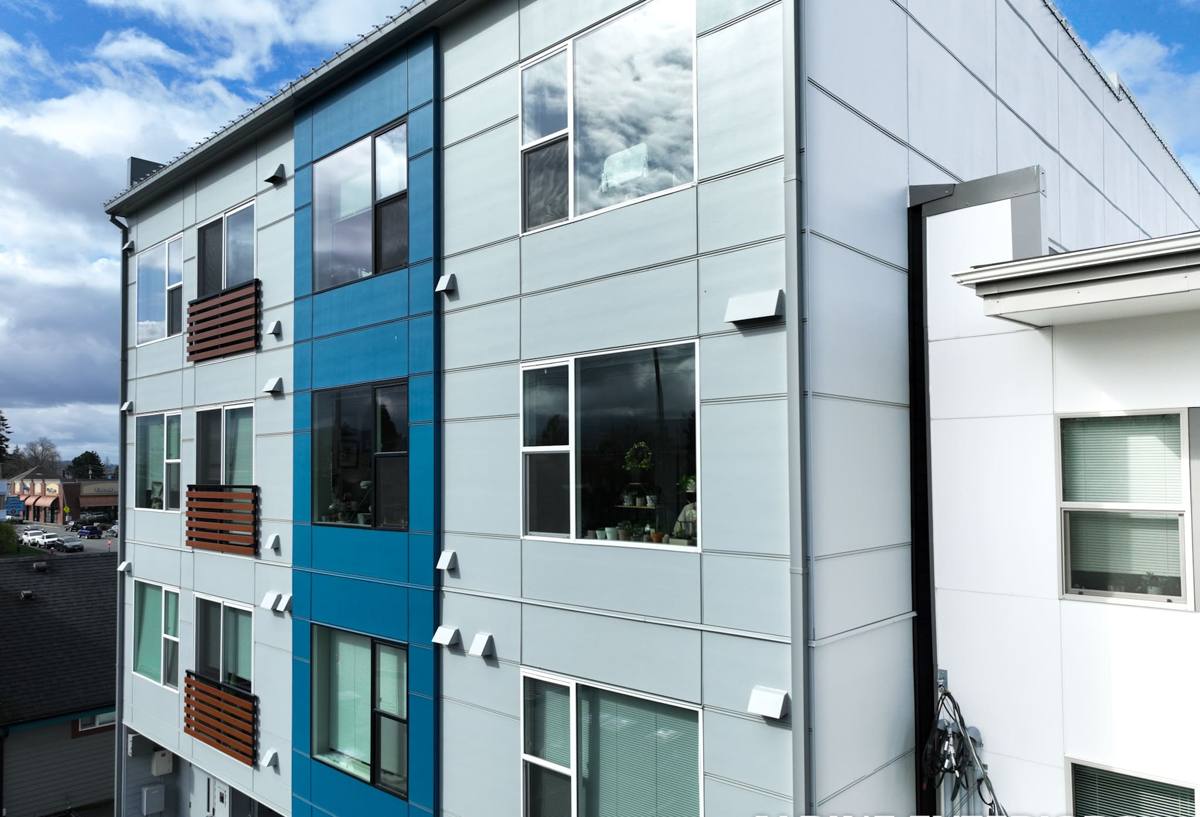
What Lake Whatcom Homes Actually Need From Their Siding
Shade and Slow Drying
A lot of Sudden Valley lots sit under mature fir and cedar cover, which is part of the appeal of living there — but it also means siding on shaded elevations can stay damp for days after a storm passes. Products that are sensitive to moisture, or that rely on a paint film to keep water out, lose that fight slowly and quietly, usually behind the siding where you can't see it until there's a problem.
Moss and Organic Growth
Long damp seasons and tree cover are exactly the conditions moss and algae need. Siding material matters here — some products absorb and hold moisture in a way that feeds surface growth and, over years, softens the substrate underneath. What the material is made of, and how it's finished, determines whether moss is a cosmetic wash-off or a slow structural problem.
Driving Rain and Wind-Driven Water
Lake-adjacent properties catch wind off the water that pushes rain sideways into wall assemblies, not just straight down onto the roof. That means flashing details, water-resistive barrier integration, and correct overlap at every seam matter more here than on a sheltered inland lot.
Signs Your Siding Is Overdue for Replacement
- Soft, spongy, or crumbling spots when you press on the siding, especially near the bottom courses and around windows
- Paint that won't hold — recurring peeling or bubbling in the same spots every couple of years
- Persistent moss or dark streaking that comes right back within a season of cleaning
- Visible gaps, warping, or buckling boards, particularly on north- and west-facing walls
- Rising energy bills with no other explanation, which can point to a compromised wall assembly
- Siding installed 20+ years ago with the original manufacturer finish, especially wood-based products
- Trim and siding that no longer sit flush, suggesting movement or rot in the sheathing behind it
What a Correct Siding Replacement Actually Involves
Tearing off old siding and nailing up new boards is the easy part to see and the easy part to get wrong. The work that actually determines how long a siding job lasts happens underneath, and it's worth knowing what should happen on your home:
- Tear-off and inspection: Full removal of the old siding so the sheathing underneath can actually be checked, not just assumed sound
- Sheathing repair: Any rotted or delaminated sheathing gets replaced before anything new goes over it — covering damage is how small problems become expensive ones
- Water-resistive barrier: A correctly lapped house wrap or building paper, installed so water sheds down and out, not into the wall
- Flashing at every penetration: Windows, doors, hose bibs, light fixtures, and vents all need proper flashing integration — this is the single most common shortcut on rushed jobs
- Correct fastening: Manufacturer-specified nailing patterns and fastener types, not whatever's fastest for the crew
- Proper clearances: Gaps at grade, roofline, and deck ledgers so siding isn't wicking moisture from contact points
- Factory-finished material: A finish applied and cured under controlled conditions, not field-painted after the fact
Why We Install Only James Hardie Fiber Cement
We don't install vinyl, LP SmartSide, primed wood, cedar, or other fiber cement brands. That's a deliberate standard, not a lack of options, and it's especially relevant on a lake where moisture and shade already stack the deck against a siding system.
Vinyl expands and contracts with temperature swings and can warp or crack in the kind of driving wind that comes off open water. Wood-based products — cedar, primed spruce, engineered wood siding — perform well when maintenance keeps up with them, but in a shaded, damp environment like much of Sudden Valley, that maintenance schedule gets demanding fast, and a missed year can mean swelling, delamination at the edges, or rot starting from the inside out. Other fiber cement brands exist, but we've standardized on James Hardie specifically because of its ColorPlus factory finish and its HZ5 product engineering, which is built around exactly the wet, temperature-swinging climate the Pacific Northwest delivers.
James Hardie fiber cement is non-combustible, doesn't feed moss growth the way absorptive materials do, and holds its factory-applied color without the repaint cycle that wood and some composite products demand. It's not the cheapest material on the market, and we're upfront about that. It's the one we've found holds up on lake-adjacent, shaded, damp lots without turning into a maintenance project every few years.
James Hardie vs. Common Alternatives
| Factor | James Hardie Fiber Cement | Vinyl | Wood / Engineered Wood |
|---|---|---|---|
| Moisture resistance | Engineered for wet climates (HZ5) | Doesn't absorb, but seams can let water behind panels | Absorbent; needs consistent maintenance |
| Moss/algae resistance | Factory finish resists staining and growth | Moderate; can trap moisture behind panels | Prone to moss in shaded, damp conditions |
| Wind/impact durability | Rigid, holds up to wind-driven rain and debris | Can crack or warp in temperature extremes | Denting and impact damage over time |
| Finish longevity | Factory-cured ColorPlus finish, long repaint interval | Color molded in but can fade/chalk | Field-applied paint, shorter repaint cycle |
| Fire resistance | Non-combustible | Combustible | Combustible |
Our Process for Lake Whatcom Homeowners
- On-site walkthrough: We look at every elevation, note shaded and exposed areas separately, and check for existing moisture or rot before quoting anything
- Written estimate: A clear scope covering tear-off, sheathing repair allowances, water barrier, flashing, and the specific Hardie product and color
- Scheduling around weather: We plan tear-off and dry-in around forecast windows rather than starting a wall we can't close up before rain moves in
- Tear-off and sheathing check: Old siding comes off, sheathing gets inspected and repaired as needed, documented before it's covered
- Water management install: House wrap and flashing go in first, correctly lapped, before a single piece of siding is hung
- Hardie installation: Installed to manufacturer fastening and clearance specifications
- Final walkthrough: We go over the finished work with you before calling the job done
What Siding Replacement Costs Depend On
| Factor | Why It Matters |
|---|---|
| Home size and elevation count | More wall area and more complex rooflines mean more material and labor |
| Existing sheathing condition | Rot or delamination found during tear-off adds repair scope |
| Hardie product line and profile | Lap siding, shingle-style panels, and trim boards vary in material cost |
| Access and site conditions | Steep driveways, tree-crowded lots, and lake-adjacent terrain can affect staging and labor time |
| Trim and detail work | Window casing, corner boards, and fascia detail add finish labor |
We don't publish a flat per-square-foot number because these factors genuinely move the total — an accurate figure comes from seeing the house.
Why a Crew That Already Works Lake Whatcom Matters
Sudden Valley and the surrounding lake community aren't like a standard Bellingham subdivision. Many properties are on sloped, wooded lots with limited staging space, and some fall under community architectural or color-approval guidelines that need to be checked before material gets ordered. A crew that's already worked in the area knows to ask about those guidelines up front, knows how tree cover on a given lot affects drying time during the job, and isn't learning the terrain on your dime.
There's also a practical scheduling advantage: a crew already doing work around the lake can often coordinate timing more efficiently than one driving in from farther out in Whatcom County for a single job, which matters when you're trying to hit a dry window between fall storm systems.
If your Lake Whatcom or Sudden Valley home is due for new siding, we're glad to come take a look, walk the exterior with you, and put together a straightforward, no-pressure estimate — use the form below to get started.