 Sudden Valley
 Windows Built for Sunnyland's Weather, Not a Showroom
Sunnyland homes sit in a part of Whatcom County that never gets a real dry season. Wind-driven rain comes in sideways off the water more often than most homeowners realize, salt-laden air works its way inland and quietens down slower than people expect, and shaded lots grow moss on anything that holds moisture for more than a day or two. Windows here don't just need to look good and cut a heating bill — they need to shed water correctly, resist corrosion at the hardware and frame joints, and keep performing after a decade of that cycle repeating itself every winter.
A lot of window "replacement" work sold in this region is really just a swap: same size, same rough opening, new glass, done in an afternoon. That gets you a nicer-looking window for a few years. It does not fix flashing that was never right to begin with, and in a climate like ours, bad flashing behind a brand-new window is a slower, more expensive problem than the old drafty window it replaced.
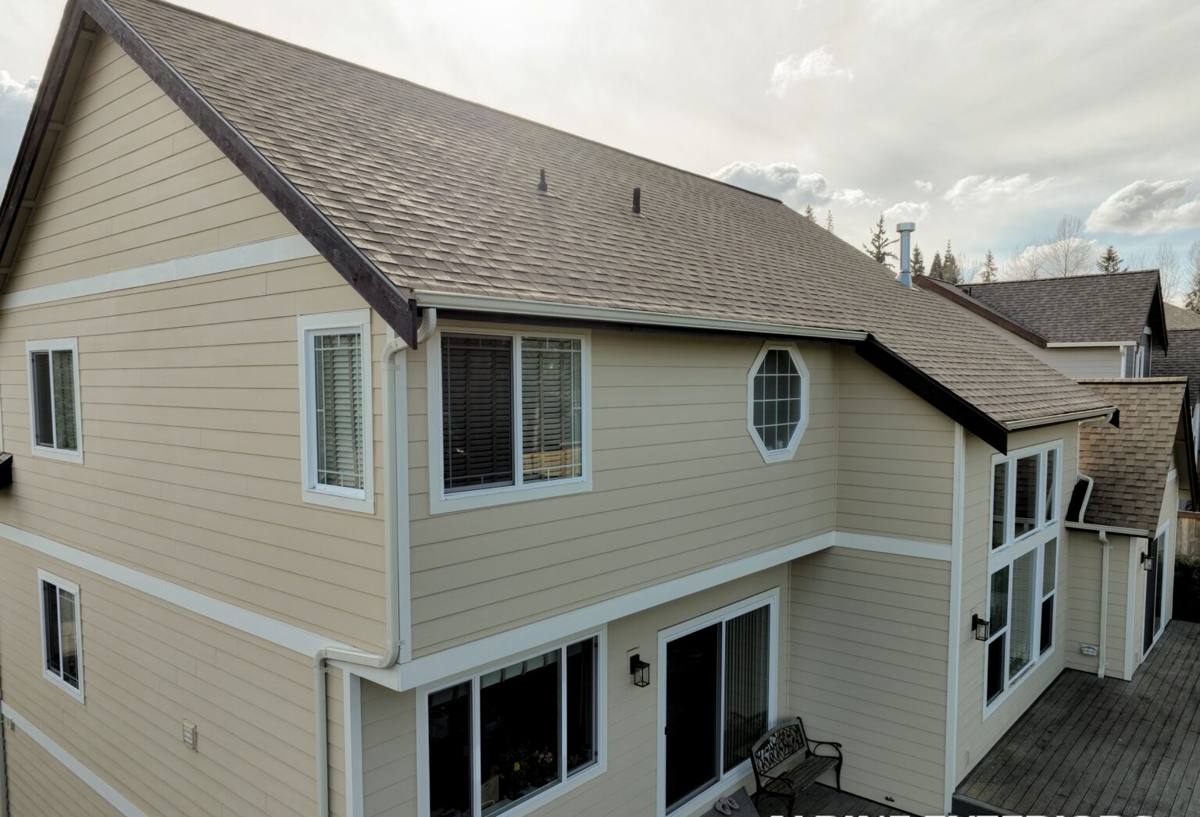
What "Energy-Efficient" Actually Means Here
Manufacturers rate windows with two numbers that matter more than any marketing term: U-factor and Solar Heat Gain Coefficient (SHGC). In a marine climate like Whatcom County's — long, mild, overcast winters and short cool summers — the priority is different than it would be in a hot, sunny climate.
- U-factor measures how much heat escapes through the window. Lower is better. This is the number that determines how much of your furnace or heat pump's work leaks back outside on a cold, wet January night.
- SHGC measures how much solar heat passes through the glass. In our region, a moderate SHGC is usually the right call — we don't get enough direct sun most of the year to justify a very low SHGC, but west- and south-facing rooms still benefit from some solar heat gain control.
- Air infiltration rating matters as much as either of the above when wind-driven rain is part of daily weather. A window that's efficient on paper but leaks air at the sash will also let water find its way in eventually.
For most Sunnyland homes, that means a dual-pane, low-E coated window with an argon gas fill hits the right balance of performance and cost. Triple-pane makes sense on north-facing walls, larger picture windows, or homes right up against consistent wind exposure, but it's not always worth the added cost on every opening.
Frame Material: The Decision That Matters Most Long-Term
Glass technology is fairly standardized across manufacturers at this point. The bigger difference in how a window performs ten and twenty years from now is the frame material and how well it tolerates constant damp conditions.
| Frame Material | Performance in Wet, Humid Climate | Maintenance | Typical Cost Range |
|---|---|---|---|
| Vinyl | Good moisture resistance, won't rot; can expand/contract with temperature swings | Low — occasional cleaning | $ |
| Fiberglass | Excellent — very stable dimensionally, handles wet-dry cycling well | Low | $$$ |
| Wood-clad (exterior clad, wood interior) | Good if flashed and sealed correctly; cladding protects the wood from direct weather | Moderate — watch seams and caulk lines | $$$ |
| Bare wood | Requires consistent upkeep to avoid moisture damage in this climate | High | $$ |
We don't push bare wood windows on exposed elevations in this area as a matter of professional judgment — not because the product is bad, but because the maintenance schedule that keeps it performing well doesn't match how most homeowners actually live. If you want a wood interior look, a clad option gets you that appearance with a lower long-term maintenance burden.
Hardware and Corrosion
Locks, hinges, and roller hardware near any coastal-influenced air should be stainless steel or a comparable corrosion-resistant finish, not standard-grade zinc or plated steel. This is a small line item on a quote that's easy to overlook and expensive to fix later when a lock seizes or a roller rusts through.
Where Water Actually Gets In
Nearly every window leak we're called to diagnose traces back to one of three things, not the glass or the sash itself:
Sill Pan Flashing
The bottom of a window opening needs a sloped, sealed pan that directs any water that gets past the sash back outside — not down into the wall framing. Many older installations, and a surprising number of newer ones done fast, skip this step or install it flat instead of sloped.
Head Flashing and Weather-Resistant Barrier Integration
The flashing above the window has to shingle correctly with the house wrap or building paper above it, so water sheds over the top of the window, never behind it. Get this sequence wrong and you won't see a problem for a year or two — by the time staining shows up on an interior sill or wall, the damage has usually been happening for a while.
Sealant Joints
Caulk and sealant are the last line of defense, not the first. A window that depends on a perfect bead of caulk to stay dry is one bad caulk job away from a leak. We treat sealant as a backup to correct flashing, not a substitute for it.
Moss, Algae, and Shaded Sills
Sunnyland's tree cover keeps a lot of properties comfortably shaded in summer, but it also means window sills, trim, and lower sashes on the north and west sides of a house can stay damp for days after a storm. That's exactly the environment moss and green algae need to take hold. Beyond looking bad, sustained moisture on wood trim or a compromised sealant joint accelerates rot and finish failure. Frame and trim materials that shed water quickly, plus sills with enough slope to actually drain, cut down on this a lot more than any cleaning product will.
How We Approach a Sunnyland Window Project
- On-site assessment. We look at each opening individually — sun exposure, wind exposure, existing flashing condition, any signs of past water intrusion or rot in the sill or framing.
- Product selection matched to the opening. Not every window on the house needs the same spec. A sheltered, covered-porch window doesn't need the same air-infiltration rating as an exposed second-story window facing the prevailing wind.
- Careful removal. We check the condition of the rough opening and framing once the old window is out, before anything new goes in. This is where hidden damage from old, undersized flashing shows up.
- Correct flashing sequence. Sloped sill pan, properly lapped weather-resistant barrier, head flashing integrated with the existing exterior — in that order, every time.
- Installation and shimming. The window is set plumb, level, and square, and shimmed correctly so the sash operates smoothly for years, not just on install day.
- Insulation and air sealing. The gap between the window frame and rough opening gets properly insulated — not overpacked, which restricts the frame's ability to move slightly with temperature changes, and not left empty, which is a cold and drafty install.
- Exterior trim and sealant. Final trim work and sealant joints, sized and placed to shed water rather than trap it.
- Walkthrough. We check operation on every window before we consider the job finished — locks, rollers, screens, and weatherstripping.
Signs Your Current Windows Are Working Against You
- Visible condensation between the panes (a sign the seal has failed and the gas fill is gone)
- Drafts you can feel near the frame on a windy day, even with the window latched
- Soft or discolored wood trim around the window, inside or outside
- Moss or persistent green growth on the sill or lower sash that comes back quickly after cleaning
- Difficulty locking, or a sash that doesn't sit flush anymore
- Noticeably colder rooms near windows compared to the rest of the house
- Rising heating costs without a clear change in usage habits
Cost Factors Worth Understanding Before You Get a Quote
| Factor | Why It Moves the Price |
|---|---|
| Number and size of openings | Larger and more numerous windows mean more material and labor |
| Frame material | Vinyl is generally the most affordable; fiberglass and clad-wood cost more upfront |
| Glazing package | Triple-pane and specialty coatings add cost but may make sense on exposed or noisy elevations |
| Condition of the existing opening | Rot repair or reframing discovered during removal adds time and material |
| Accessibility | Second-story or hard-to-reach windows take longer and may require additional equipment |
| New-construction vs. replacement window | Full-frame replacement (with new flashing) typically costs more than an insert but is often the right call when the old flashing is failing |
Broadly, homeowners in our area should expect a wide range depending on these factors — a straightforward vinyl replacement in a good opening will run considerably less than a full-frame, fiberglass, custom-size project. Any honest quote should walk you through which of these factors apply to your specific home rather than giving a flat per-window number sight unseen.
Why Hiring Local Experience Matters for This Job
Window installation looks straightforward from the outside, which is part of why it's so commonly done poorly. The difference between a window that performs for twenty years and one that causes a rot problem in five usually isn't the product — it's whether the person installing it understands how water moves through a wall assembly in a specific climate, and takes the extra twenty minutes per window to flash it correctly instead of relying on caulk to cover for a rushed job.
A crew that already works in and around Sudden Valley and Sunnyland has seen how the local combination of shade, moisture, and coastal-influenced air actually plays out on real houses over time — not just in a training manual. That's the kind of judgment that shows up in small decisions on the job: how much slope to build into a sill pan, which hardware finish to spec, whether an opening needs extra attention before the new window goes in at all.
Get a Straight Answer for Your Home
Every house is different, and the right window spec for a shaded, wind-exposed opening isn't always the right spec for a covered, south-facing one on the same wall. If you're weighing a full replacement, want a second opinion on windows that were installed elsewhere, or just want to know what condition your current windows and flashing are actually in, we're happy to take a look. The estimate is free, there's no pressure, and you'll get a straightforward assessment of what your home actually needs — not a one-size-fits-all sales pitch. The request form below is the easiest way to get started.