 Sudden Valley
 Why Decks Wear Out Faster Around Sehome
A deck in Sehome doesn't fail the way a deck in a dry climate fails. Out here, the damage is slow and mostly hidden until it isn't. Driving rain gets pushed sideways under railings and through board gaps by wind off the water. Salt-laden air corrodes fasteners and hardware faster than the label on the box would suggest. And for a big chunk of the year, north-facing and shaded sections of a deck stay damp long enough to grow moss and algae, which hold moisture against the wood even longer. None of this is dramatic in year one. By year eight or ten, it's a structural problem.
Replacing a deck the right way in this part of Whatcom County means building for that cycle from the start, not just swapping old boards for new ones and hoping the framing underneath is still sound.
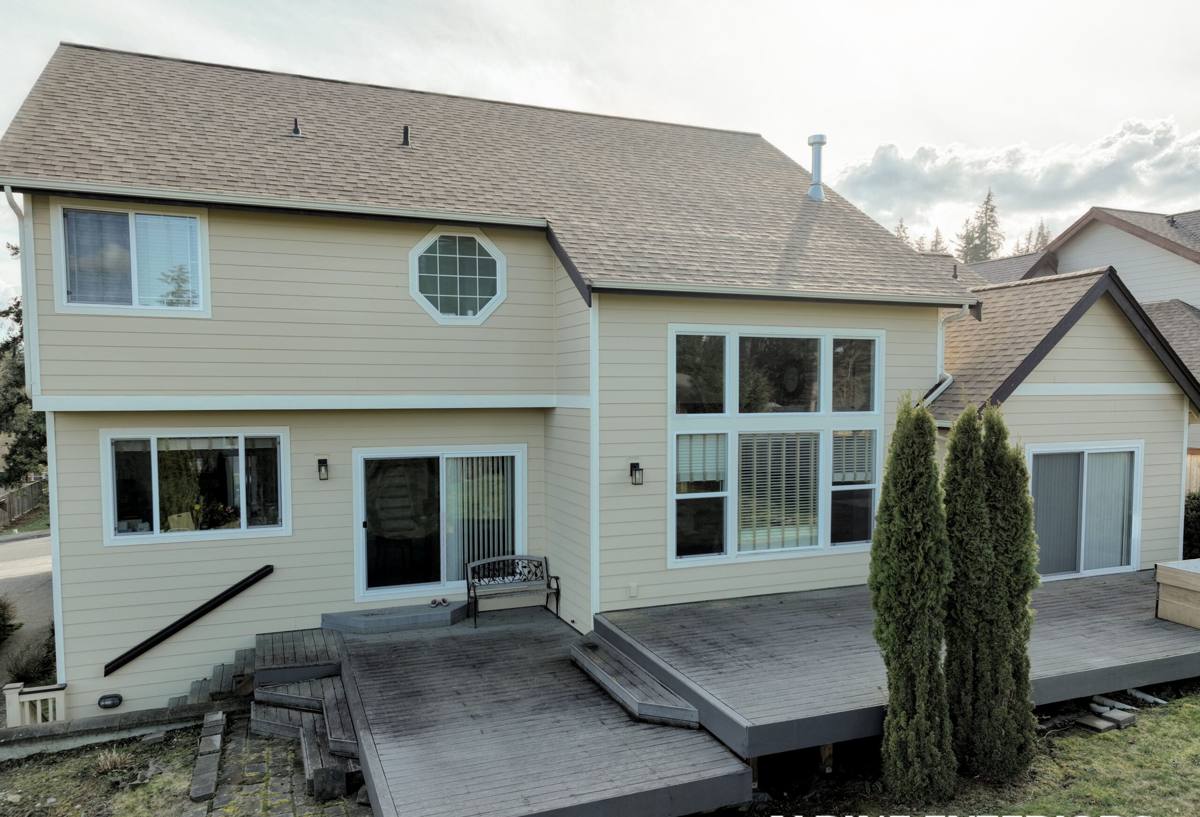
Signs a Deck Needs Replacing, Not Patching
Homeowners often call us thinking they need a few boards swapped, and sometimes that's true. But there's a point where board-by-board repair stops making sense and full replacement is the honest recommendation. Here's what we look for:
- Soft or spongy spots underfoot, especially near the house or stair landings
- Rust streaking from fasteners, or visibly corroded joist hangers and brackets
- Gaps or separation where the deck ledger meets the house siding
- Moss or dark staining that returns within weeks of cleaning
- Wobble in railing posts or stairs, which usually points to a rotted post base
- Boards cupping, splitting, or delaminating across most of the surface, not just a corner
If it's one or two boards and the frame underneath is solid, repair is the right call. If the framing, ledger, or posts are compromised, patching just delays a bigger problem and can mask a safety issue.
The Part Most Homeowners Never See
The visible decking is maybe a third of the job. The framing, the ledger connection to the house, the footings, and the flashing detail where the deck meets the wall do the actual work of holding the structure up and keeping water out of your house. A deck can look fine on top and still have a rotted ledger board or undersized footings underneath — that's the failure mode we watch for most closely in a climate that stays wet this long.
What a Correct Deck Replacement Actually Involves
A full replacement isn't just demo-and-rebuild. Done right, it's a sequence:
- Tear-off and inspection. Remove the old decking and railings, then inspect every joist, beam, post, and footing that's exposed. This is where we find out if the problem was bigger than the surface suggested.
- Structural correction. Replace or sister any compromised framing, confirm footing depth and bearing, and correct any undersized members from the original build — a lot of older Whatcom County decks were framed to a lighter standard than current code expects.
- Ledger flashing. This is the single most important waterproofing detail on the whole deck. A proper ledger flashing assembly keeps rain from tracking behind the siding and into the house framing — the most common source of hidden rot we find on tear-offs.
- Fastener and hardware selection. Every bracket, screw, and hanger needs to be rated for the coastal, damp-climate conditions here. This is a place where cutting corners on a $2 bracket can cost thousands later.
- Decking and railing installation. Board spacing, drainage slope, and railing attachment all matter as much as the material choice itself.
- Final grading and drainage check. Water needs somewhere to go once it clears the deck — pooling at the base of posts or against the foundation undoes a lot of the good work above it.
Comparing Decking Materials for This Climate
There's no single "best" material — it depends on budget, how much upkeep you want to do, and how the deck is used. Here's how the common options actually perform in a wet, moss-prone, salt-air environment:
| Material | Moisture & Moss Behavior | Maintenance | Typical Lifespan |
|---|---|---|---|
| Pressure-treated wood | Absorbs water, needs sealing to resist moss and staining | Annual cleaning, re-sealing every 1-2 years | 10-15 years with upkeep |
| Cedar | Naturally rot-resistant but still needs sealing in this climate | Regular cleaning and periodic sealing | 15-20 years with upkeep |
| Composite decking | Doesn't absorb water like wood; still needs surface cleaning to prevent moss film | Occasional washing, no sealing or staining | 25-30+ years |
| PVC/capped polymer | Fully resists moisture absorption; best moss resistance of the group | Lowest — periodic washing only | 25-30+ years |
We install all of these. Our job is to walk you through the honest trade-offs — wood costs less up front but demands ongoing sealing and cleaning to keep moss from taking hold; composite and PVC cost more initially but largely take that maintenance burden off your plate. Neither is objectively "right" — it depends on how much time you want to spend on upkeep versus what you want to spend at installation.
A Note on Fasteners and Hardware
Whatever decking material you choose, the hardware underneath matters just as much. In coastal-influenced air, standard galvanized fasteners can corrode faster than expected. We use hardware rated for this environment — it's a small line item that prevents a much bigger repair down the road.
Local Code and Permitting Considerations
Deck replacement in Whatcom County typically requires a building permit once you're doing more than a like-for-like surface swap — especially if we're touching framing, footings, or railings. A few things that commonly come up on inspection:
- Guardrail height and baluster spacing on any deck significantly above grade
- Stair rise, run, and handrail requirements
- Footing depth relative to frost line and soil bearing
- Proper ledger attachment and flashing at the house connection
We handle the permitting process as part of the job rather than leaving it to the homeowner to sort out. It's one less thing to manage, and it means the finished deck is inspected and documented correctly — which matters if you sell the house later.
What Cost Depends On
We don't publish flat prices because deck replacement cost varies a lot based on real site factors, but these are the main drivers:
| Factor | Why It Matters |
|---|---|
| Deck size and height above grade | Larger and taller decks need more framing, footings, and railing |
| Condition of the existing structure | Rotted framing or undersized footings add structural correction work |
| Material choice | Pressure-treated, cedar, composite, and PVC all carry different material costs |
| Access and site conditions | Slope, tree cover, and how close the deck sits to the house affect labor time |
| Railing and stair complexity | Custom railing designs and multi-level stairs add both material and labor |
We give a firm, itemized estimate after walking the site — not a phone-quote guess. That's the only way to account for what's actually under the old decking.
Why It Matters to Hire a Crew That Already Works in Sehome
A lot of deck-building experience translates anywhere, but the details that keep a deck performing for 25+ years in Sudden Valley and the surrounding Sehome area are specific to this climate: how far the ledger flashing needs to extend, which hardware actually holds up against the damp air here, and how to grade drainage so water doesn't pool against posts through the long wet season. A crew that works this area regularly has already made the adjustments that a general contractor from a drier region hasn't had reason to think about. That shows up in fewer callbacks and a deck that still looks and performs well a decade in, not just on install day.
After Replacement: Keeping It Right
Whatever material you choose, a little seasonal attention goes a long way here:
- Sweep and rinse the surface regularly through fall and winter to keep moss from establishing
- Check that gaps between boards stay clear of debris so water can drain instead of pooling
- Inspect railing posts and stair connections once a year for movement
- If you chose wood, plan on re-sealing on the schedule your material calls for — skipping a cycle is when moss and rot get a foothold
We're happy to walk you through the specific maintenance plan for whatever material you go with once the job is done.
If your deck is showing soft spots, moss that keeps coming back, or you're just not sure whether it needs repair or full replacement, we're glad to come take a look. The estimate is free, there's no pressure, and you'll get a straight answer about what your deck actually needs.