 Sudden Valley
 Why Decks in Barkley Take a Different Kind of Beating
A deck built for a dry climate and a deck built for Whatcom County are not the same structure, even if they look identical from the yard. Homes in and around Barkley deal with a long wet season, driving rain that comes in sideways off the wind more often than straight down, salt-tinged air moving in off the water, and a moss season that can stretch from late fall well into spring. Put those four things together and you get a environment that's constantly testing every joint, fastener, and board on an outdoor structure.
Most deck failures we get called out to inspect aren't dramatic. They're slow. Water sits where it shouldn't, wood stays damp longer than it should dry, and a few years in, something that looked fine on the surface is soft or rusted underneath. Building correctly for this area means designing the deck to shed water fast, keep air moving underneath and between boards, and use materials and hardware that don't quietly corrode or rot while everything still looks fine from a few feet away.
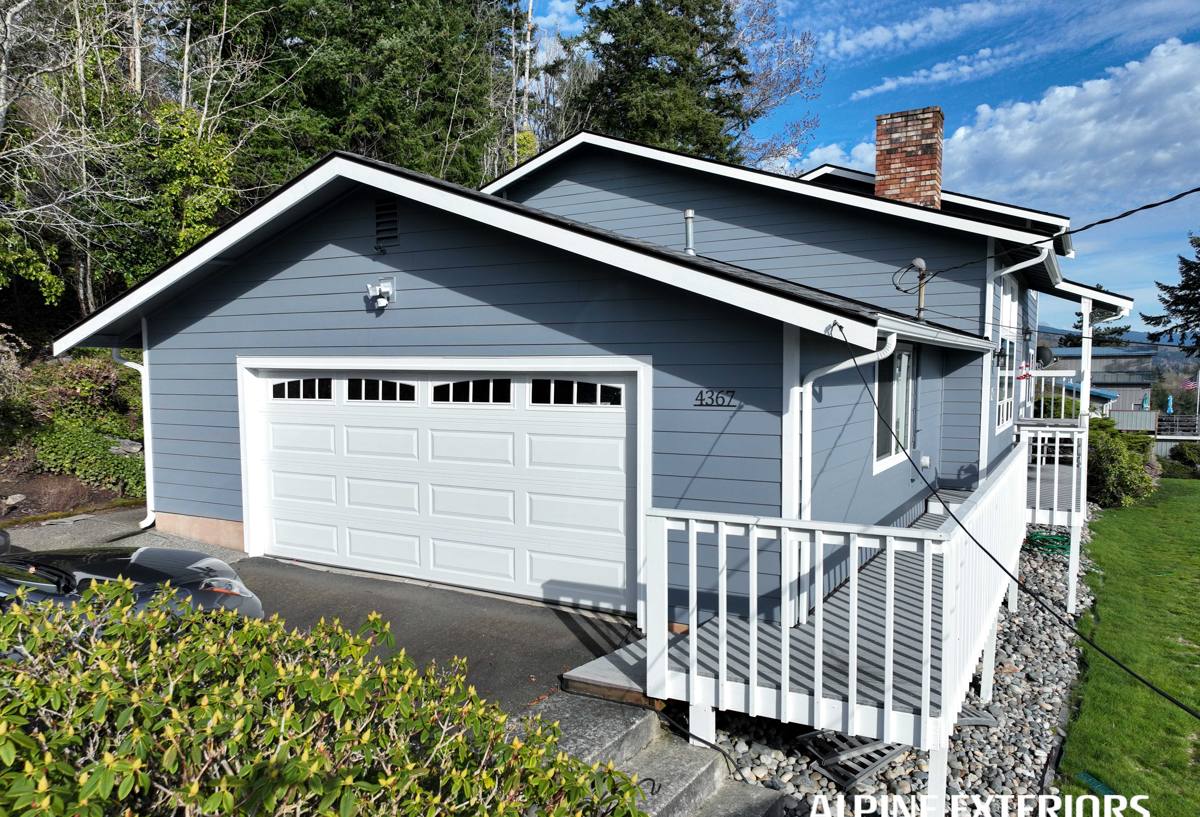
What a Correctly Built Deck Actually Requires Here
A deck that's going to hold up in this climate is less about the decking material on top and more about everything you don't see once it's finished. That's where the real difference between a deck that lasts fifteen years and one that lasts thirty gets decided.
Water Has to Have Somewhere to Go
Every deck needs a plan for water, not just a hope that it evaporates. That means proper slope away from the house, gaps between boards sized for airflow and drainage, and a ledger board connection that's flashed so water can't work its way behind the siding or into the rim joist. This last point matters more than almost anything else on the structure — a poorly flashed ledger is one of the most common sources of hidden rot we find on older decks in this area, and it's completely preventable when it's done right the first time.
Ground Contact and Airflow Under the Deck
Low decks with little clearance underneath trap moisture and stay damp for days after a storm, which is exactly the environment moss and rot organisms want. Where the design and lot allow it, we build in enough clearance for air to actually move, and we treat or protect any framing member that sits close to grade or soil contact differently than the rest of the structure.
Decking Material Options for This Climate
There's no single "best" decking material — there's a best material for your budget, your maintenance appetite, and how much shade and moss exposure your specific spot gets. Here's how the common options actually perform in a wet Pacific Northwest climate over time.
| Material | Moisture Behavior | Moss/Algae Resistance | Maintenance Burden |
|---|---|---|---|
| Pressure-treated wood | Handles moisture well when properly sealed; can cup or check if left untreated | Low — needs regular cleaning and treatment | Annual cleaning, periodic sealing/staining |
| Cedar | Naturally moisture-resistant, but surface still needs upkeep | Moderate — still grows moss in shaded, damp spots | Regular cleaning, occasional oiling or staining |
| Composite decking | Doesn't rot or absorb water into the core | Moderate to good, varies by product — surface can still host moss/algae in shade | Low — periodic washing, no sealing or staining |
| PVC decking | Fully water-resistant core | Good — smoother, denser surface sheds growth more easily | Lowest — occasional washing |
We're honest with homeowners about trade-offs rather than pushing one product. Composite and PVC decking cost more upfront but cut down dramatically on the sanding, sealing, and staining cycle that wood demands in a climate like this. Wood costs less initially and has a look plenty of people prefer, but it only performs as well as the maintenance schedule behind it — skip a season of sealing here and you'll feel it faster than you would somewhere drier.
Structural Details That Matter Most
The parts of a deck that fail first in this climate are rarely the decking boards themselves — it's almost always the connections and hardware holding everything together.
- Ledger flashing installed correctly, with proper counterflashing into the siding or trim above it
- Stainless steel or coated fasteners rated for ground contact and treated lumber, not standard hardware that corrodes and streaks the wood
- Joist tape or a protective barrier on top of framing members to keep standing water off exposed end grain
- Post bases that keep wood posts off concrete and grade, rather than posts set directly in or on top of damp material
- Hidden fastener systems or properly spaced screws that don't trap water in the fastener hole
Skipping any one of these doesn't show up as a problem in year one. It shows up in year five or six, usually as rust streaks, a soft spot near a post base, or a ledger board that's holding more moisture than it should. Building it right the first time costs less than fixing it later, and it's a lot less disruptive than a mid-life repair.
Our Deck Building Process
Design and Site Walk
We start by walking the actual lot — sun exposure, drainage patterns, tree cover, and how close the deck will sit to grade all shape the design decisions before a single board is ordered. A deck tucked under heavy tree cover needs a different drainage and material plan than one that gets full sun most of the day.
Permitting
Deck permitting requirements vary by jurisdiction and by the deck's size, height, and attachment to the house. We handle that process as part of the job rather than leaving it to the homeowner to sort out, and we build to the structural requirements that apply to your specific project.
Construction
Footings, framing, ledger flashing, and hardware go in first, and that's where most of our attention goes — it's the part that determines how the deck performs in ten years, not just how it looks the day we finish. Decking material goes on last, installed with the spacing and fastening method appropriate to whatever you've chosen.
Final Walkthrough
We walk the finished deck with you, cover basic care for whatever material you chose, and make sure you know what routine maintenance actually looks like for your specific deck before we consider the job done.
Living With a Long Moss Season
Moss doesn't mean your deck was built wrong — it means it's outdoors in Whatcom County. But letting moss and organic buildup sit is where problems start, since trapped moisture under a moss layer keeps wood or composite surfaces damp far longer than open air and sun would. A basic seasonal routine keeps most decks ahead of it.
- Sweep leaves and debris off the deck regularly through fall, not just once at the end of the season
- Rinse or wash the surface periodically to keep moss and algae from establishing, especially in shaded corners
- Check that gaps between boards stay clear so water keeps draining through rather than pooling on top
- Inspect fasteners and hardware once a year for rust streaks or loosening
- Re-seal or re-stain wood decking on the schedule appropriate to the product — don't wait until it visibly needs it
- Confirm the area under and around the deck stays clear of piled debris or vegetation that traps moisture against the framing
Why a Crew That Already Works Barkley Makes a Difference
Building decks in this specific area, with this specific mix of rain, moss, and coastal air, teaches you things a generic build spec doesn't cover — which details of the ledger flashing tend to get missed on standard house wraps in this area, which shaded lot layouts need extra drainage attention, and how local permitting actually works in practice, not just on paper. A crew that's built decks throughout Whatcom County has already made the small adjustments that keep a deck performing well here, instead of learning them on your project.
There's also the simple matter of being reachable. If a question comes up two years after the build, or you want a maintenance recommendation before re-sealing, it helps to be working with a local crew that's still around and familiar with your specific deck, not a company that moved on to the next region.
Cost Factors to Understand Before You Budget
Deck pricing varies widely based on size, material, height off the ground, and site access, but a few factors consistently move the number more than homeowners expect.
| Factor | Why It Affects Cost |
|---|---|
| Height above grade | Taller decks need more substantial footings, framing, and often railing and stair systems |
| Decking material | Composite and PVC cost more upfront than wood but reduce long-term maintenance spending |
| Site access | Difficult access for equipment and material delivery adds labor time |
| Attachment vs. freestanding | Ledger-attached decks require flashing work tied into the house; freestanding decks need their own independent support structure |
| Railing and stair complexity | Custom railing designs and multiple stair runs add material and labor beyond a simple rectangular deck |
We'll walk through these factors specifically for your project during an estimate rather than quoting off a generic per-square-foot number, since the details above can shift a project's cost more than square footage alone.
If you're planning a new deck or replacing one that's showing its age, we're happy to come take a look and talk through what makes sense for your home and your budget. The estimate is free, there's no pressure attached to it, and you can fill out the form below to get started.