 Sudden Valley
 Building a Deck That Actually Holds Up in Geneva
Geneva homes sit in one of the wetter, mossier corners of Whatcom County, and a deck out here works harder than the same structure would fifty miles inland. Between the long stretch of fall-through-spring rain, the salt-laden air drifting in off the water, and a moss season that can run eight or nine months of the year, an outdoor structure gets tested constantly. A deck built to a generic national spec — the kind you'd see in a big-box how-to guide — will usually look fine for a year or two and then start showing problems: soft spots near the house, black streaking on the boards, hardware bleeding rust through the finish. We build decks for this specific climate, not a theoretical average one, and that shows up in the details most homeowners never think to ask about until something fails.
This page covers what a correctly built custom deck looks like for a Geneva property: the materials that actually perform here, the structural details that keep water out of places it shouldn't be, and the maintenance rhythm that keeps a deck looking good for decades instead of years.
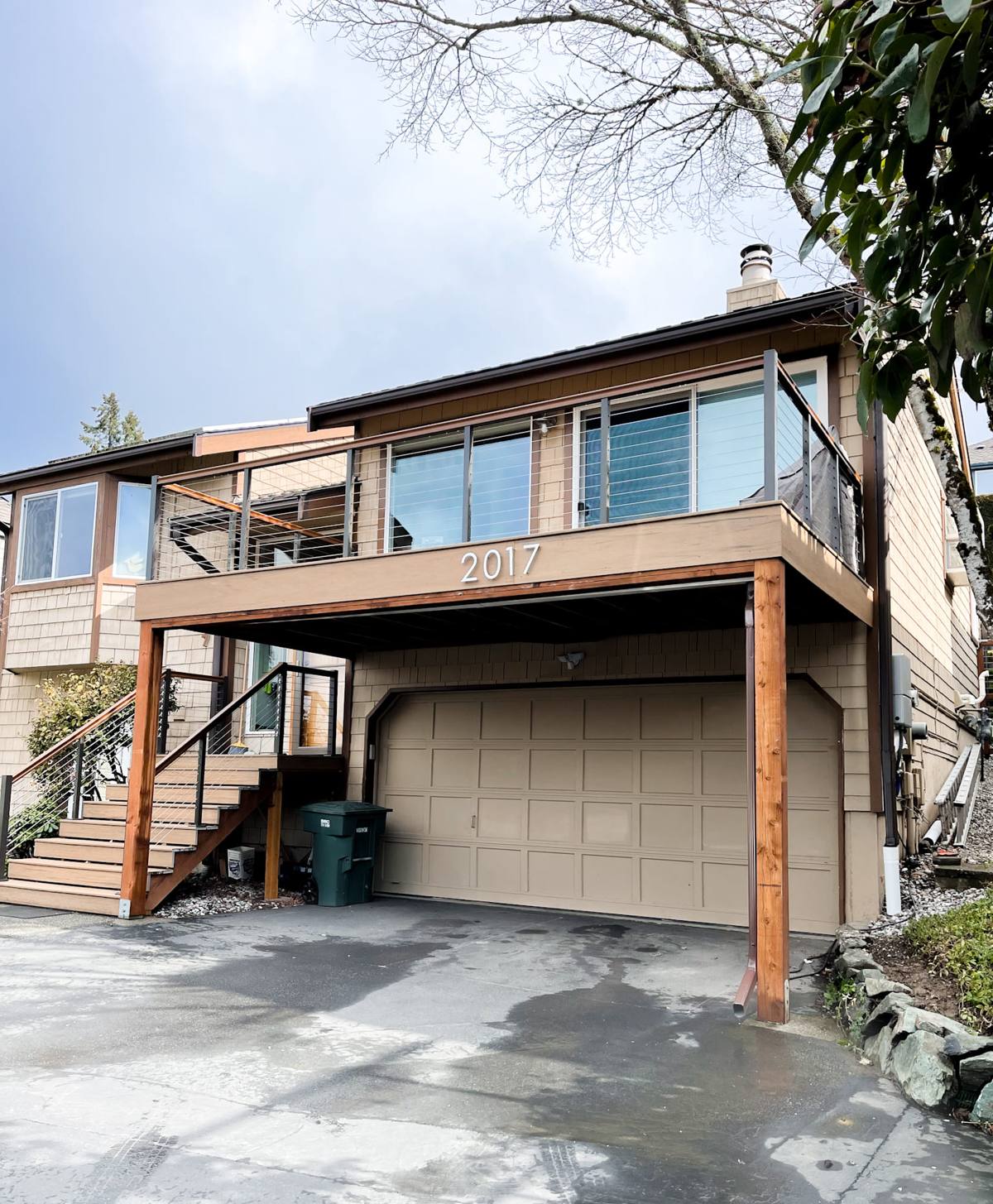
What Rain, Moss, and Salt Air Actually Do to a Deck
It helps to understand the specific failure modes before talking about how to prevent them, because each one calls for a different fix.
Moisture Intrusion at the Ledger
The single most common structural failure on decks in this region isn't the decking boards — it's the ledger board, the piece that bolts the deck to the house. Without proper flashing, water works its way behind the ledger and into the house's rim joist. In a climate with this much sustained rainfall, that process can take years to become visible and cause real rot damage long before anyone notices a soft spot.
Fastener and Hardware Corrosion
Salt air accelerates corrosion on any metal that isn't rated for it. Standard electro-galvanized screws and joist hangers can start rusting within a couple of seasons this close to the water. Once a fastener corrodes, it loses holding strength long before it looks obviously bad, which is part of what makes it dangerous — the deck can seem solid right up until it isn't.
Moss and Algae on Walking Surfaces
Moss doesn't just look bad — it holds moisture against the board surface and creates a genuinely slick walking surface, especially on stairs. Decks with poor airflow underneath, tight board spacing, or shaded northern exposures grow moss the fastest, and once it's established it's a recurring maintenance fight rather than a one-time cleanup.
Wood Movement and Cupping
Lumber that stays damp for long stretches and then dries out in short sun breaks moves more than lumber in a drier climate. Boards installed without the right gap or fastening pattern for this cycle tend to cup, crown, or split at the ends over a few winters.
Choosing the Right Decking Material for a Geneva Property
There's no single "best" decking material — the right choice depends on how much upkeep you want to do, your budget, and how the deck sits relative to sun and shade. Here's how the common options actually compare in this climate, not in a showroom.
| Material | Moisture/Moss Resistance | Maintenance | Typical Lifespan Here | Notes |
|---|---|---|---|---|
| Pressure-treated pine | Good if sealed regularly | Annual cleaning + resealing every 1-2 years | 15-20 years | Lowest upfront cost; needs the most consistent upkeep to resist moss and checking |
| Cedar | Naturally rot- and insect-resistant | Cleaning + oil or stain every 2-3 years | 20-25 years | Good natural look; still needs sealing to resist moss staining and graying |
| Composite (capped) | Excellent — won't absorb moisture | Periodic washing, no sealing | 25-30+ years | Higher upfront cost; some non-capped composites can still stain and grow moss in shaded spots |
| PVC | Excellent — fully moisture-proof | Occasional washing | 30+ years | Highest upfront cost; consistent performance in shaded, damp locations |
For a shaded, tree-covered Geneva lot with limited airflow, we usually steer homeowners toward composite or PVC decking on the walking surface, because moss simply doesn't get the foothold on a sealed synthetic surface that it does on open-grain wood. For a sunnier, more exposed site, a well-maintained wood deck can perform just as well and costs less to build.
Getting the Structure Right Below the Boards
The decking material gets all the attention, but the framing and connections underneath are what actually determine whether a deck lasts. This is where a generic build and a climate-correct build diverge most.
Ledger Flashing
Every ledger attachment gets proper metal or membrane flashing that directs water away from the house structure, installed in the correct shingle-lap order so water can't back up behind it. This is non-negotiable on any deck we attach to a house in this climate.
Footings Below Frost Depth
Footings are sized and set below the local frost line so seasonal ground movement doesn't shift the deck's support posts over time. On sloped or soft Geneva lots, we also check soil conditions before finalizing footing depth and diameter rather than assuming a standard spec will hold.
Corrosion-Rated Hardware Throughout
Given the salt air exposure, we use stainless steel or heavy hot-dip galvanized fasteners, joist hangers, and structural screws rated for coastal or treated-lumber contact — not the standard hardware that ships with many prefab connector kits.
Airflow and Drainage Underneath
Proper joist spacing, ventilation gaps, and grading beneath the deck keep air moving and water draining instead of pooling and sitting stagnant, which is one of the biggest drivers of moss and mildew growth on the underside of a deck and the boards above it.
Design Choices That Matter on Geneva Lots
Beyond materials and structure, a few design decisions have an outsized effect on how a deck ages here.
- Board spacing: Slightly wider gaps between boards improve drainage and airflow, reducing moss buildup, without compromising the walking surface.
- Stair and railing placement: Stairs get extra attention to slip resistance given how much of the year they can be damp or moss-prone.
- Sun exposure mapping: Before finalizing layout, we look at how much direct sun the deck footprint actually gets across seasons — shaded corners often benefit from a different material choice than the rest of the deck.
- Roof and gutter interaction: Where a deck sits under or near a roofline, we make sure runoff is directed away from the deck surface and framing, not dumped straight onto it.
Our Build Process, Start to Finish
Every project follows the same sequence, adjusted for the specifics of the lot and the homeowner's goals.
- On-site consultation: We walk the property, assess sun/shade patterns, grade, existing drainage, and talk through material and layout options honestly, including trade-offs in cost and maintenance.
- Design and permitting: We finalize the design, pull the required permit, and confirm structural details meet current code before any digging starts.
- Footings and framing: Footings go in below frost depth, and the frame is built with corrosion-rated hardware and properly flashed ledger connections.
- Decking and railing installation: Boards and railing go on with attention to spacing, fastening pattern, and stair detailing.
- Final walkthrough: We go over the finished deck together, including care and maintenance specific to the material you chose.
Permits and Local Code
Decks above a certain height or attached to the primary structure typically require a permit in Whatcom County, and inspections check things like footing depth, ledger attachment, and railing height and spacing. Skipping this step — or hiring a crew that doesn't pull permits — can create real problems at resale, since an unpermitted deck often has to be disclosed and can complicate a home sale or refinance. We handle the permitting process as a standard part of the build, not an optional extra.
Maintaining a Deck in This Climate
Even the right materials and structure need some seasonal attention to stay ahead of moss and moisture. A realistic yearly routine looks like this:
- Sweep off leaves, needles, and organic debris regularly — this material holds moisture against the boards and is the main food source for moss and mildew
- Rinse or lightly scrub the deck surface at least once or twice a year, more often in shaded areas
- Check and clear gaps between boards so water and debris don't accumulate
- Inspect fasteners and hardware annually for early signs of corrosion or loosening
- Reseal or restain wood decking on the schedule appropriate to the product — don't wait until the surface looks visibly gray or worn
- Confirm gutters and downspouts near the deck are directing water away, not onto the deck surface
Why a Crew That Already Works Geneva Makes a Difference
A deck contractor who mostly works drier inland areas will often default to standard specs that simply aren't built for this environment — lighter fasteners, minimal ledger flashing, tighter board spacing that traps moisture. A crew that already works Geneva and the broader Sudden Valley area knows which corners of a lot hold moisture longest, how the local frost depth affects footing decisions, and which materials actually hold up to the moss season rather than just looking good on installation day. That local experience is the difference between a deck that needs real repair work in five years and one that's still solid in twenty-five.
If you're planning a new deck or replacing one that's showing its age, we're happy to walk the property with you and talk through honest options for your budget and site — no pressure, no upsell. Fill out the form below to schedule a free estimate.