 Sudden Valley
 Why Bellingham's Climate Is Hard on Siding
Homes in and around Bellingham sit in a tough spot for exterior materials. You've got salt air drifting in off the water, long stretches of driving rain through fall and winter, and shaded, tree-covered lots that stay damp long after a storm has passed. That combination is exactly what breaks down cheaper siding products over time. Salt-laden moisture accelerates corrosion on fasteners and trim. Wind-driven rain finds any gap in flashing or caulk and pushes water sideways into the wall assembly instead of letting it run off. And moss doesn't need much encouragement in a climate this wet and this shaded — once it gets a foothold on siding, it holds moisture against the surface and keeps it there.
None of this is unusual for Whatcom County. It's just the reality of building on the wet side of the Cascades, close to the water. The problem is that a lot of siding on older homes here was never designed for it. Wood-based products swell, delaminate, or rot where moisture sits. Vinyl can look fine for a while and then crack or fade under UV and temperature swings. What holds up here has to handle constant moisture exposure, resist moss and mildew staining, and keep its shape through decades of wet-dry cycling.
What "Handling the Climate" Actually Means
It's not just about the material being water-resistant. It's about the whole assembly — siding, flashing, house wrap, and fastening — working together so water that reaches the wall gets directed back out instead of trapped behind the cladding. A siding product can be rated for wet climates and still fail on a house if it's installed without the right water management details underneath it. That's the piece a lot of siding jobs skip.
Why We Install James Hardie and Nothing Else
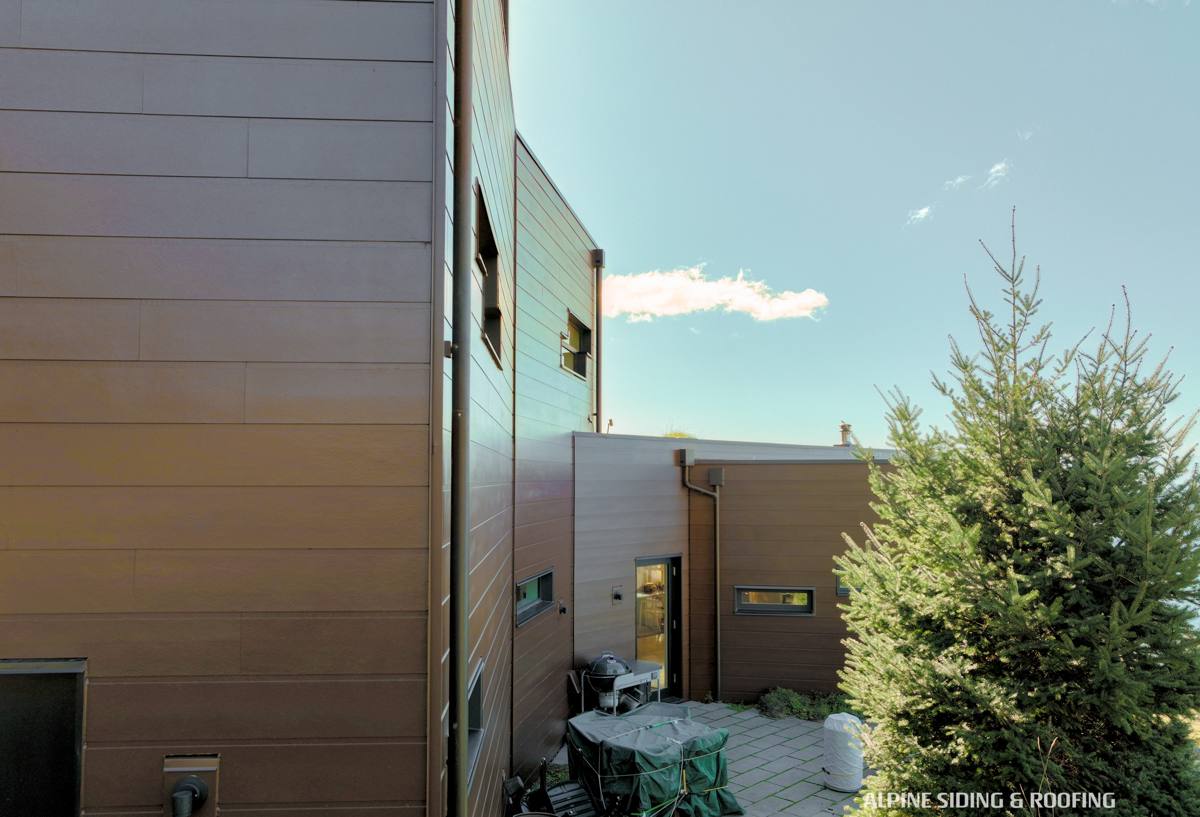
We standardized on James Hardie fiber cement siding for every home we work on, including here in the Bellingham area, and we don't install LP SmartSide, vinyl, Cemplank, Allura, primed spruce, or cedar. That's not a marketing position — it's based on what actually holds up under this region's conditions and what we're willing to warranty our work behind.
Non-Combustible, Dimensionally Stable
James Hardie siding is fiber cement — it doesn't burn, it doesn't rot the way wood-based products can, and it doesn't expand and contract with moisture the way engineered wood siding does. In a climate where the siding is wet more often than it's dry, that dimensional stability matters. It's the difference between a wall assembly that stays tight for decades and one that starts working loose seams within a few wet seasons.
ColorPlus Finish and Moss Resistance
James Hardie's factory-applied ColorPlus finish is baked on under controlled conditions, which gives it better adhesion and UV resistance than field-applied paint. That matters for moss and mildew staining specifically — a tight, consistent factory finish gives moss spores less to grip onto compared to a porous or unevenly coated surface, and it holds its color instead of chalking and fading the way lower-grade coatings do under years of Northwest rain and gray-sky UV exposure.
Choosing the Right HZ Product Line
James Hardie makes climate-engineered HZ product lines, and the HZ10 line is built for exactly this kind of wet, moisture-heavy climate zone. Beyond the climate engineering, there are a few different profiles worth understanding before you pick one for a Bellingham home.
| Product | Typical Use | Why It Fits This Area |
|---|---|---|
| HardiePlank lap siding | Most common choice for full re-sides | Traditional lap profile sheds water efficiently when installed with proper overlap and flashing |
| HardiePanel vertical siding | Accent walls, gables, modern styling | Fewer horizontal laps means fewer water-catch points on exposed elevations |
| HardieShingle siding | Craftsman and cottage-style homes | Textured look without the moisture vulnerability of real wood shingles |
| HardieTrim boards | Corners, window and door casing | Resists the swelling and rot common in wood trim exposed to constant rain |
Color and texture choice matters too on shaded, tree-covered lots. Darker colors show less staining from tannin runoff and airborne debris, but they also absorb more heat, which can be a factor on south-facing walls. We walk through these trade-offs with homeowners as part of the estimate — there's rarely a single "right" answer, just the option that fits your lot and your house.
What Correct Installation Involves
James Hardie siding is only as good as the installation underneath it. The material can handle this climate; a rushed installation can't. Here's what actually needs to happen for it to perform the way it's engineered to.
Flashing and Water Management
Every horizontal joint, every window and door opening, and every penetration through the siding needs proper flashing so water is directed out and away from the wall, not into it. On a house exposed to wind-driven rain, this is the single most common place we find shortcuts on prior installations — missing kick-out flashing at roof-to-wall intersections, reused old flashing, or house wrap that wasn't properly lapped and taped.
Clearances and Fastening
James Hardie specifies minimum clearances from grade, roofing, and decks, along with specific fastener spacing and gun pressure settings so nails or screws seat correctly without cracking the board or leaving it loose. Get the clearance wrong and you invite moisture wicking up from the ground or splashback rot at the base of the wall — a slow problem that doesn't show up until years later.
Caulking and Joint Treatment
Manufacturer specs call for factory-primed or factory-finished cut edges to be sealed, and for joints to be caulked with a product rated for the movement and moisture exposure involved. Skipping this step is invisible on install day and shows up as staining or soft spots two or three winters later.
Our Process for Bellingham and Sudden Valley Homes
- On-site assessment: We look at your existing siding, wall assembly, and any problem areas — moss buildup, soft trim, staining patterns — to understand what the house is telling us before we quote anything.
- Product and color selection: We walk through HZ10 profile options, colors, and trim choices based on your home's exposure and style.
- Removal and inspection: Once old siding comes off, we check the sheathing and house wrap underneath for hidden moisture damage before closing anything back up.
- Water management install: Flashing, house wrap, and drainage details go in first — this is the part that determines whether the siding performs for 30 years or 10.
- Siding installation to spec: Fastening, clearances, and joint treatment follow James Hardie's published installation guidelines, not shortcuts.
- Final walkthrough: We go over the finished work with you before calling the job done.
Common Problems We Find on Older Bellingham-Area Homes
When we're re-siding a home that's been through a few decades of this climate, certain issues show up again and again. Knowing what to look for can help you decide how urgent a re-side really is.
- Moss or dark streaking concentrated on north-facing or shaded walls
- Soft or spongy trim boards, especially around window sills and corners
- Paint that's peeling or bubbling rather than just fading
- Visible gaps or separation at horizontal siding joints
- Staining below window sills suggesting water is tracking down instead of out
- Fastener heads showing rust streaks bleeding down the siding face
Any one of these on its own might just mean a cleaning or a caulk touch-up. Several of them together usually mean the water management underneath the siding has been compromised for a while.
Maintenance in a Moss-Prone Climate
James Hardie siding needs less upkeep than wood or engineered wood products, but "less" isn't "none," especially with the moss and mildew pressure this region puts on exterior surfaces. A periodic soft wash — not a high-pressure blast that can force water behind the boards — keeps moss and algae from establishing a foothold. Trimming back tree limbs and shrubs that keep a wall in constant shade helps too, since airflow and sun exposure are the biggest factors in how fast moss returns. Beyond that, an annual look at caulked joints and trim for any cracking or gaps catches small issues before they become water intrusion problems.
What a Bellingham Re-Side Typically Costs
Every home is different, but the factors that move the price are consistent. We give firm numbers only after seeing the house in person — anything else is a guess — but this is what tends to matter most.
| Factor | Why It Affects Cost |
|---|---|
| Home size and wall complexity | More corners, gables, and dormers mean more cutting, trim, and labor |
| Extent of hidden damage | Sheathing or framing repairs found after tear-off add to the scope |
| Product line and profile | Panel vs. lap vs. shingle profiles carry different material and labor costs |
| Trim and accent work | Custom trim details and multi-color schemes add finishing time |
| Access and site conditions | Steep lots, tree cover, and limited staging area can slow the work |
Why a Crew That Already Works This Area Matters
A contractor who's never dealt with this region's rain patterns, salt exposure, and moss cycles is learning on your house. We're based right here in Sudden Valley, and the moisture behavior of walls in Whatcom County — where water comes from, where it tends to collect, which details fail first on a shaded lot near the water — is something we deal with on every project, not something we're guessing at from a manual. That local pattern recognition is often the difference between an installation that looks right on day one and one that actually performs for the next thirty years.
If your Bellingham-area home needs new siding, or you're just trying to figure out whether what you have now is holding up, we're glad to take a look. Reach out for a free, no-pressure estimate using the form below — we'll walk the house with you and tell you honestly what we see.